

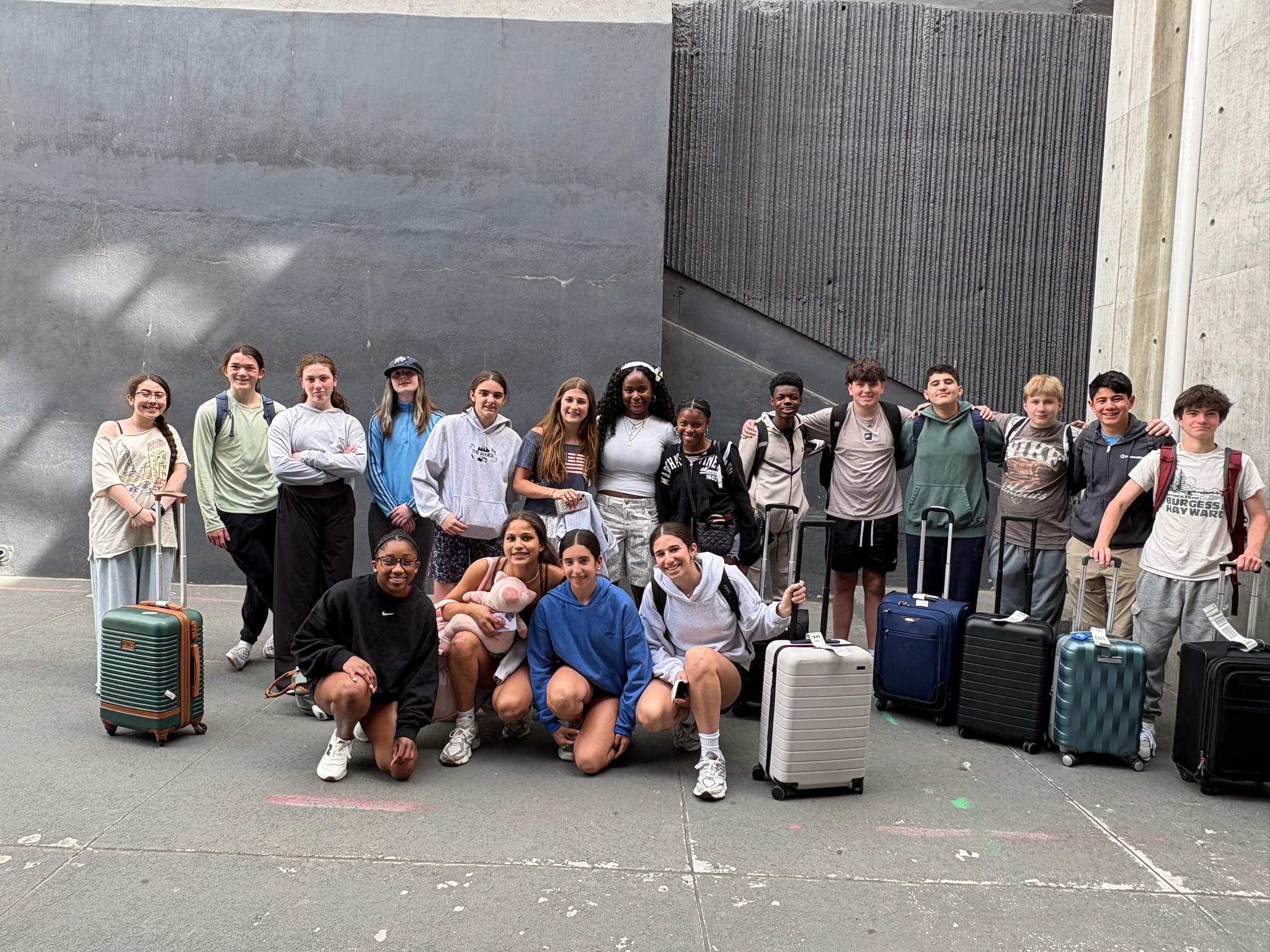
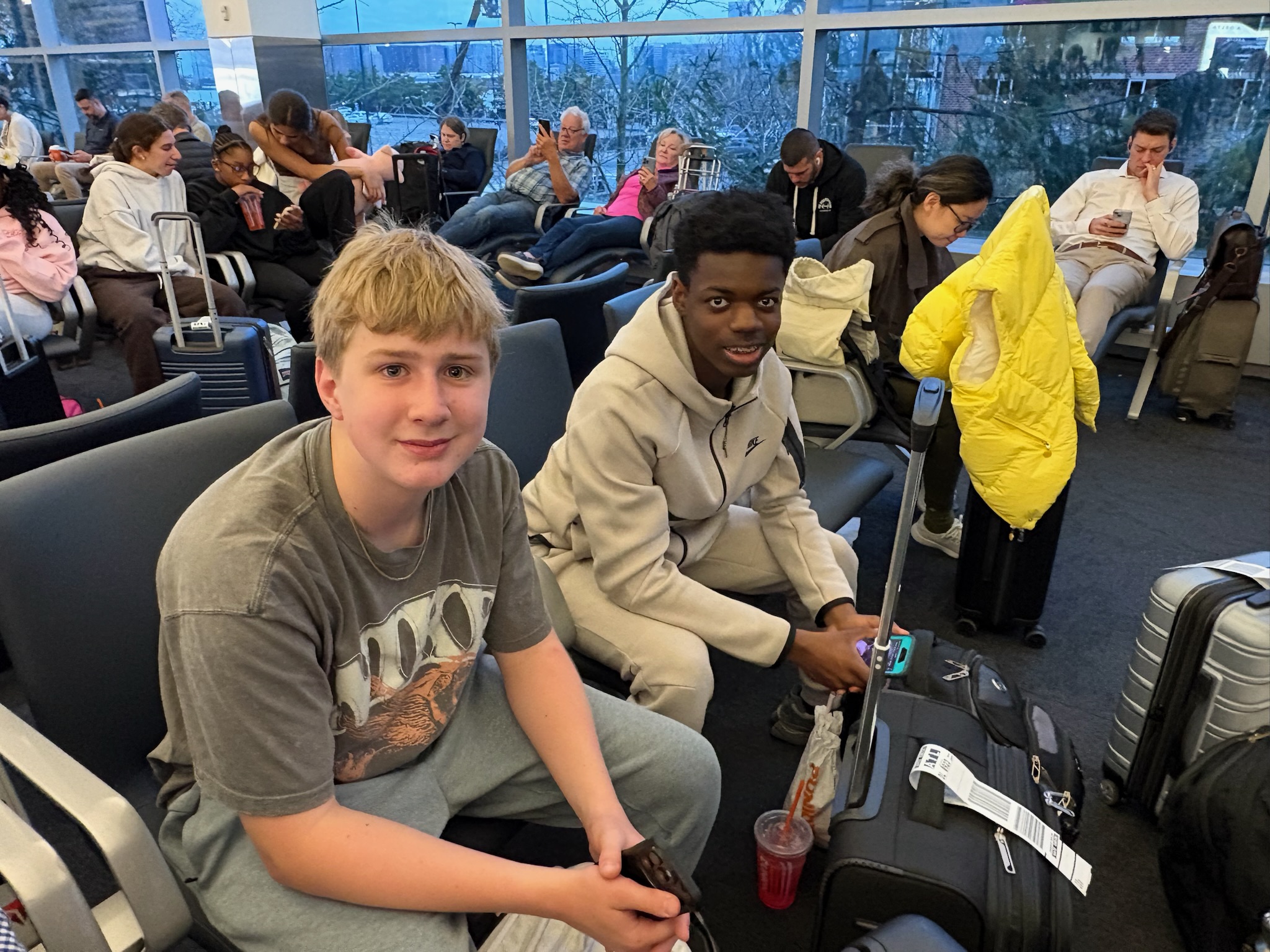
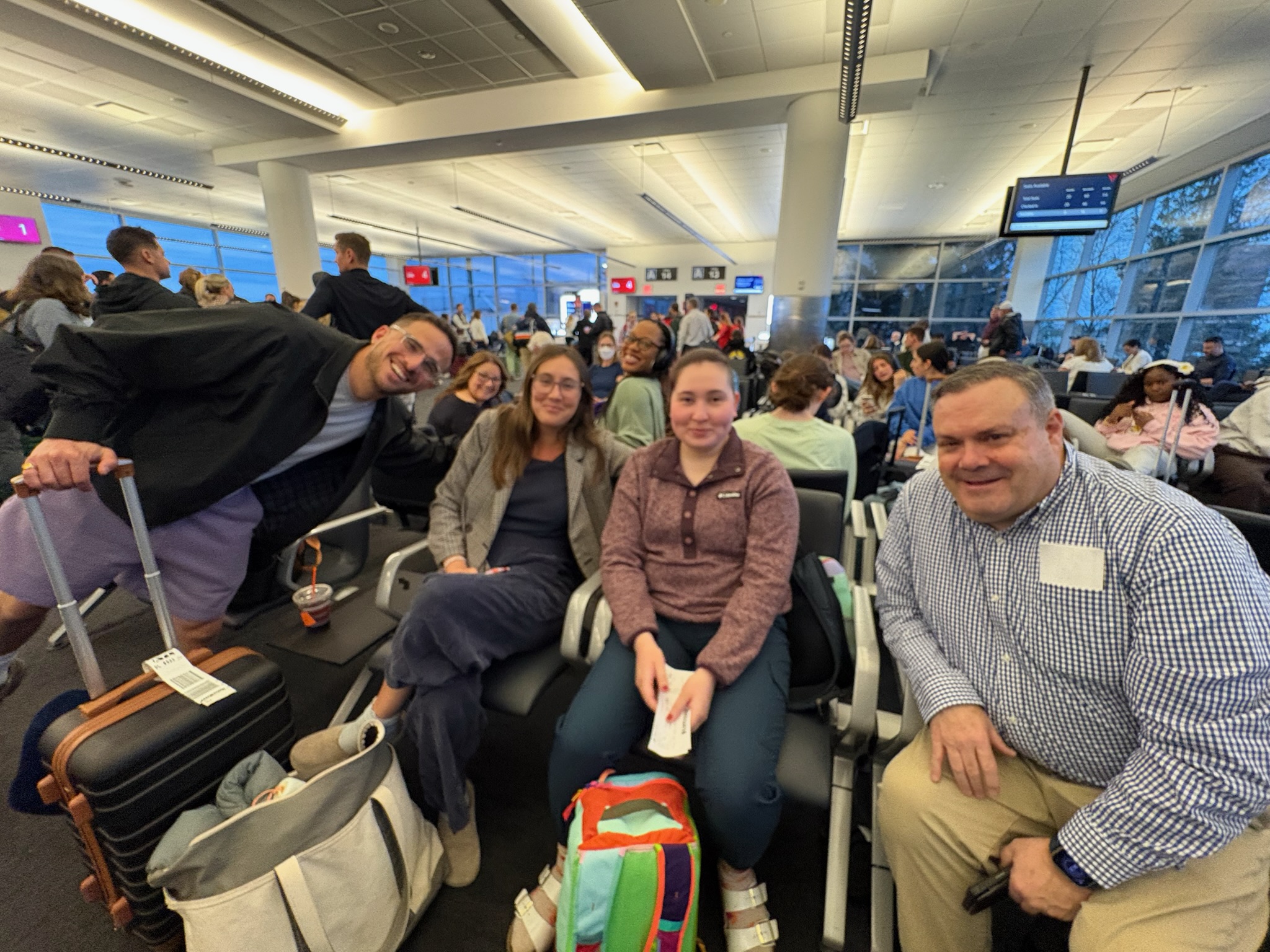
Our students and chaperones began the day at Logan Airport at 4:30am. Yes, you read that right. 4:30am.
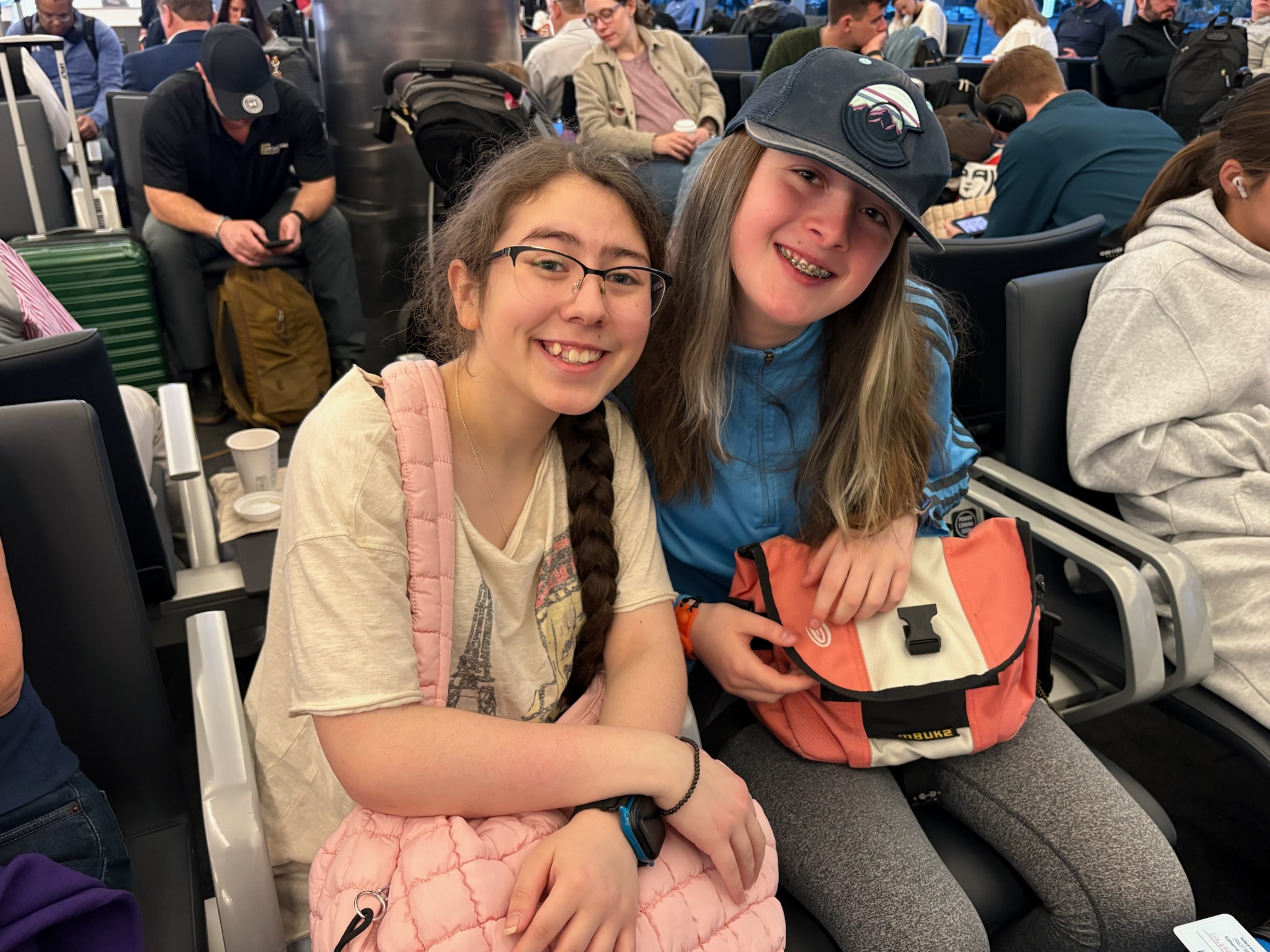
It was early, but energy and excitement levels were high.
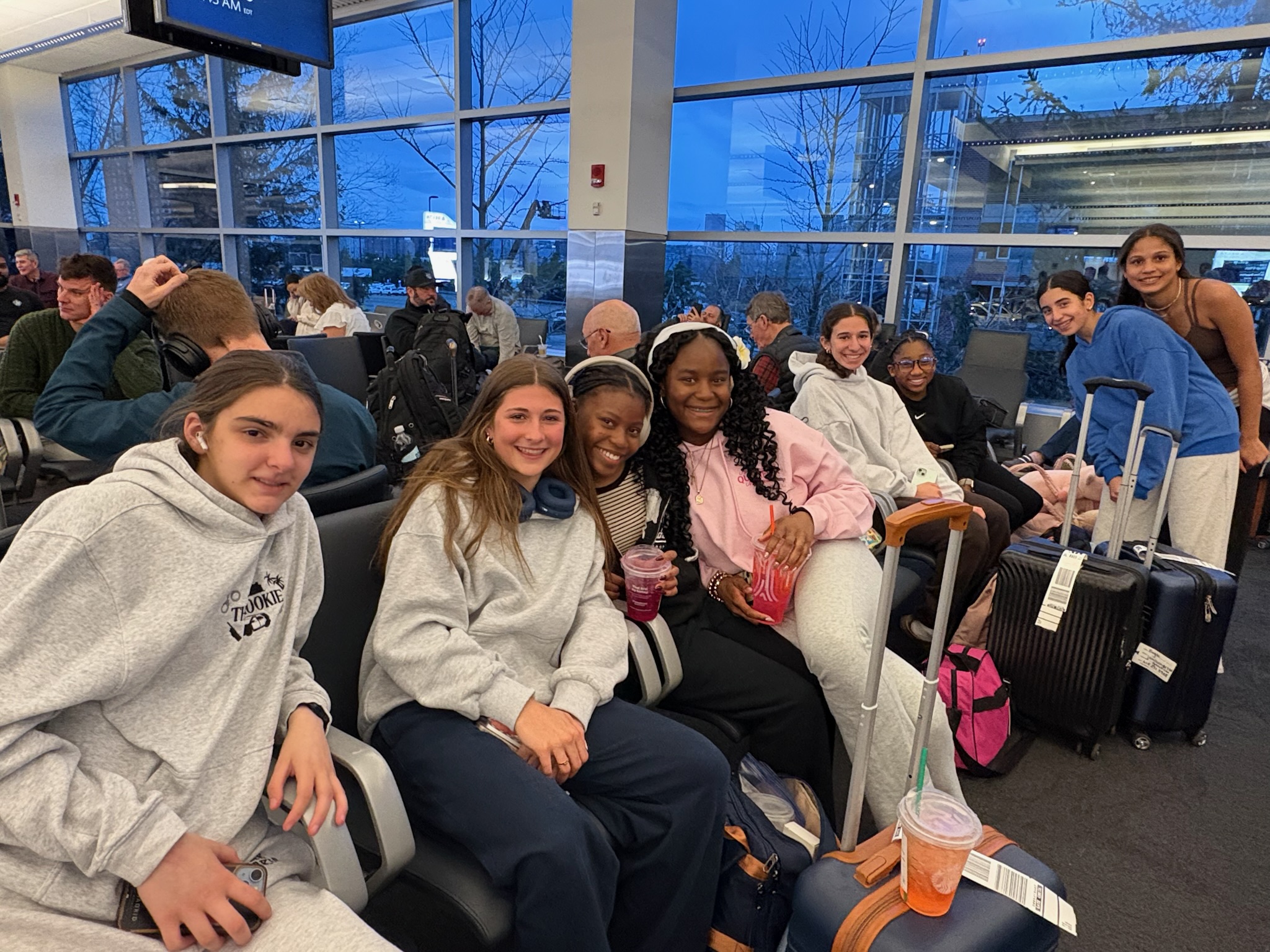
And we were ready. Students, teachers, and families have been preparing for this journey for the entire school year (and for many, beginning in seventh grade).
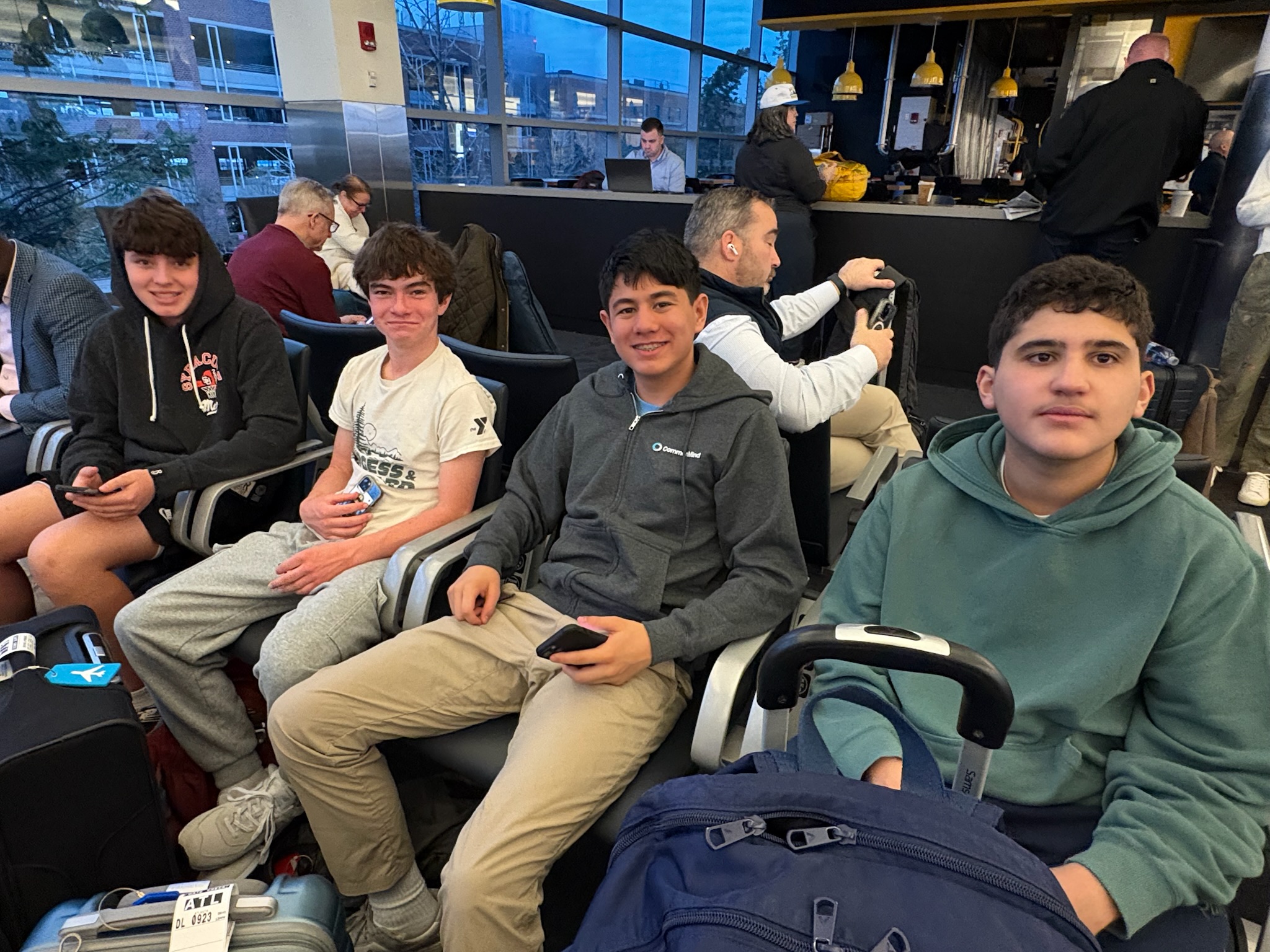
Each student set their own goals and intentions for the trip prior to leaving Charles River School.
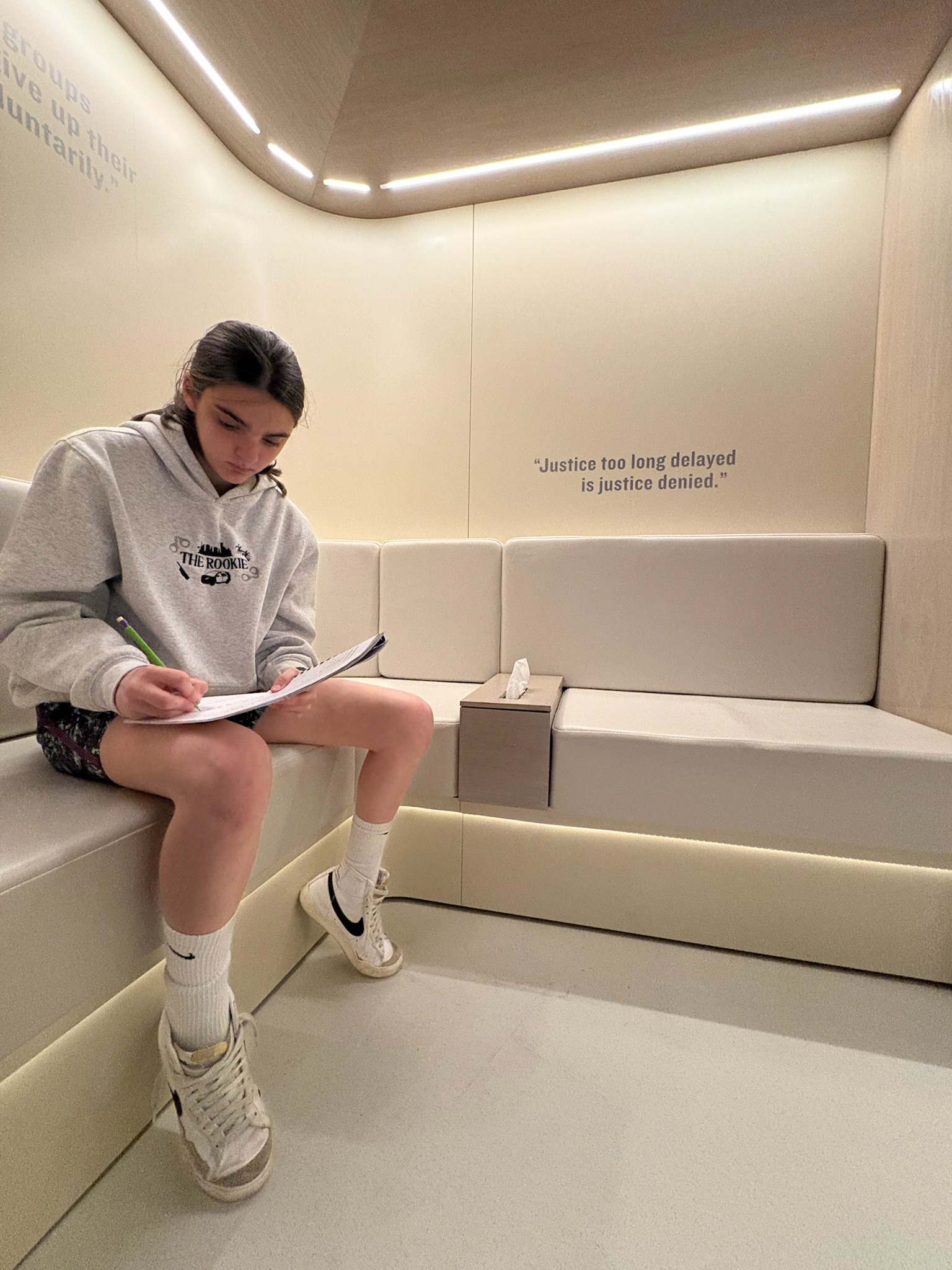
We landed in Atlanta and began the day journaling and responding to prompts about personal connection and reflections:
- How do you think the history of the Civil Rights Movement relates to your own life and community?
- Have you had any personal experiences or observations related to issues of race, equality, or justice?
- How do you think it will feel to visit historical sites where significant events of the Civil Rights Movement took place?
Herb Brown, our legendary bus driver for the trip, greeted us at the airport.
Herb said, “I was born in 1960 but I didn’t start paying attention until I saw my big daddy cry when I was 8 years old. It was the day Dr. King was shot. I’ll challenge you with this: you are our future leaders. My hope is you’ll come back from this trip and say ‘Mr. Brown, I don’t want to be a part of continuing that history.”
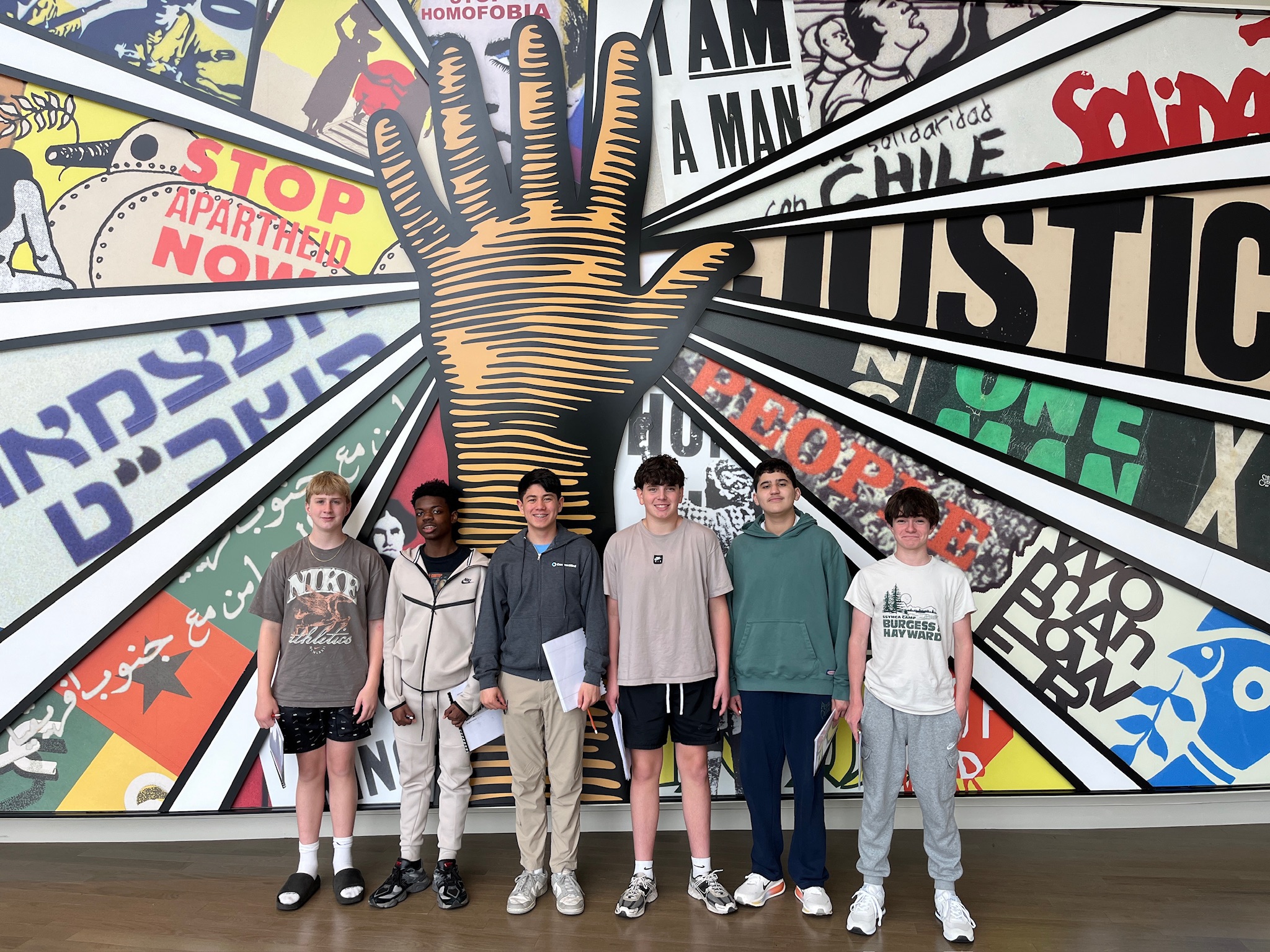
With Mr. Brown’s words on our minds, we headed to our first stop: the National Center for Civil and Human Rights.
The mission of the Center is “to inspire the changemaker in each of us.” Opened in 2014, imagined by civil rights icons Evelyn Lowery and Ambassador Andrew Young, and brought to life by former Atlanta Mayor Shirley Franklin, the Center was founded to honor the legacy of the U.S. Civil Rights Movement and connect it to global human rights struggles today.
Rolls Down Like Water Gallery
The Center is a new stop for us on our Civil Rights trip. There are several exhibits designed to inspire action, including many forms of anti-violent protest that members of the movement engaged in to bring it to a national level.
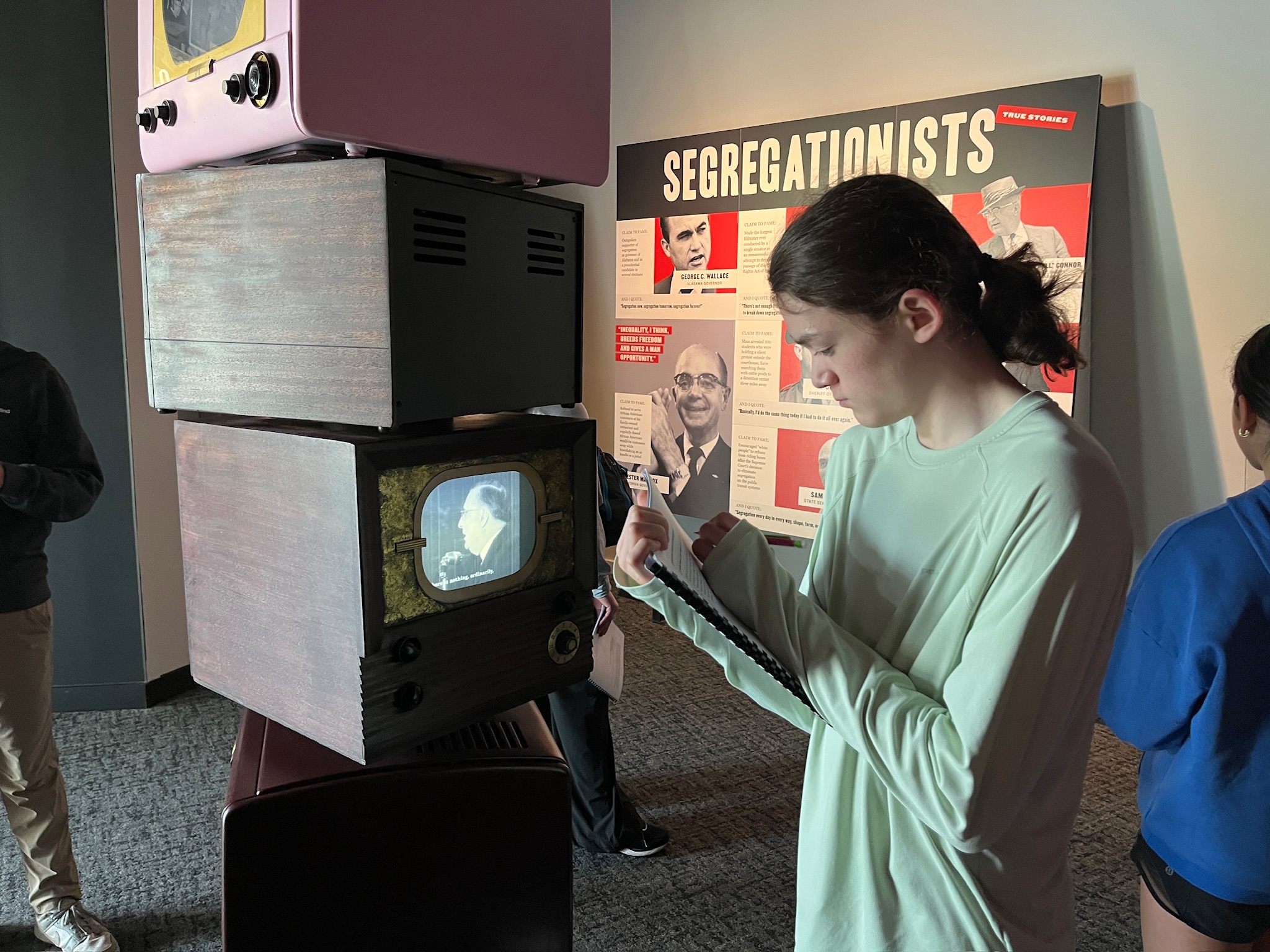
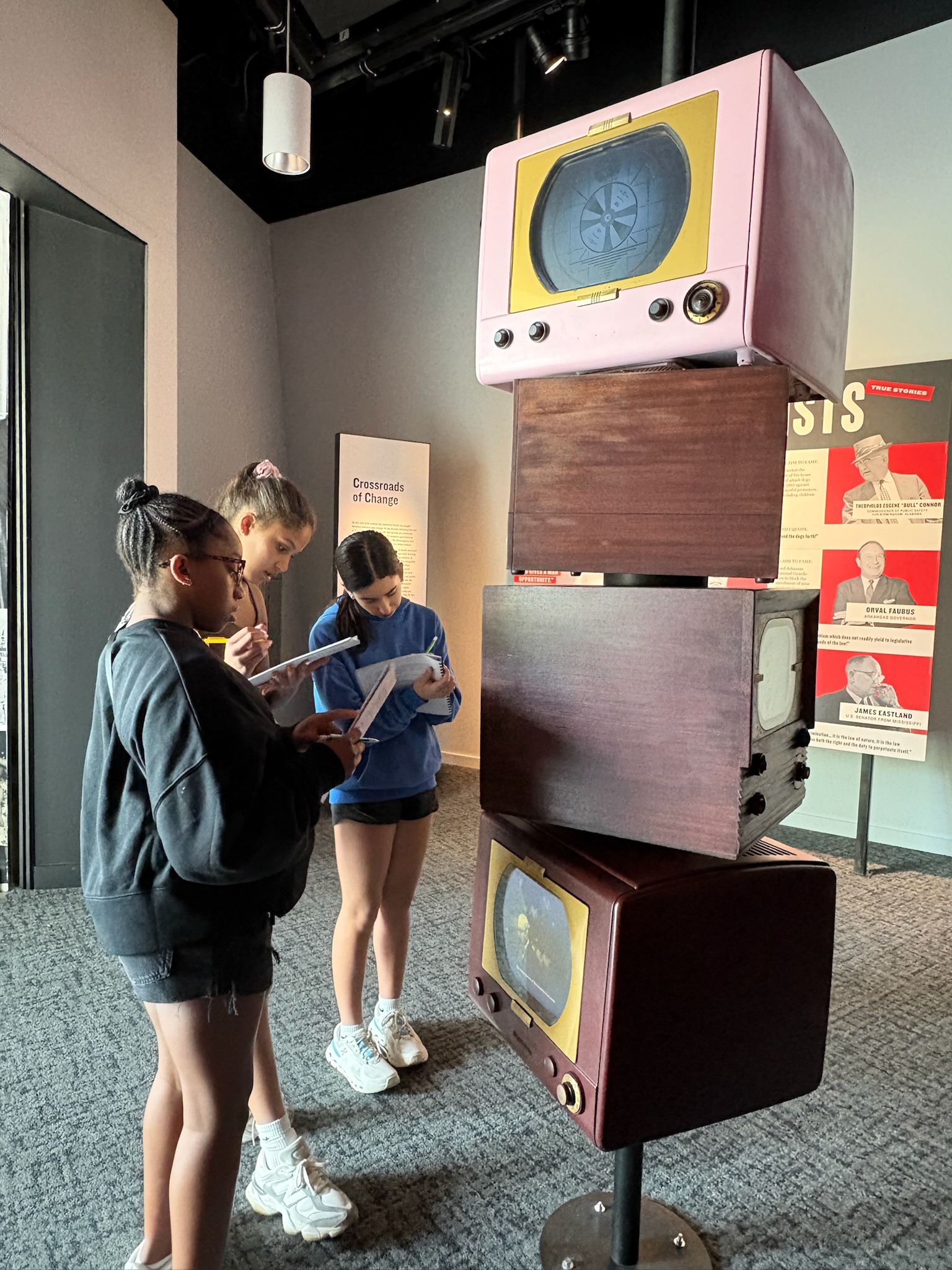
Social Studies Teacher Tessa Steinert Evoy asked students to engage with a display of old television broadcasts with a question: How did seeing these events on the nightly news change the “internal” struggle of the South into a national issue?
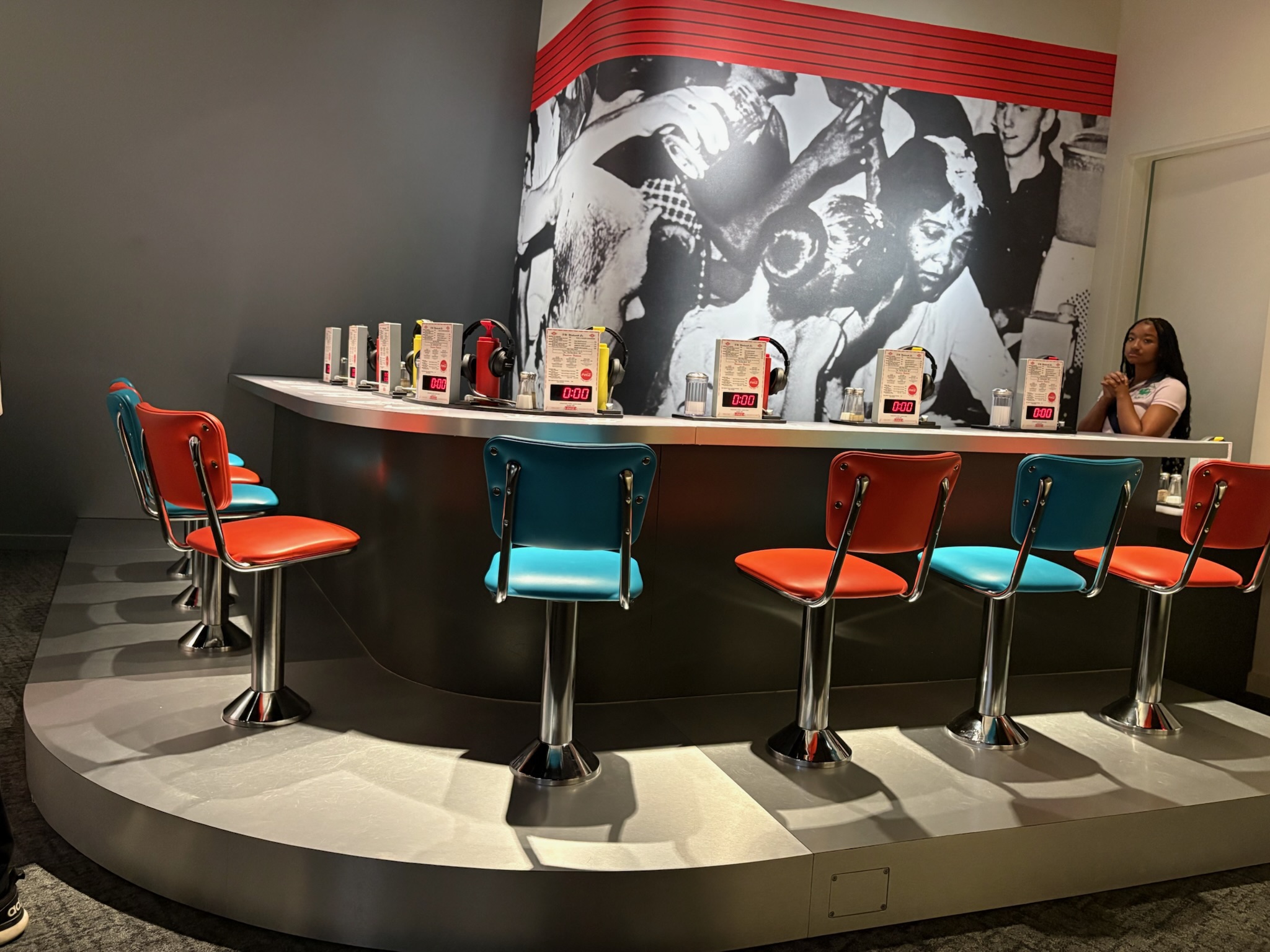
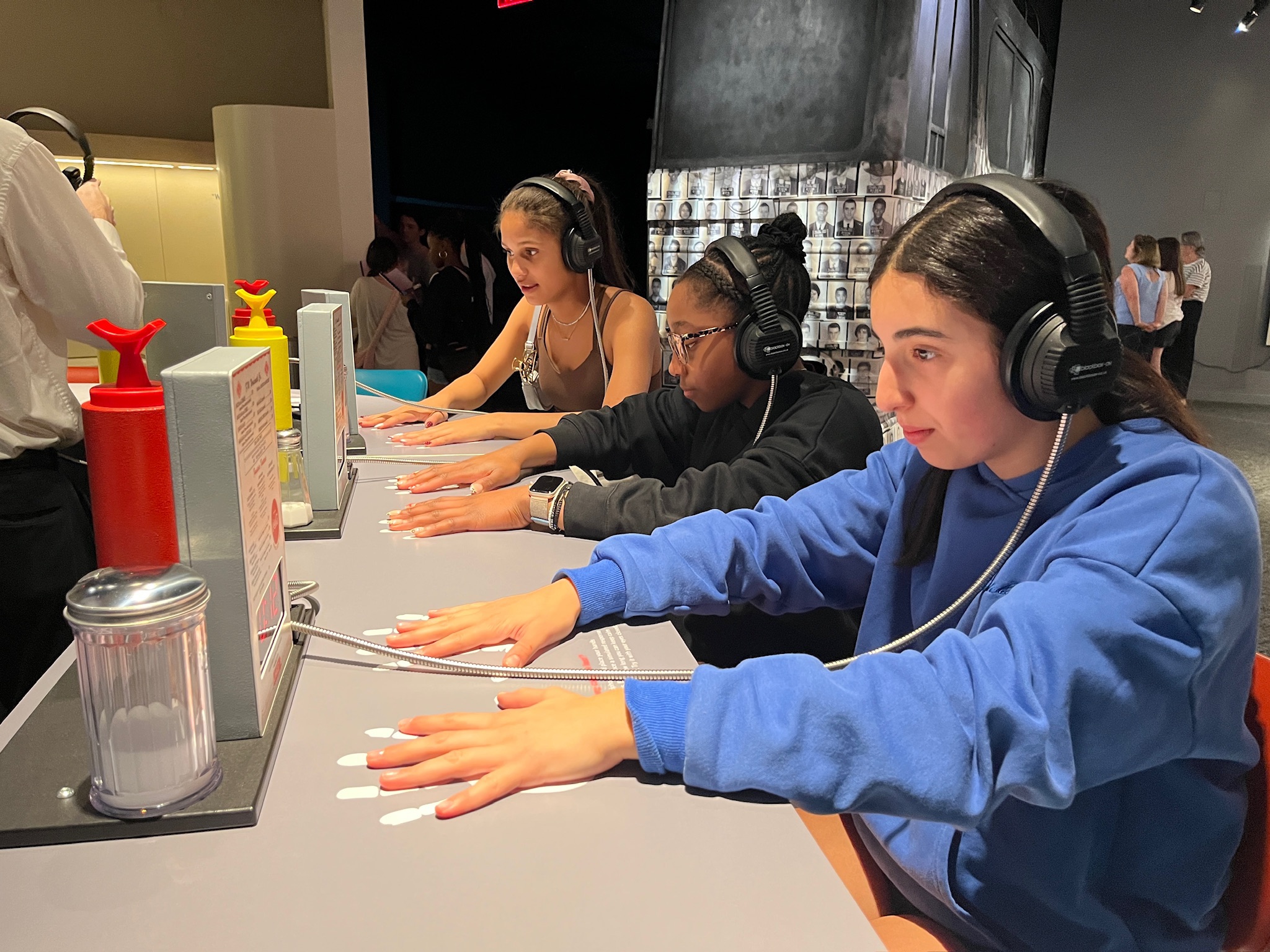
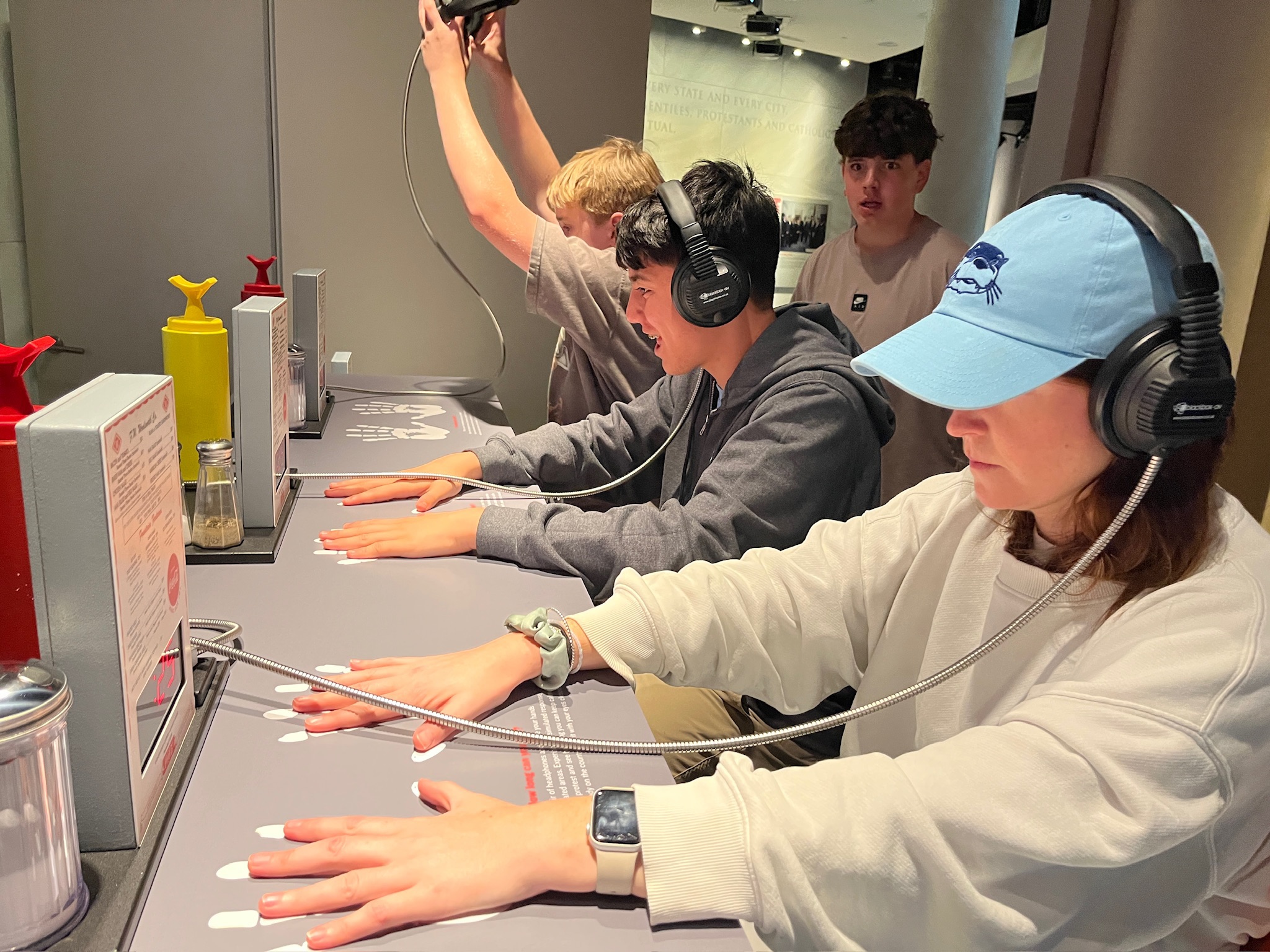
The Center’s most famous exhibit is a lunch counter sit-in experience. Students placed headphones on and put their hands on the handprints on the counter. A brief audio clip is played of the sounds of angry white customers yelling, harassing, and throwing bottles at the peaceful protestors while the counter stool shakes as if they’re being kicked.
Students reflected that it felt so real and overwhelming as the intensity grew. One student noted it felt like the men yelling were breathing down their neck and another noted: “It was very immersive and moving. It helped me fully understand what it would’ve been like to sit at that counter.”
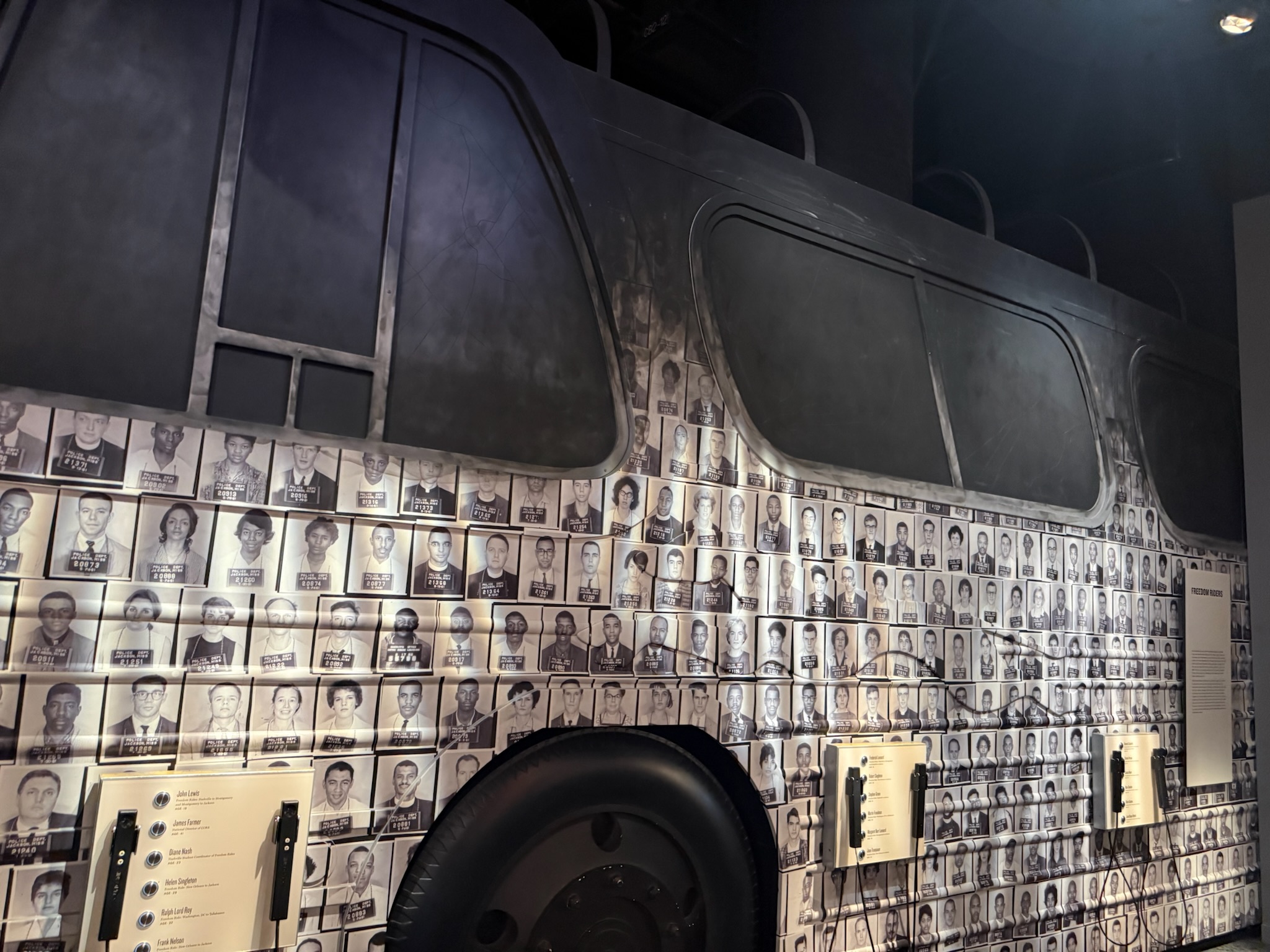
A replica of the Greyhound buses Freedom Riders took featured photos of mugshots of arrested protesters and recorded testimony of their experience. One protester shared they attended sessions on how to respond to violence non-violently and detailed her arrest leading to long, hot hours locked away in a paddy wagon. She described it as “feeling like a soldier going into enemy territory.”
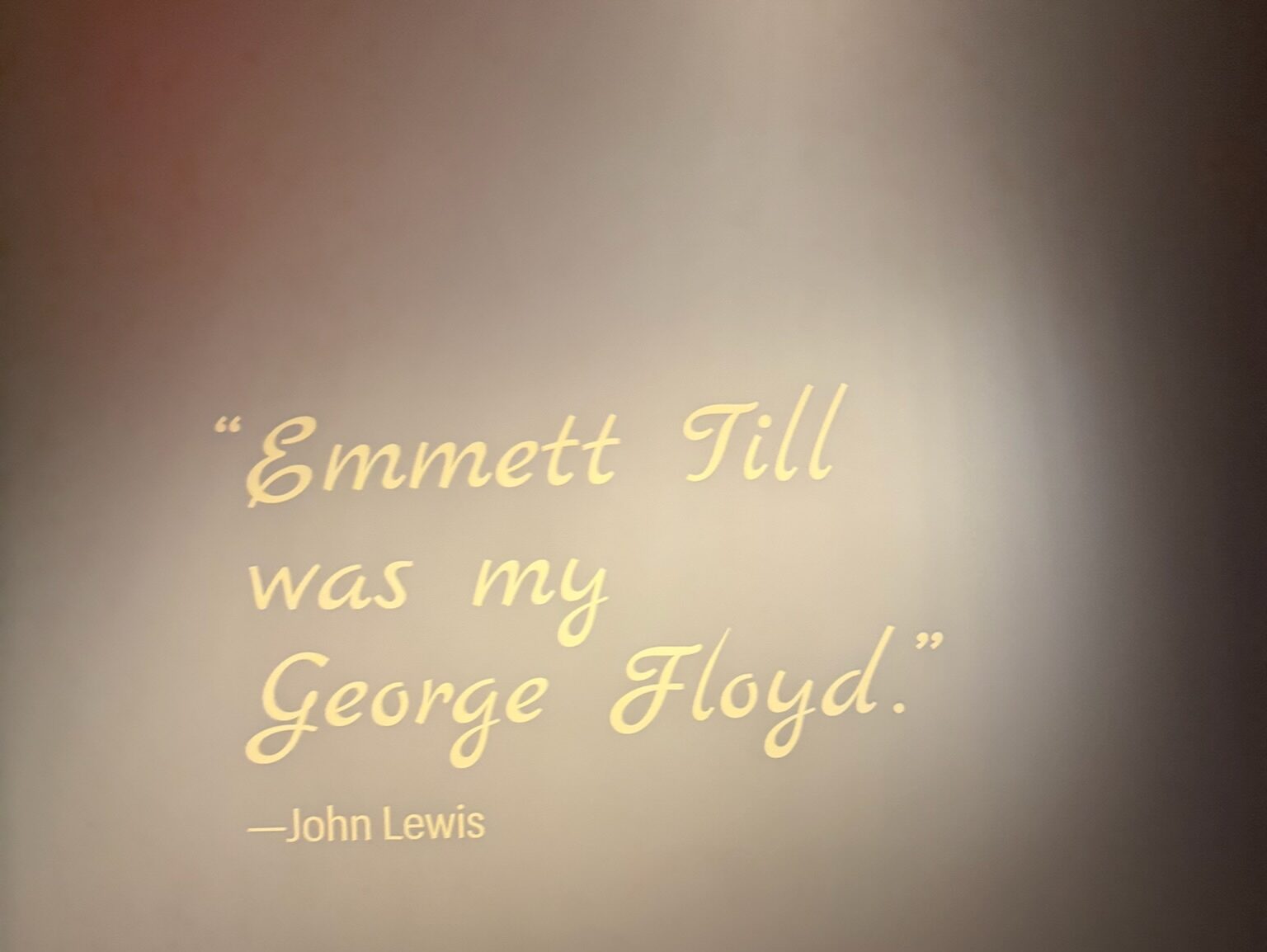
We walked through a display of the instructions for protesters when meeting violence with non-violent protests. Protestors were told to follow guidelines such as “no one goes alone,” “no retaliation,” and using singing to “create unity and ease fear.”
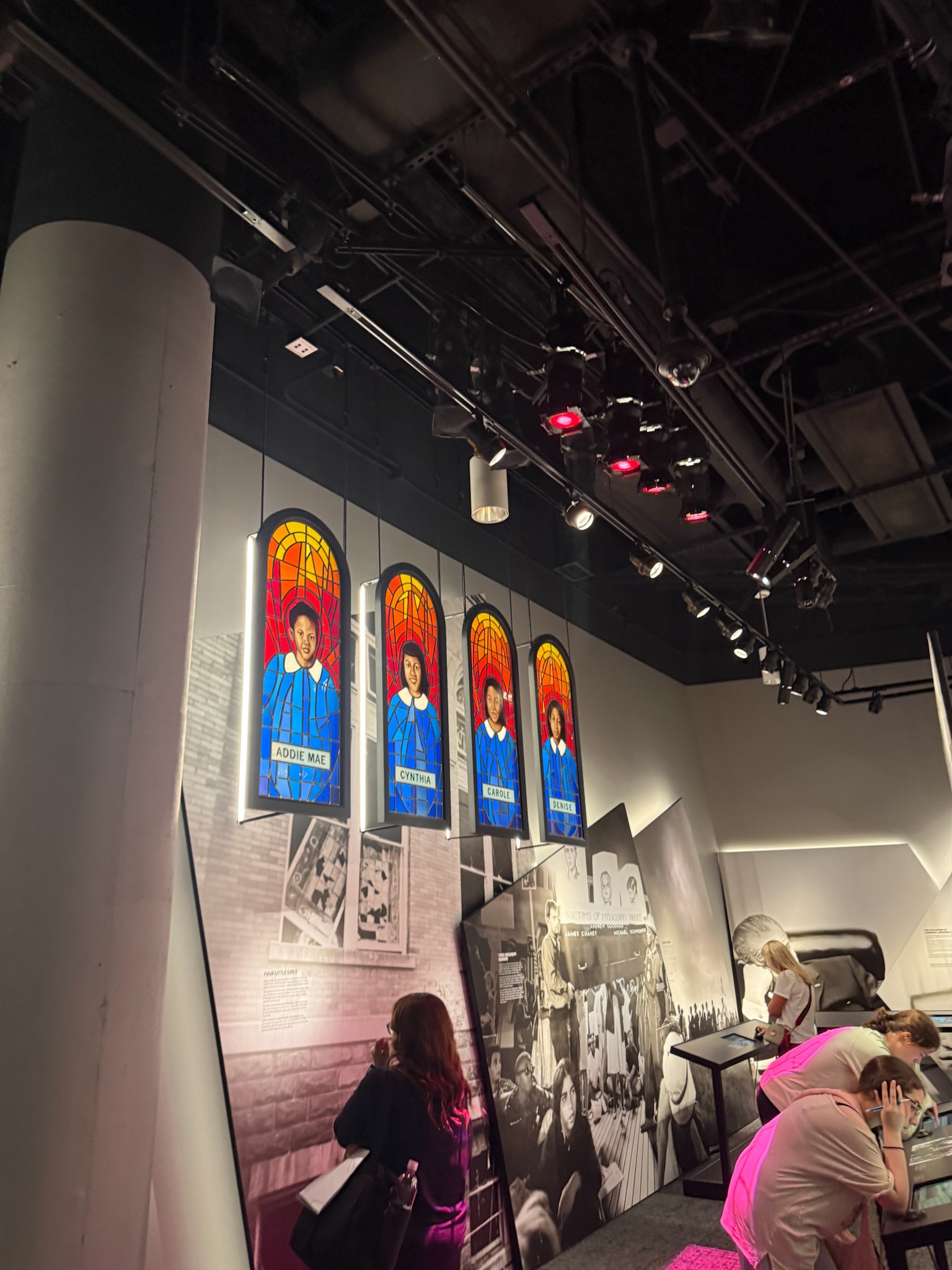
Students saw a stain glass installation of the four young girls killed in the 16th Street Baptist Church bombing, a scene they saw reenacted in the film “Selma” which they watched together in social studies class.
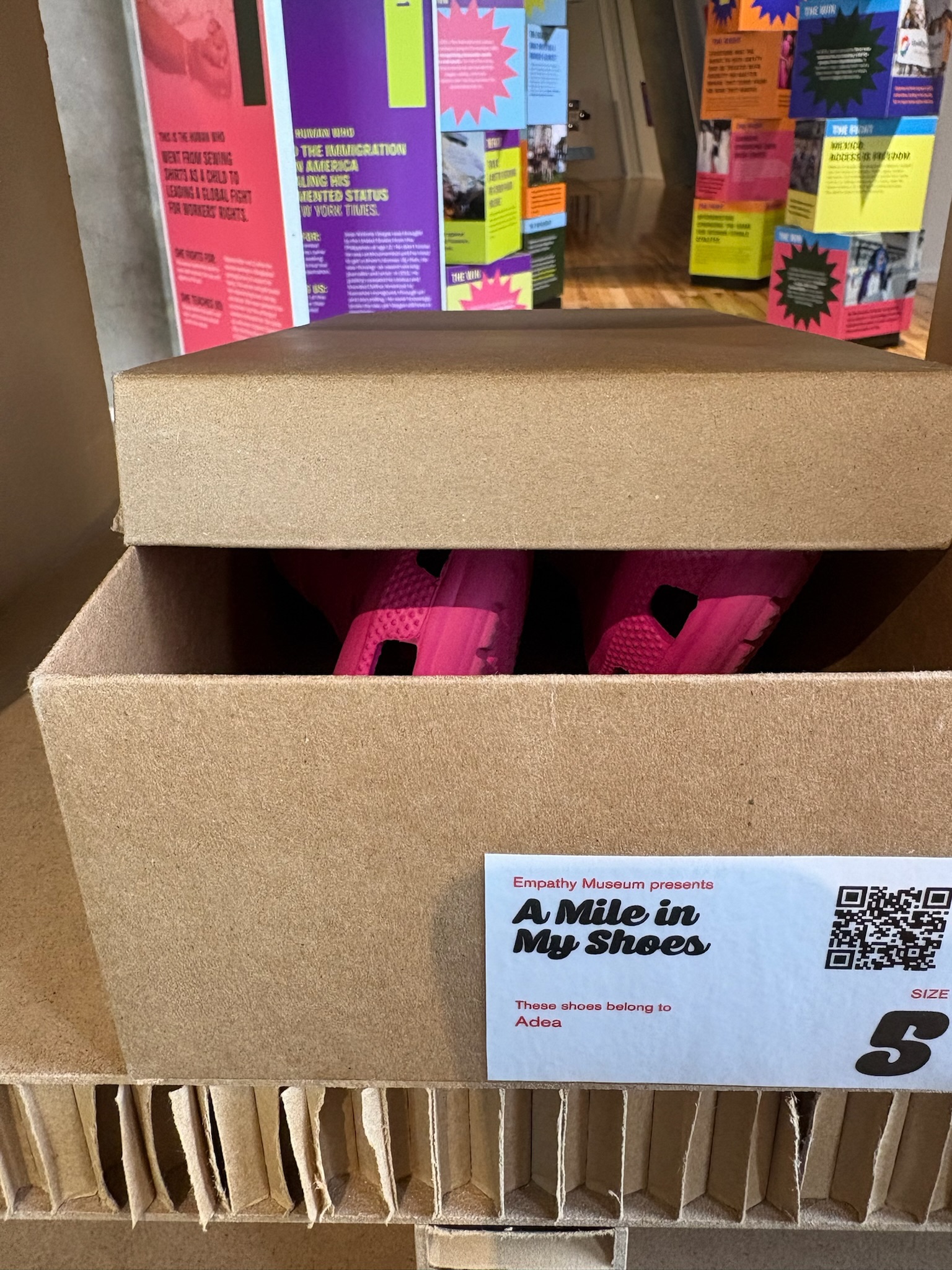
Everyone, Everywhere – Global Human Rights Gallery
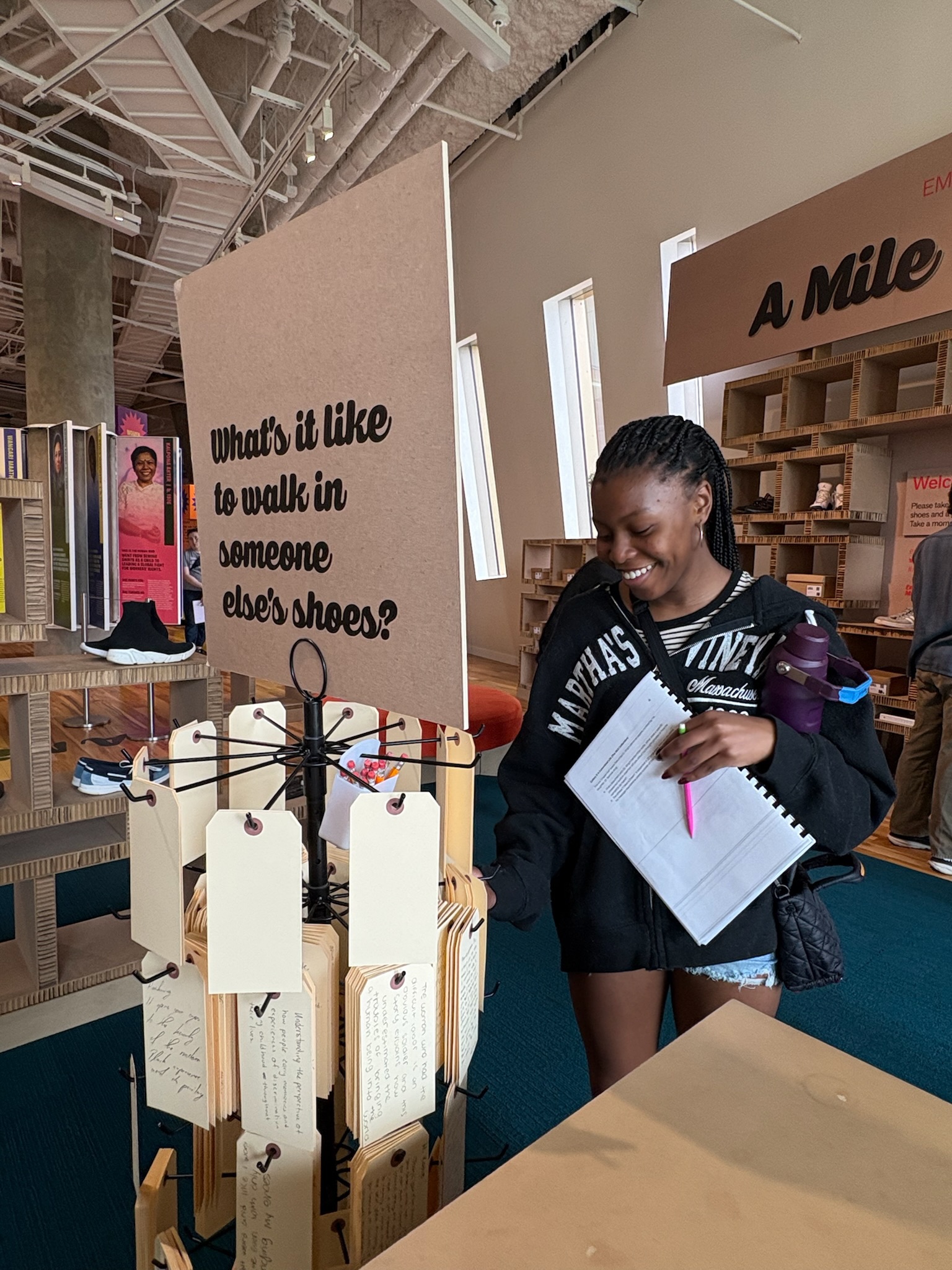
This exhibit took a broader look at human rights around the globe, and humanized stories of both legendary leaders, and ordinary citizens. In a replica of a shoe store, students could “walk a mile in someone else’s shoes” as they literally picked out a shoebox with a pair of shoes belonging to the storyteller they could listen to on audio. Built by the Empathy Project, the stories were personal and universal all at once.
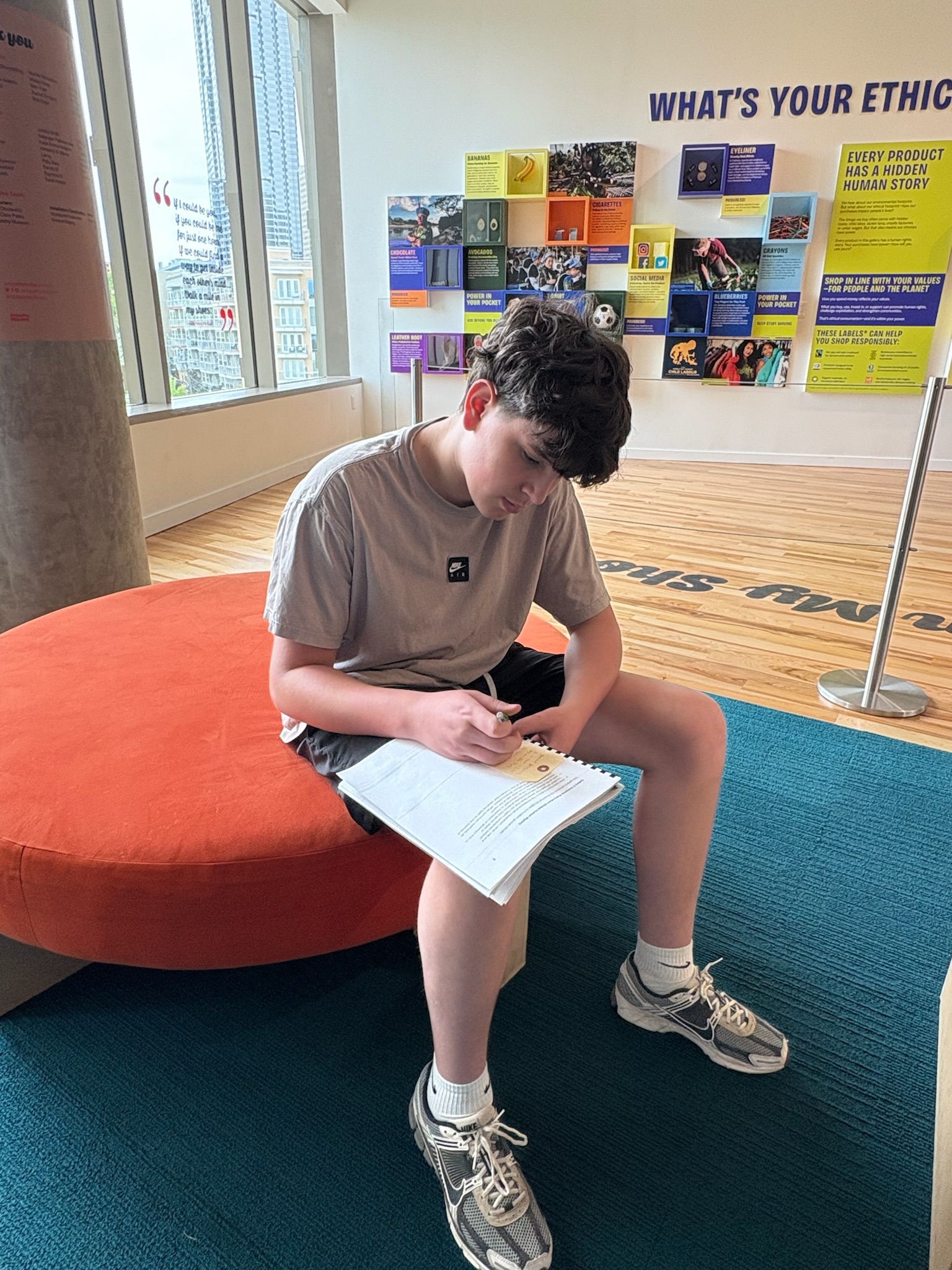
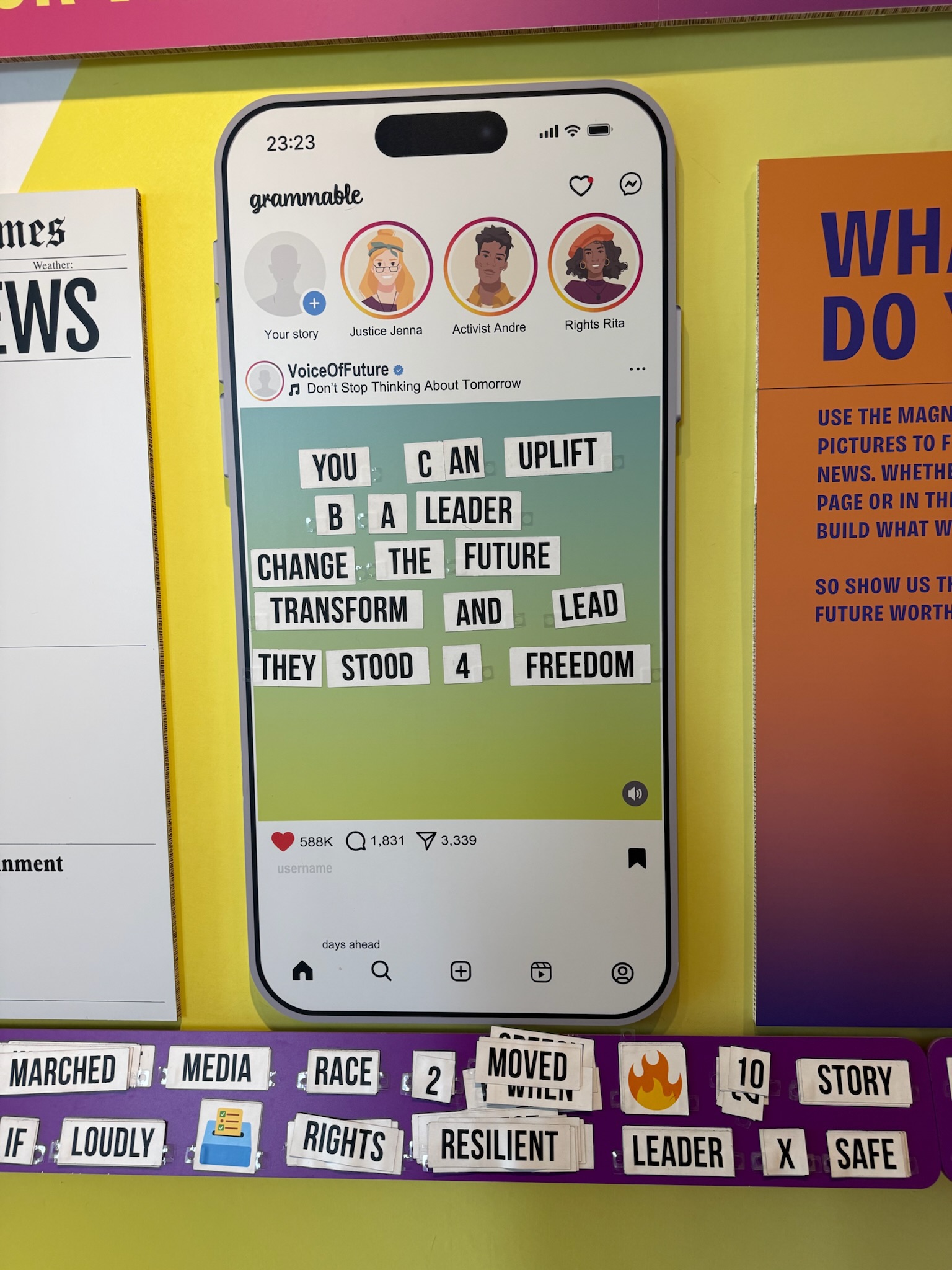
This exhibit included an Action Lab, where students could take a 12-question quiz to identify their “change maker type,” such as Investigator, Connector, or Disruptor.
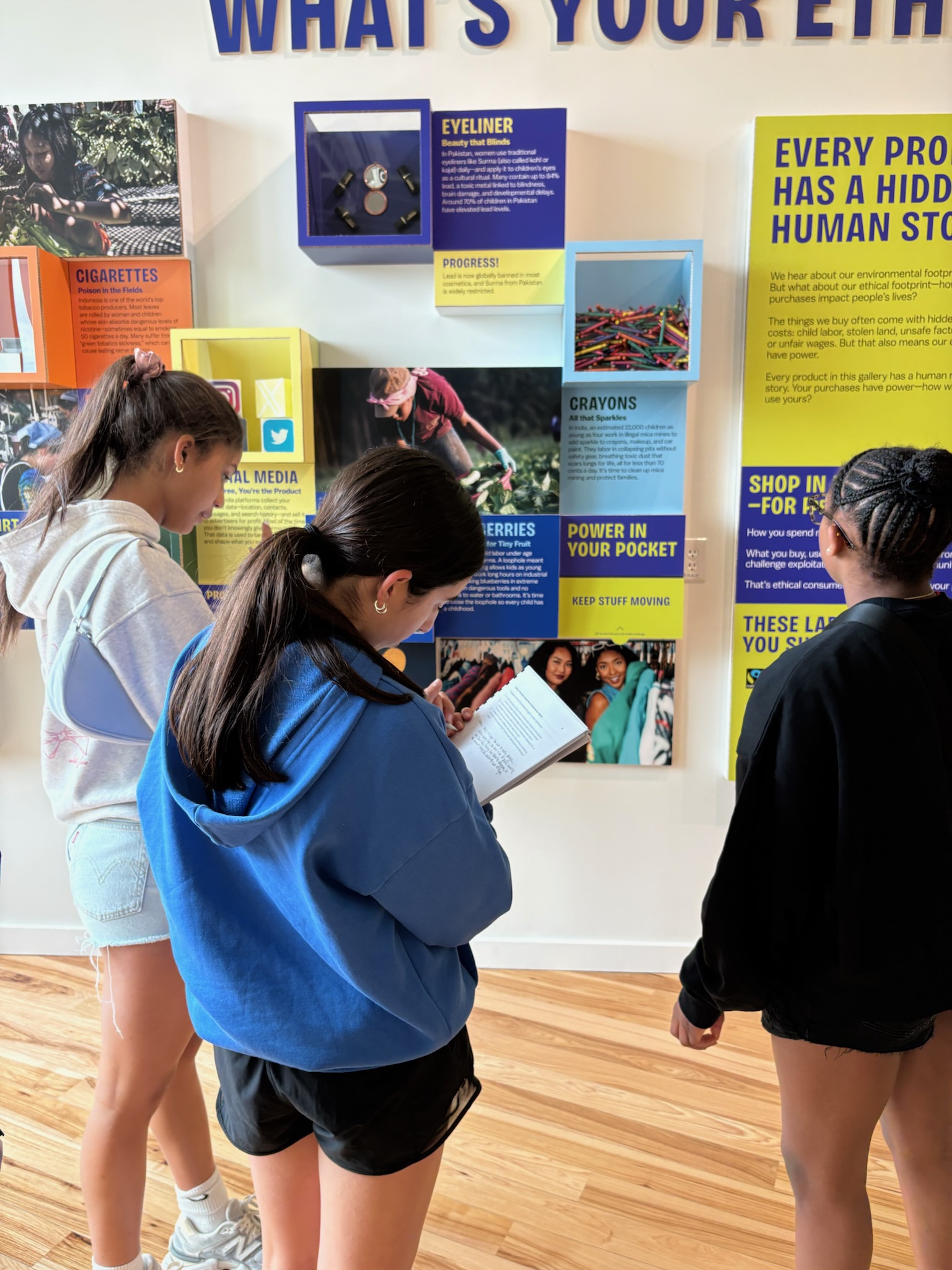
The lab encouraged visitors to identify their passion, and then browse a variety of tactics to bring about change, such as learning, connecting, amplifying, and joining.
Broken Promises – The Legacy of Reconstruction
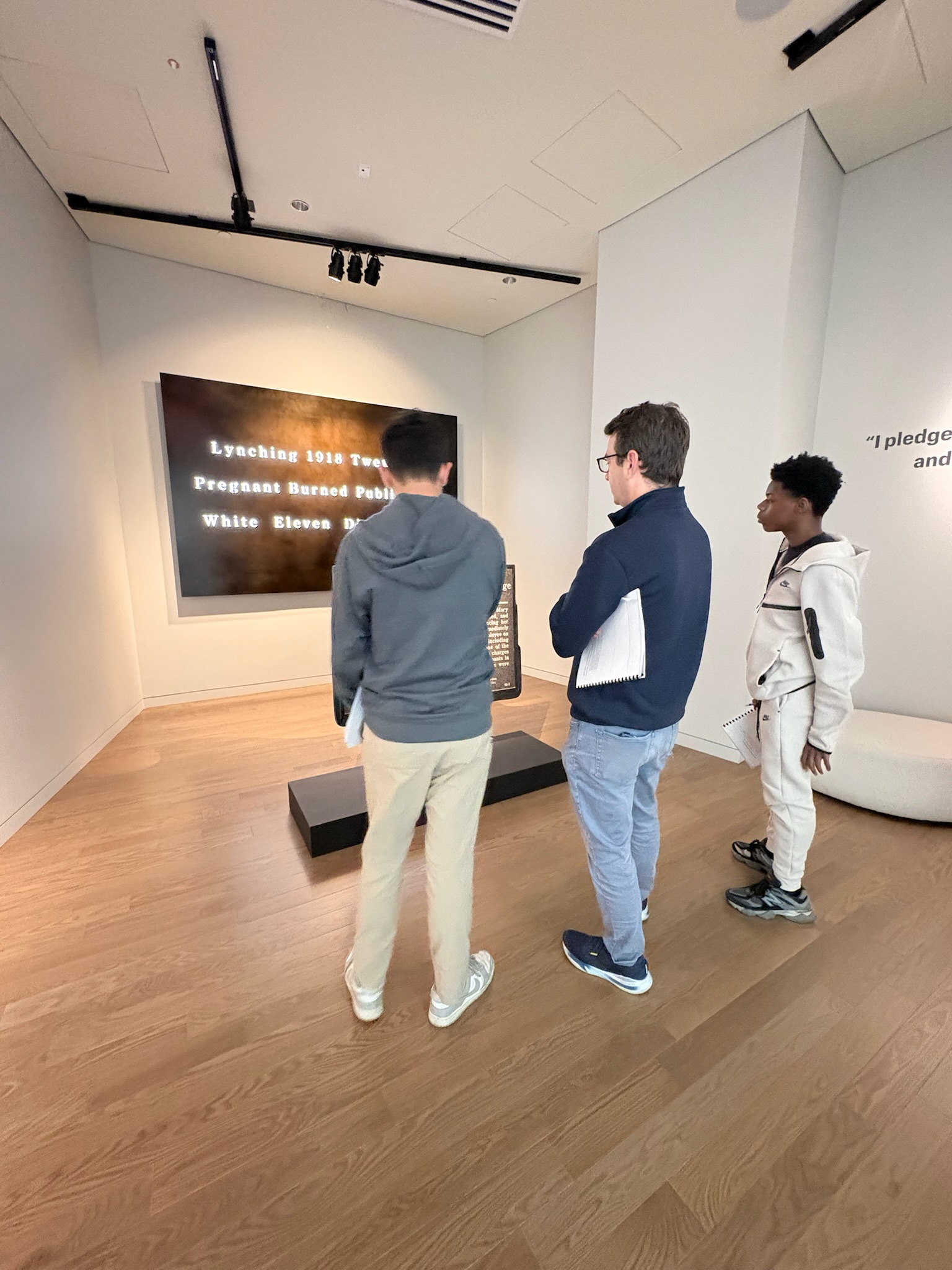
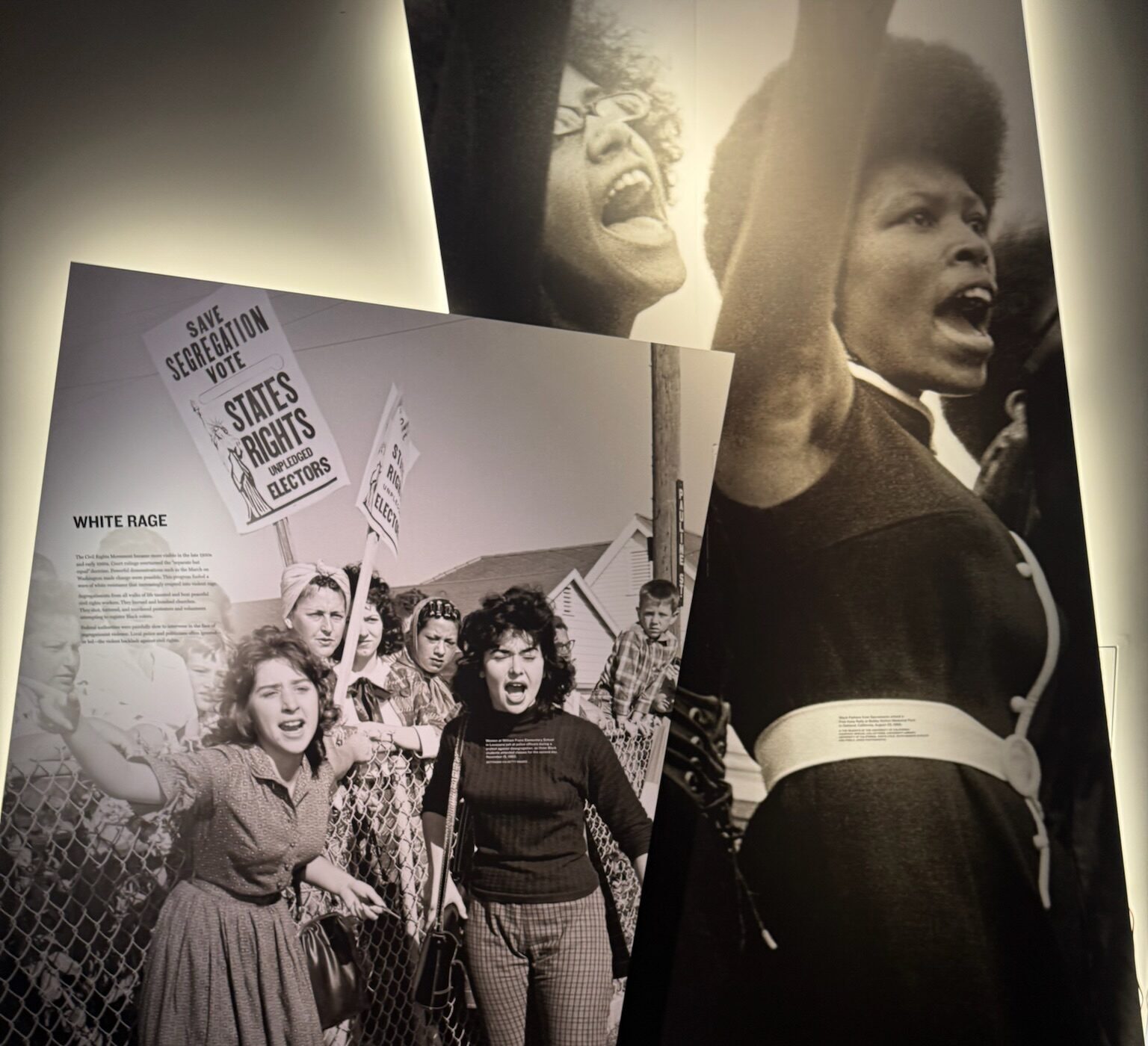
In connection with students’ study of Reconstruction, this exhibit began with the work of Ida B. Wells. She sought to rewrite the narrative on prejudiced storytelling and to transform Americans’ understanding of white supremacy. Her work challenged the justification of racial attacks, including lynchings, and explicitly focused on the white backlash to African American equality.
Storytelling was challenged throughout this exhibit as it examined the failures of the Reconstruction period for Black Americans. The exhibit ended with an art installation by Lonnie Turner about 21-year-old Mary Turner, who was lynched while eight months pregnant. Turner used the bullet-ridden plaque to memorialize her life and death with audio from her family members. Head of School Gabe Burnstein asked students to think deeply about why the artist chose the words Turner used on the plaque rather than those of her family members.
Visitors had space to reflect on how to fix broken promises, such as the freedom, hope, and repair the Reconstruction era once promised.
As we departed the museum, one student reflected: “The museum really helped me put a face and story to all of the people that we’ve been learning about.”
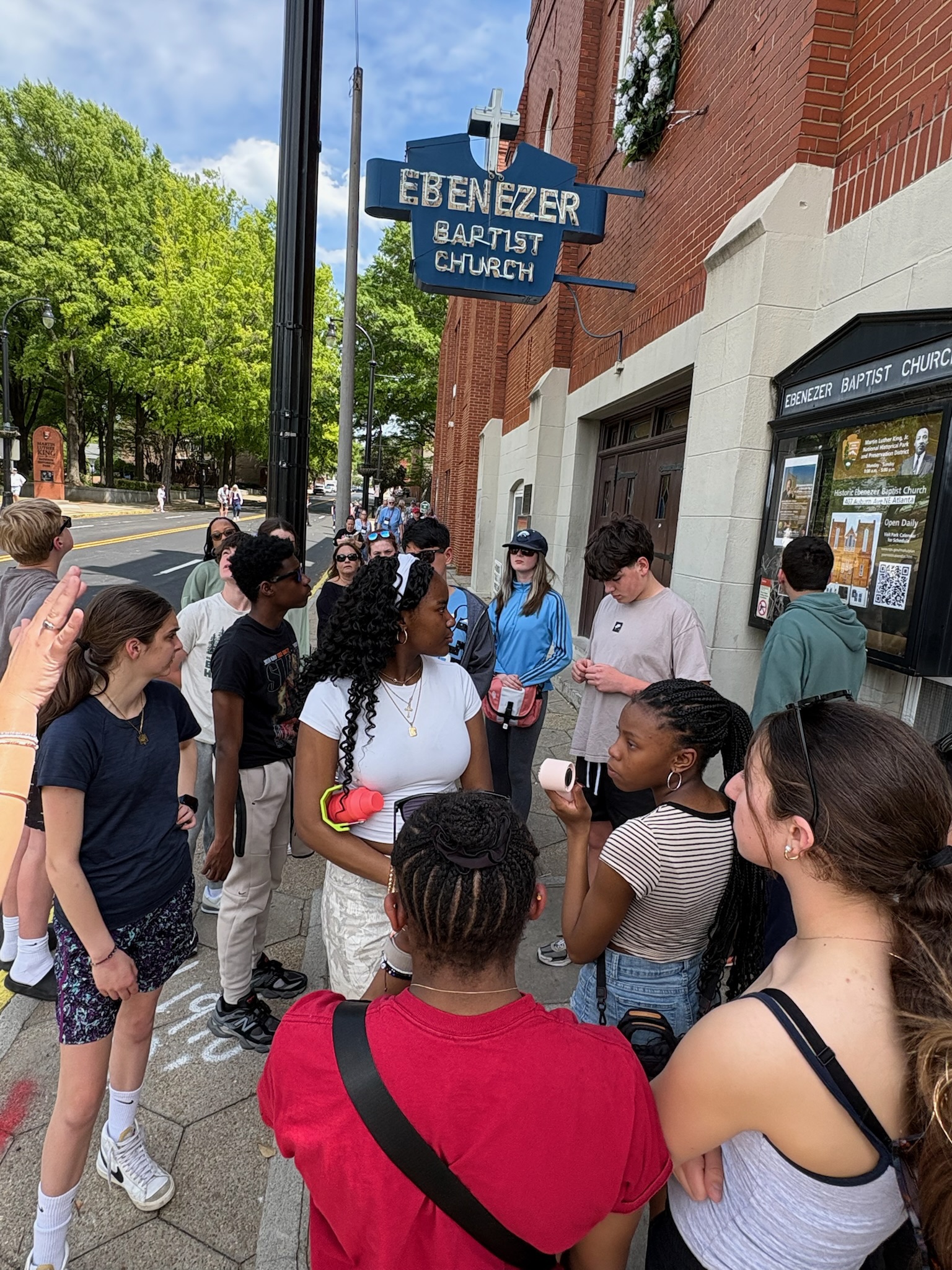
After stopping for lunch at ShakeShack and enjoying some shade from the hot Atlanta sun, we headed to Sweet Auburn Avenue to visit the neighborhood of Dr. Martin Luther King Jr.’s birthplace.
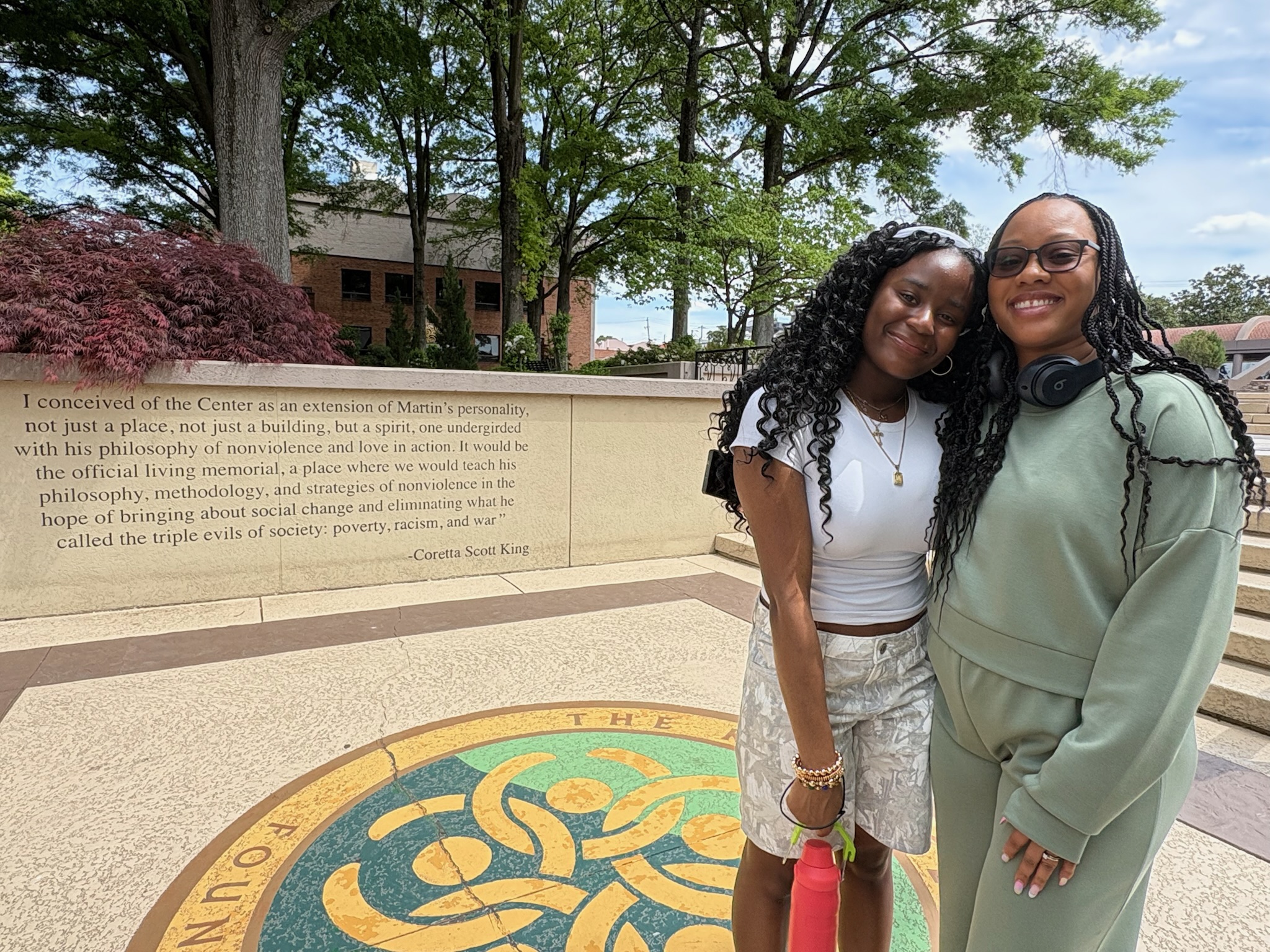
Tessa led us on a tour to the Ebenezer Baptist Church where MLK Jr.’s father and grandfather preached, and where MLK Jr.’s memorial was held following his death.
Tessa shared that his father once made him apologize to the congregation for dancing in public, an example of MLK Jr. challenging the often strict decorum of the church’s expectations. Georgia Senator Ralph Warnock has been the senior pastor at the church since 2005.
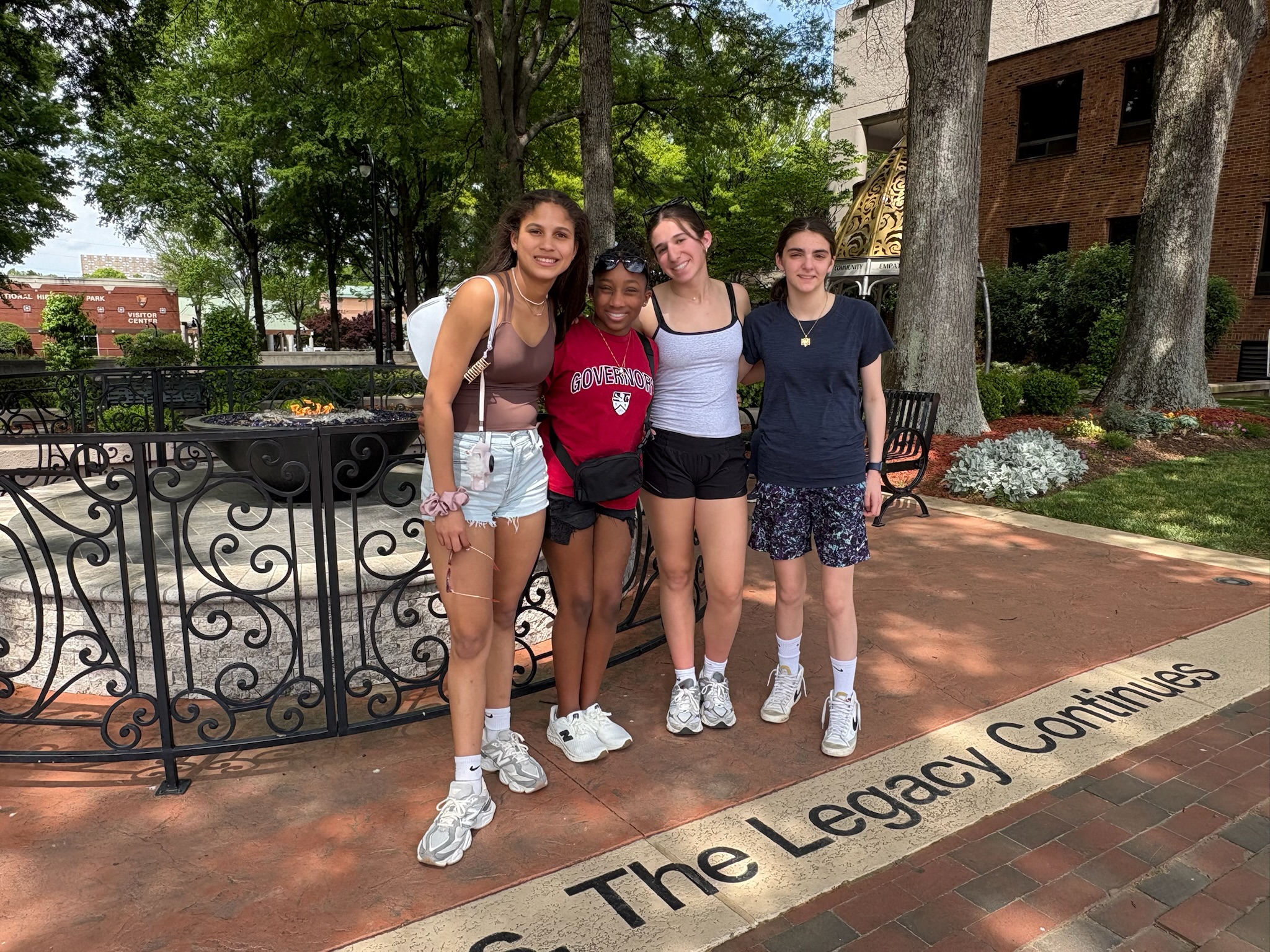
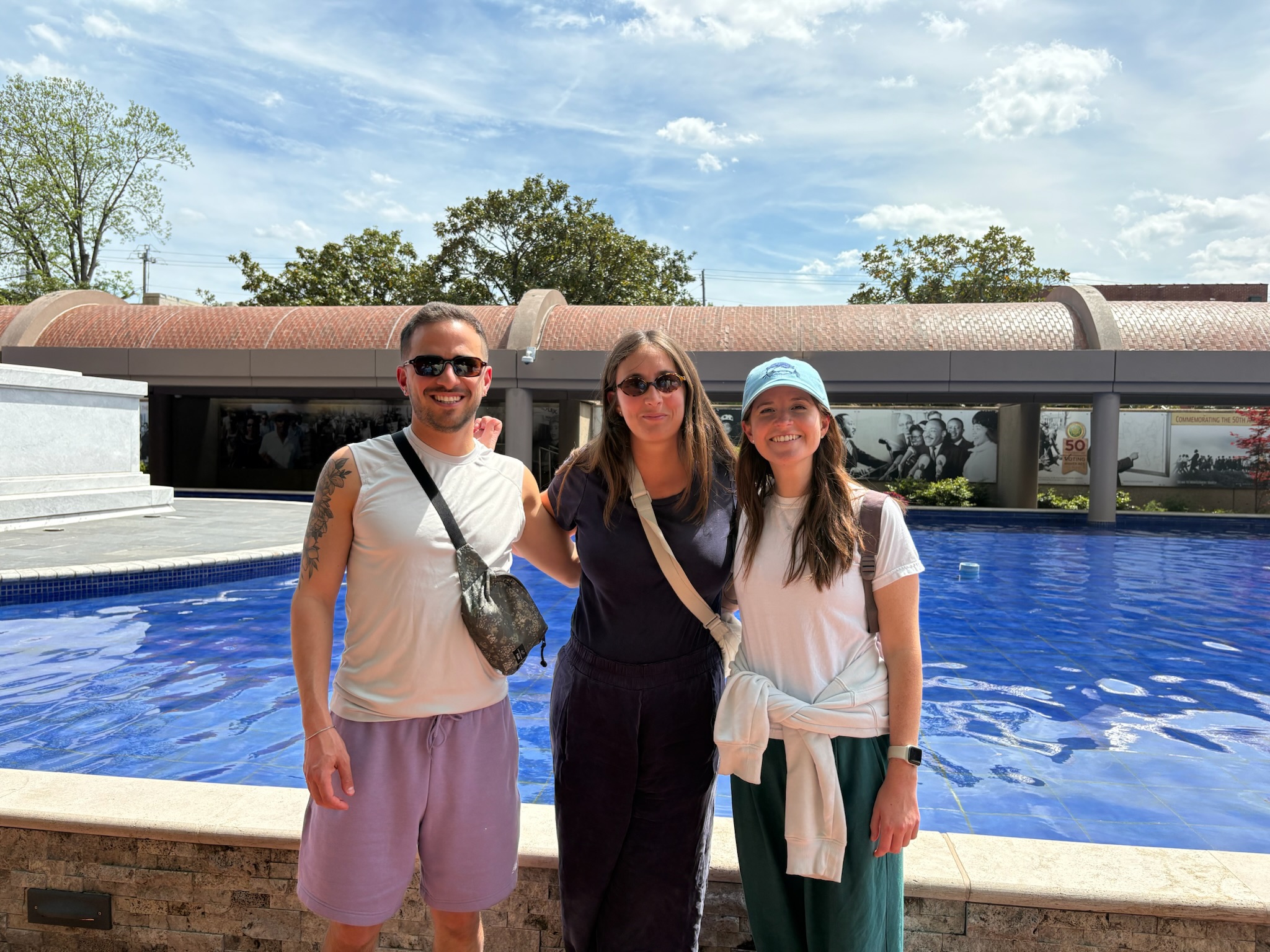
We visited the tombs of Dr. Martin Luther King Jr. and his wife and Civil Rights leader, Coretta Scott King.
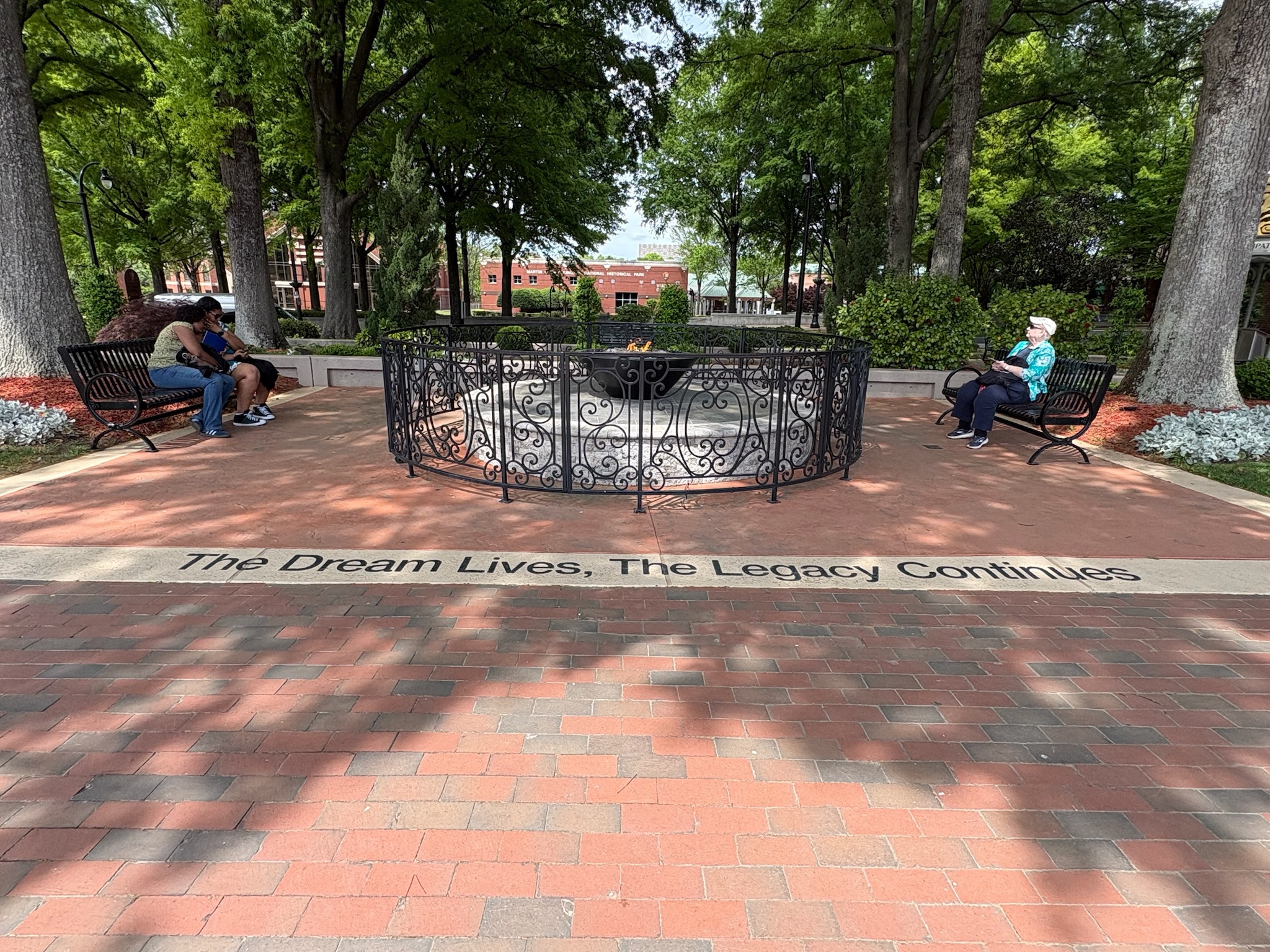
The memorial site features an eternal flame and reflecting pool, honoring the Kings’ lives and legacies. It was erected in 1970, and Dr King’s body was moved there the same year, later to be joined by his wife.
Tessa noted: “I want us to think about water as a theme from the different places we will visit from the Civil Rights movement throughout this trip.”
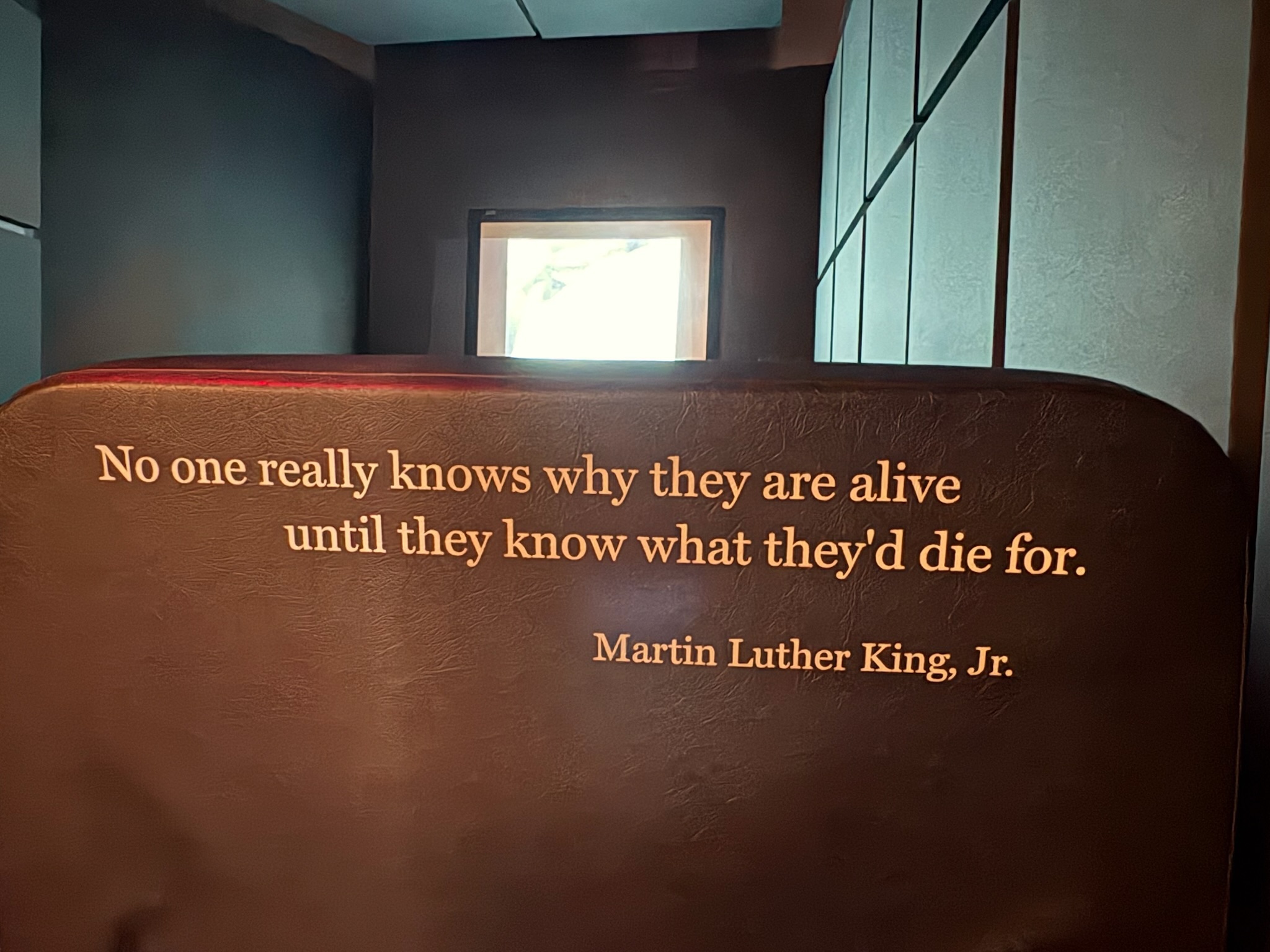
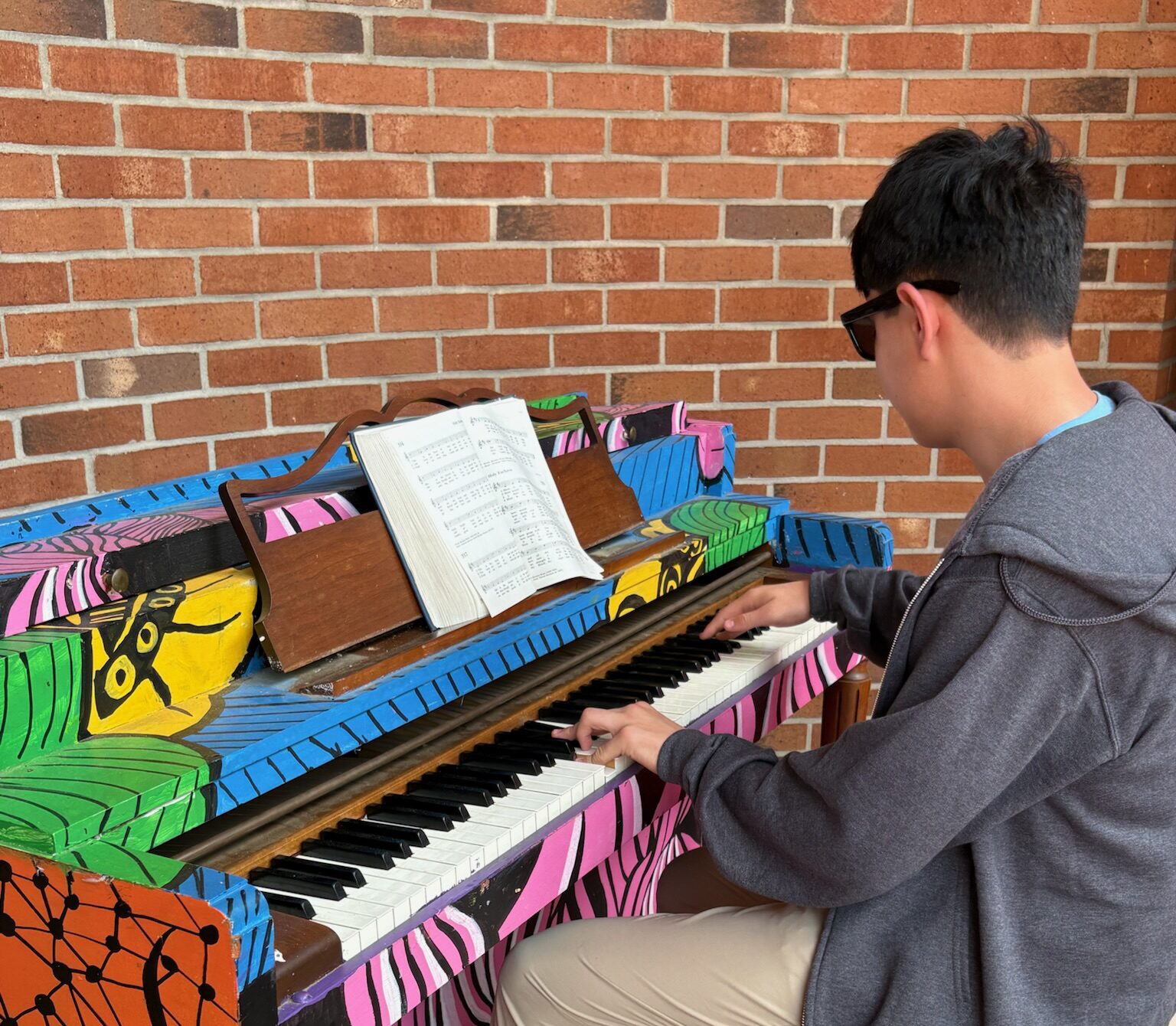
After the tour, we settled in for a scenic drive through Alabama (with a mandatory stop at the iconic Buc-ees travel center) and arrived in Montgomery, the state capital and a pivotal city in the Civil Rights Movement (and a new time zone!)
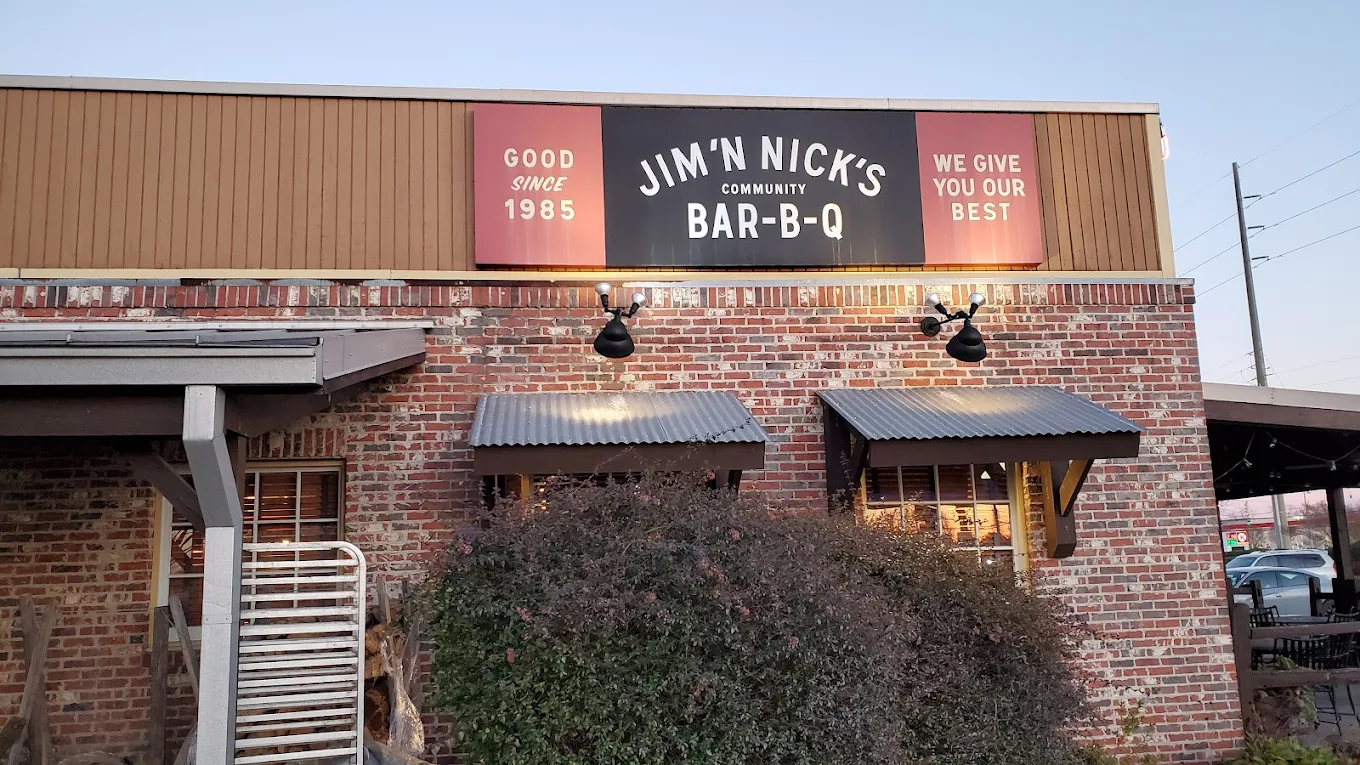
We stopped at the hotel to drop off our bags, and then made our way over to Jim N Nicks to enjoy southern BBQ cuisine!
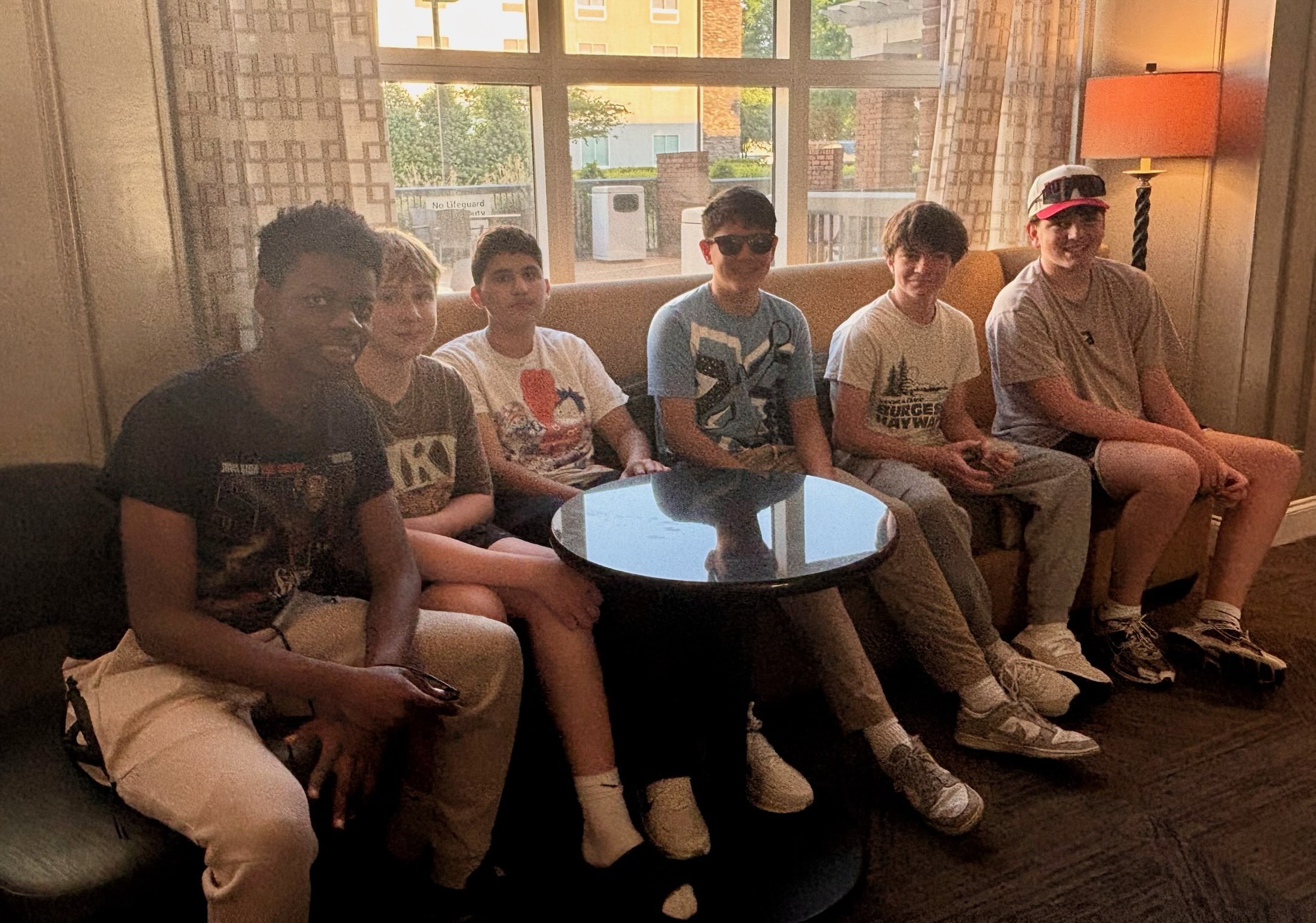
We ended the night with some family group time to reflect on the day and a much needed good night’s sleep before day two in Montgomery and Selma!