
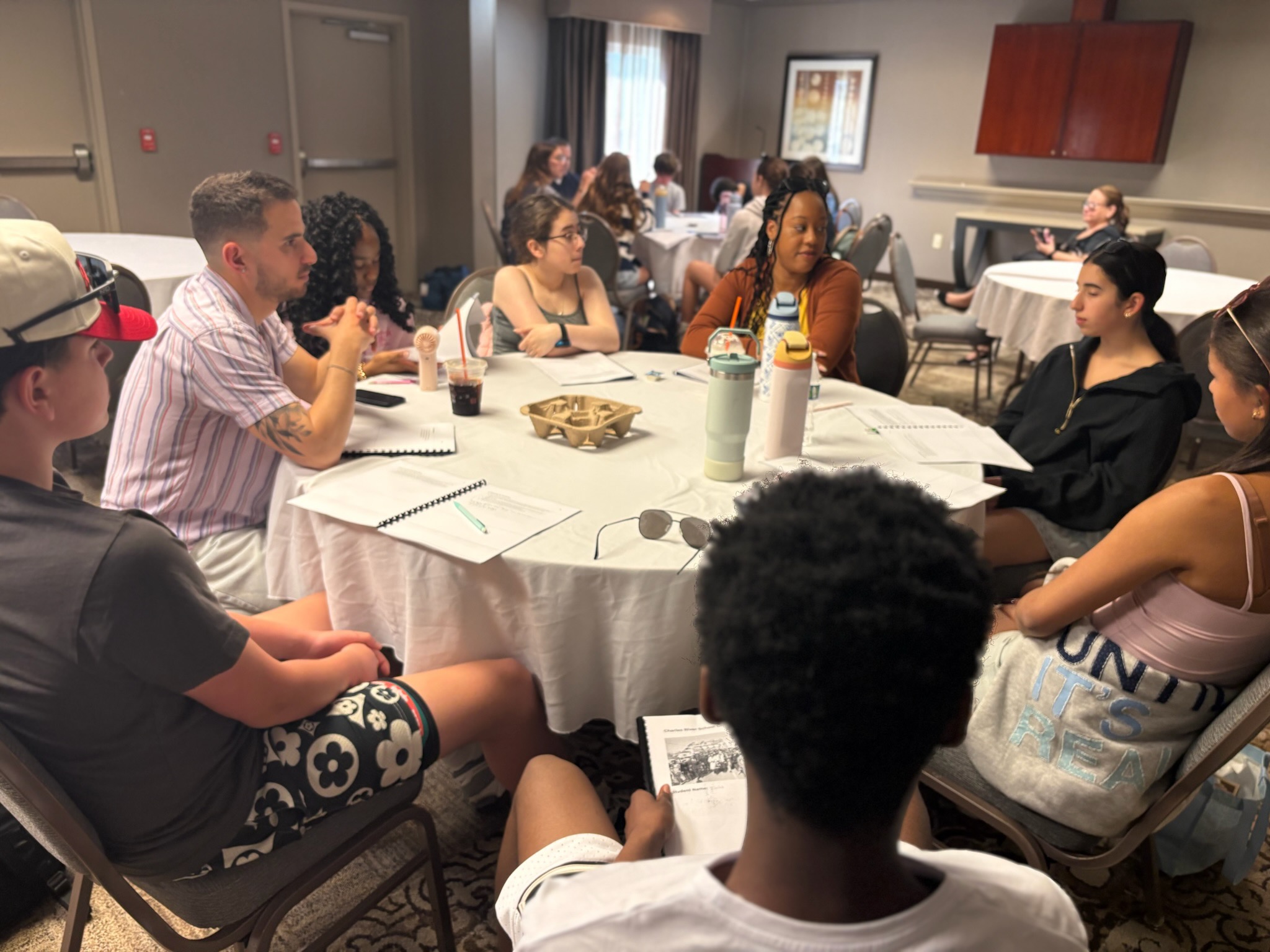
The day began with reflection time in family groups. Students talked about their most significant takeaway from our first day, how it shaped their understanding of the Civil Rights Movement, and their expectations for the rest of the trip. We shared what we hoped to gain from our time in Selma later that afternoon.
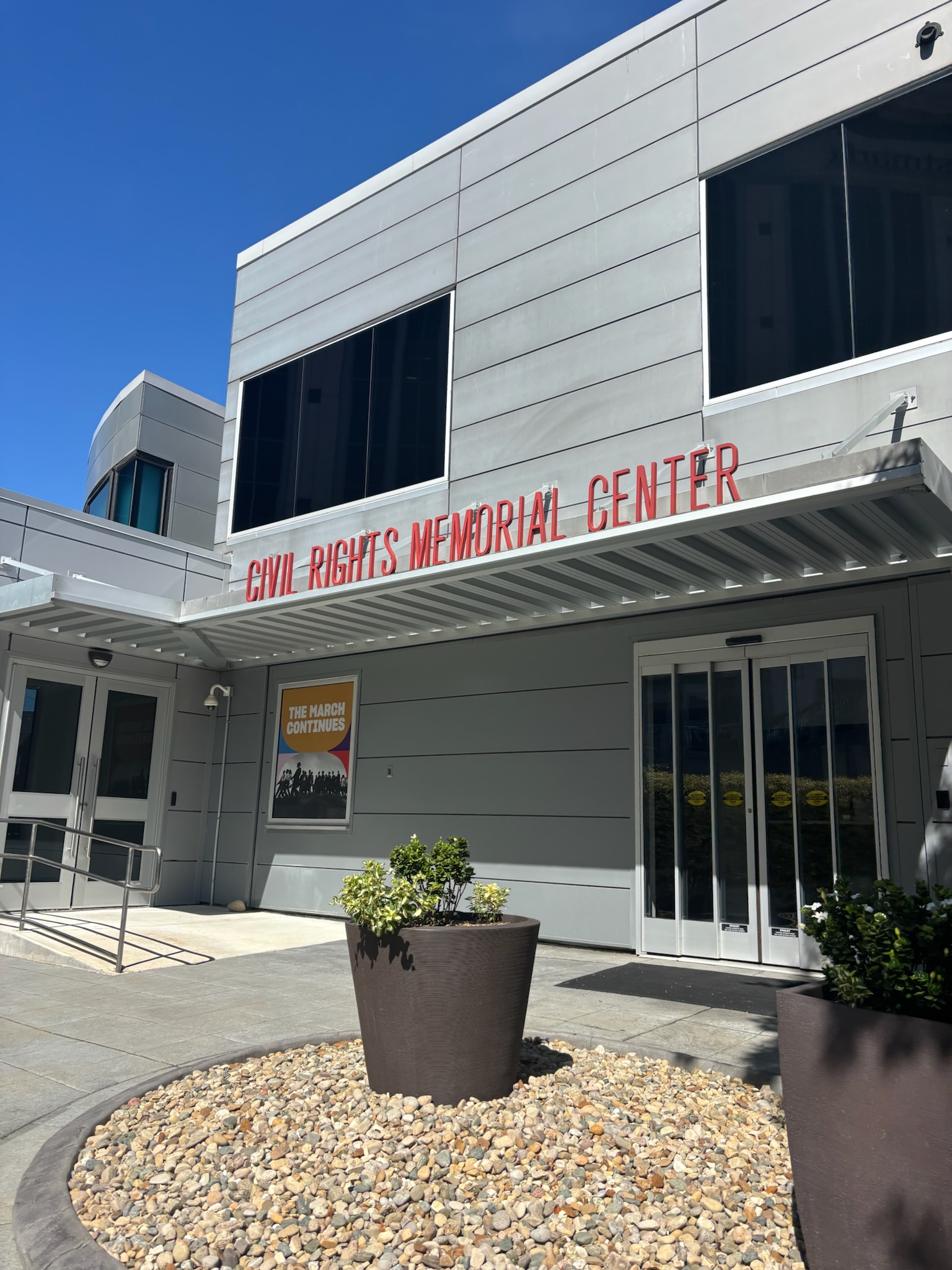
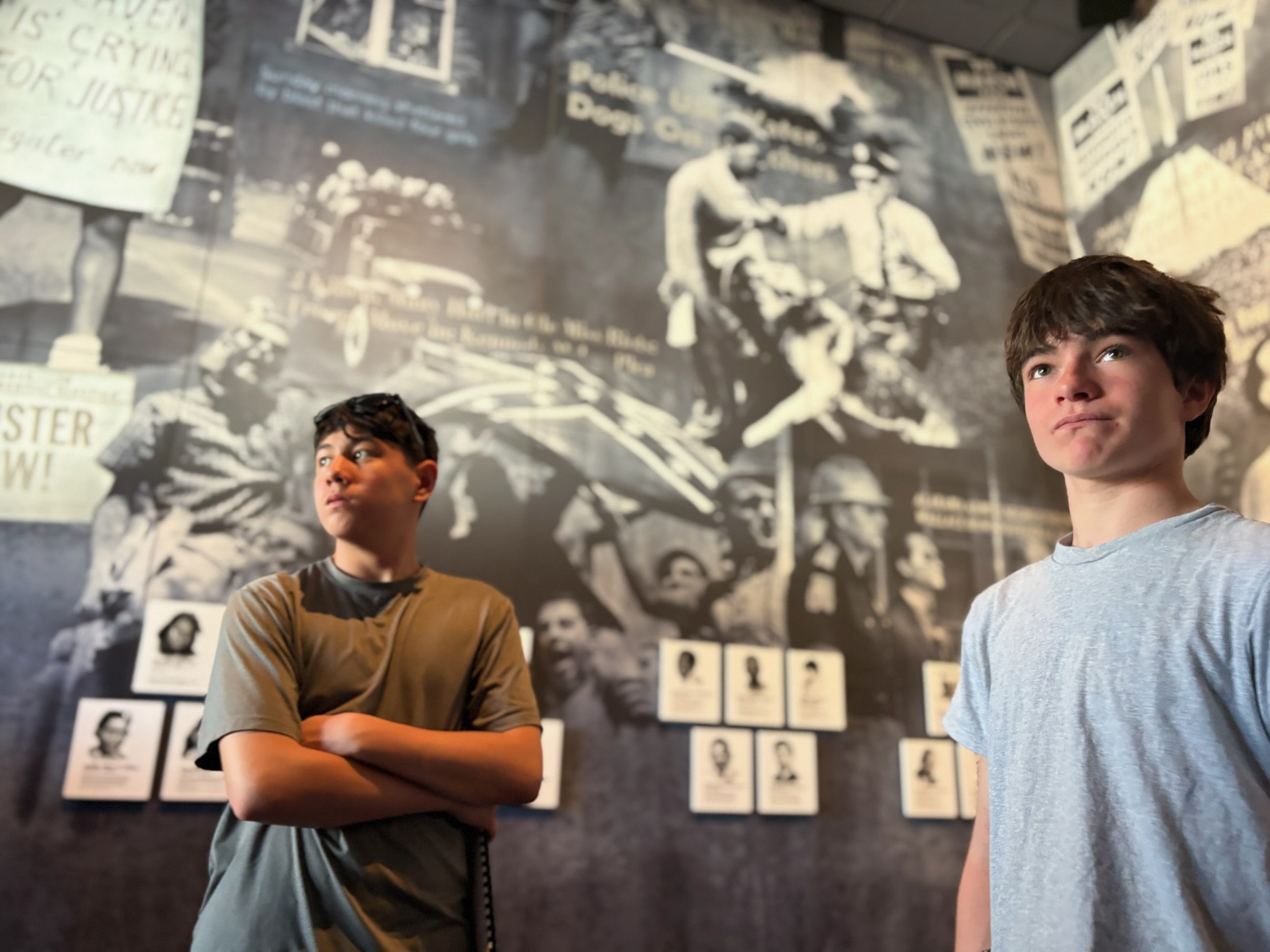
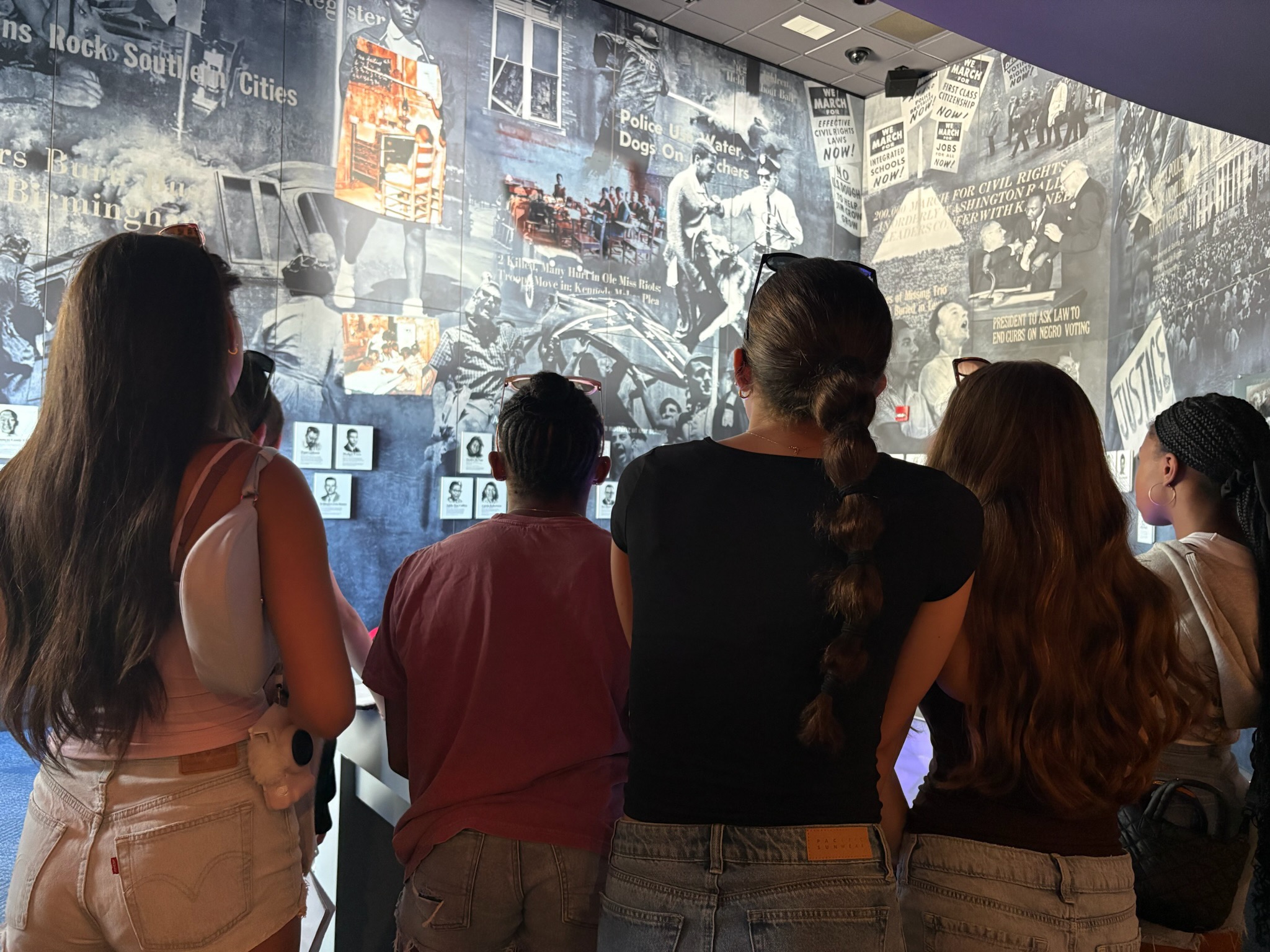
After breakfast, we arrived at our first stop of the day: the Southern Poverty Law Center’s Civil Rights Museum and Memorial in Montgomery. The SPLC was founded in the wake of the Civil Rights Act of 1965 and has since expanded to include researchers, educators, and community organizers who are tracking hate groups and fighting legislation that restricts civil rights.
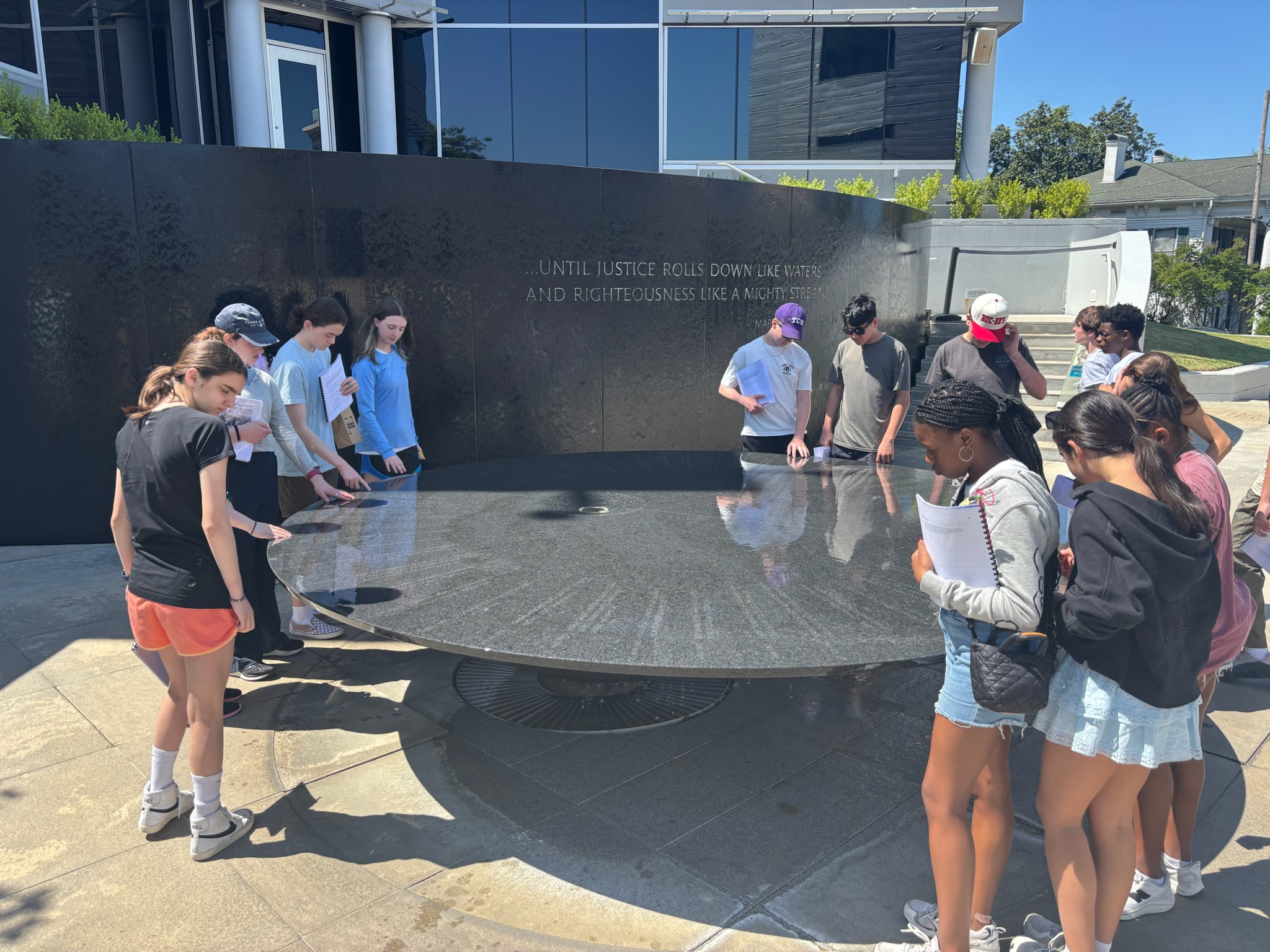
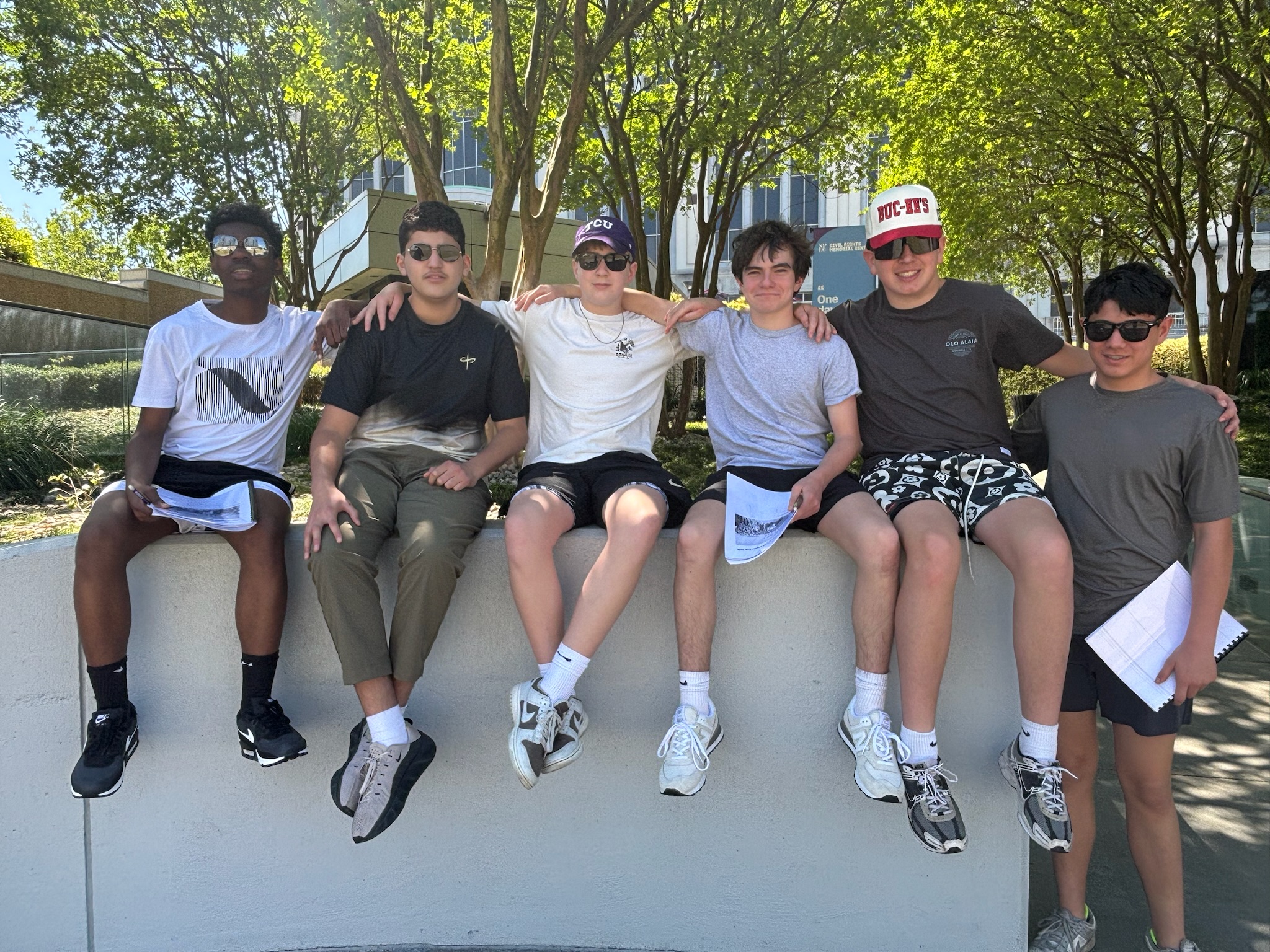
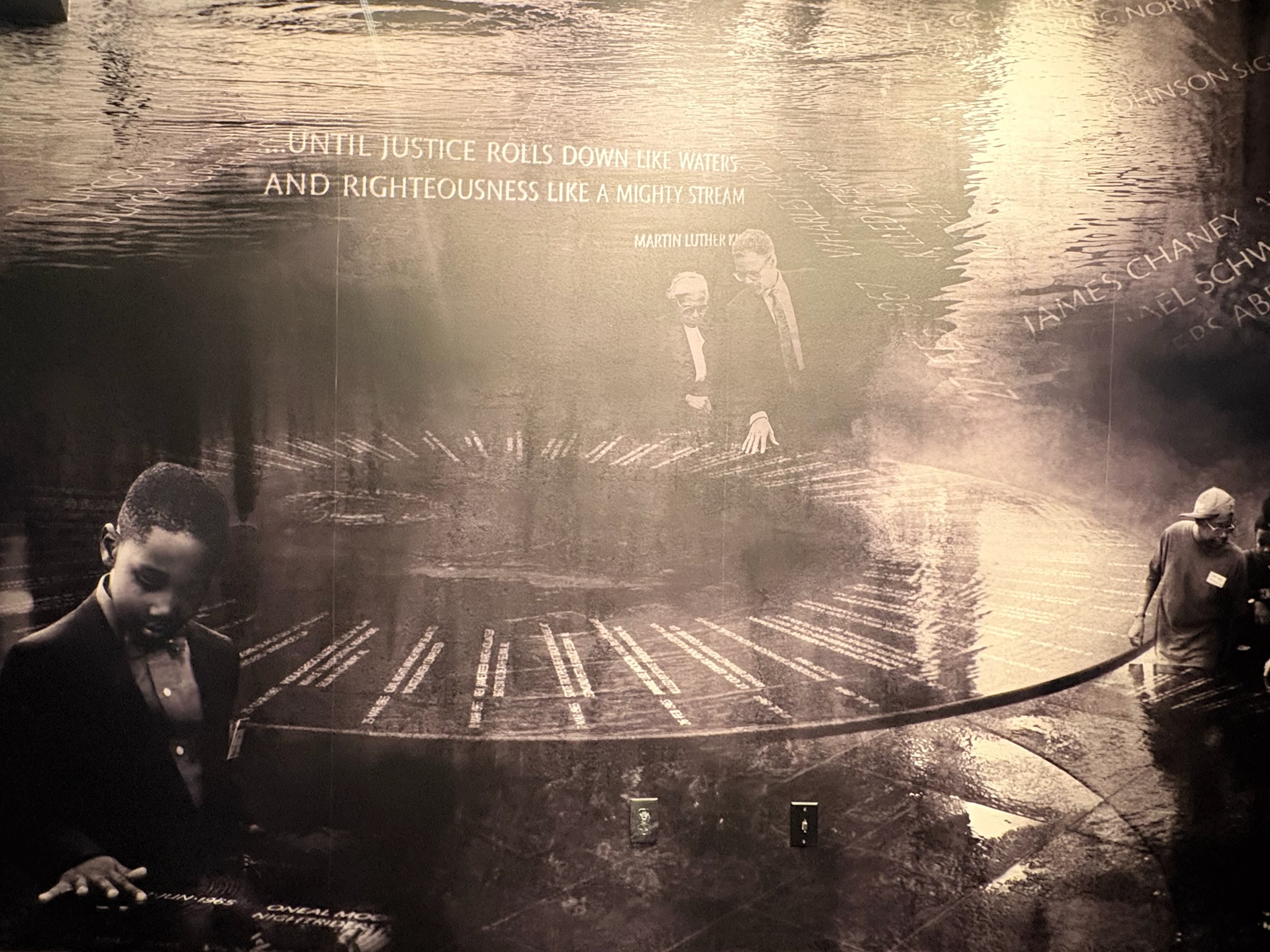
The Civil Rights Memorial at SPLC (pictured here with the Class of 2026) is a tribute to martyrs of the movement. The memorial was created by artist Maya Lin and dedicated in 1989. Lin found inspiration from MLK’s I Have a Dream Speech: “We will not be satisfied until justice rolls down like waters and righteousness like a mighty stream.”
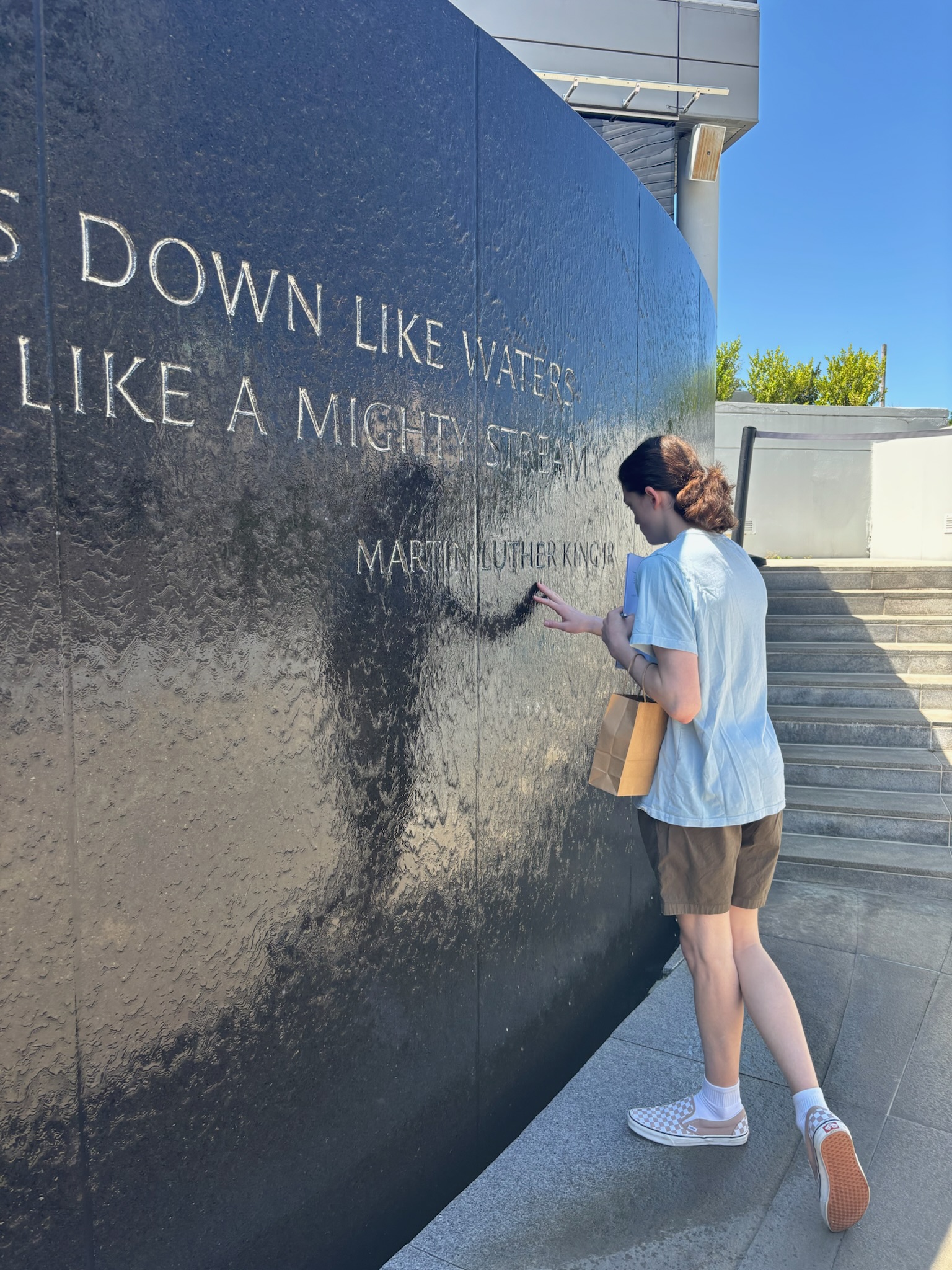
On the Memorial’s circular table, water emerges from the center and flows across a timeline of the movement and over the names of 40 martyrs.
One student asked our guide, Lauren, why she joined the Southern Poverty Law Center. Lauren shared she started her work in 2022 because she felt complacent. “I was born and raised and Alabama and always wanted to help. I felt like I wasn’t doing anything of purpose so I came to Montgomery and had conversation with myself to do better and find work that would challenge me every day.”
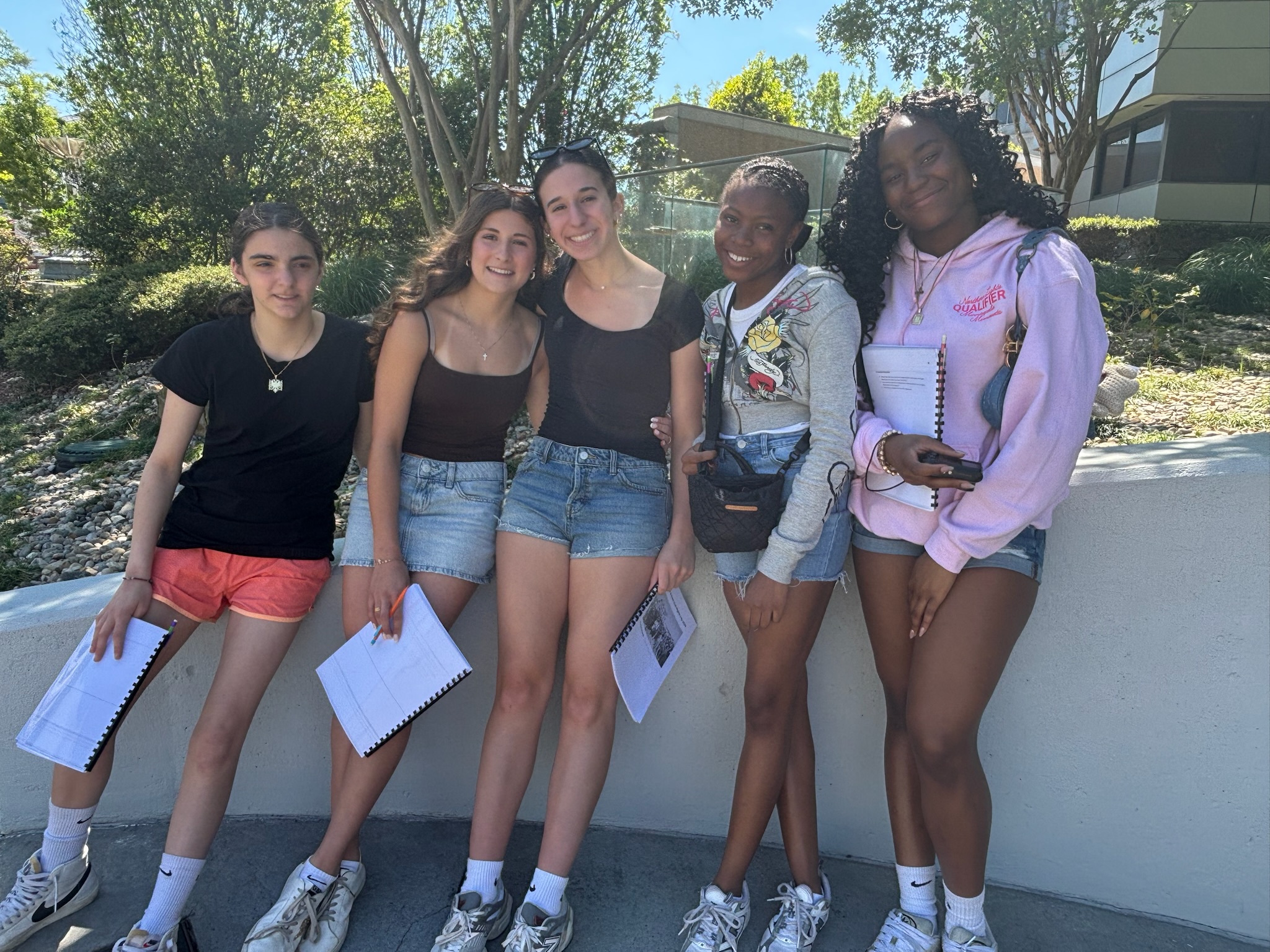
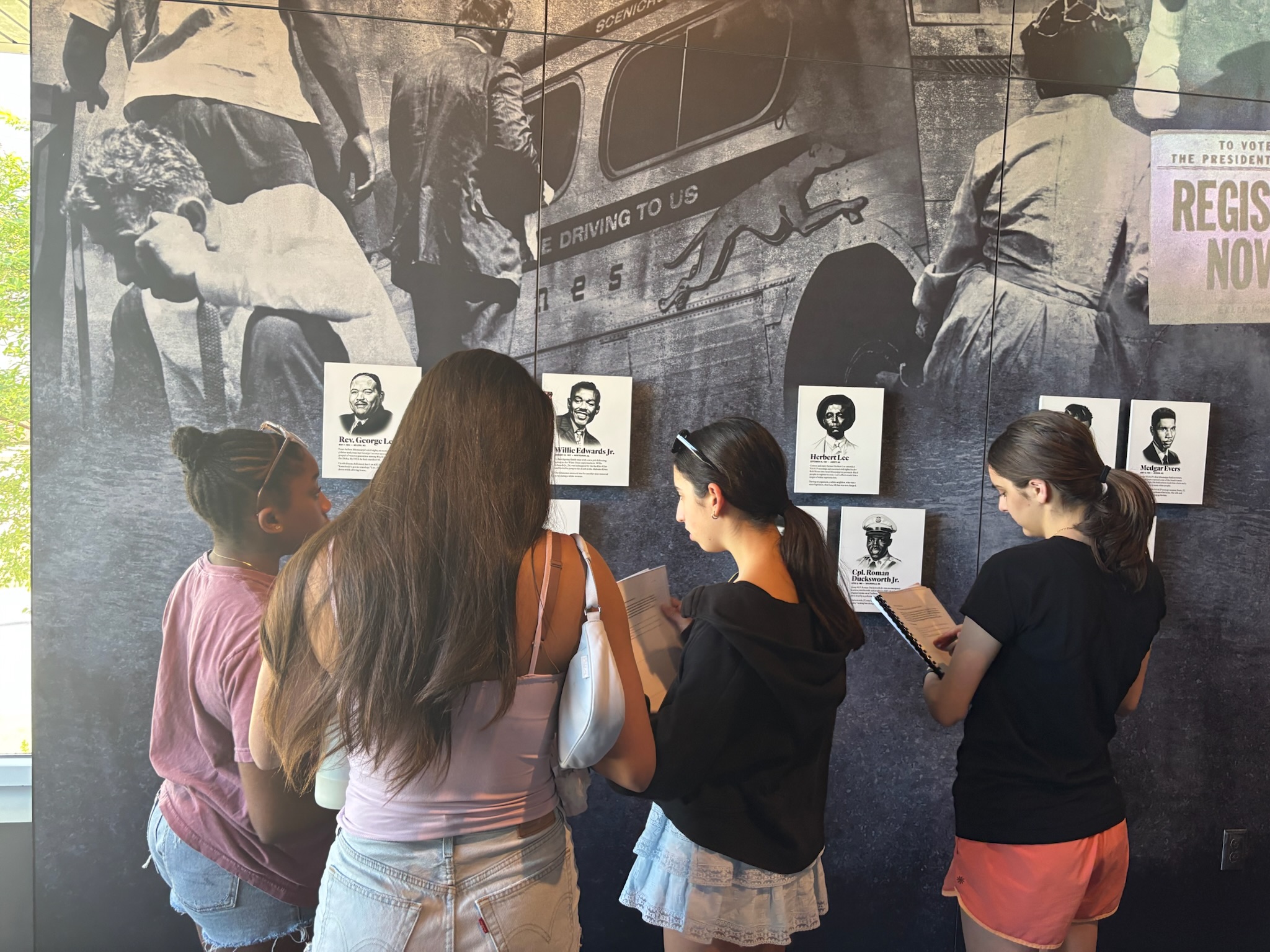
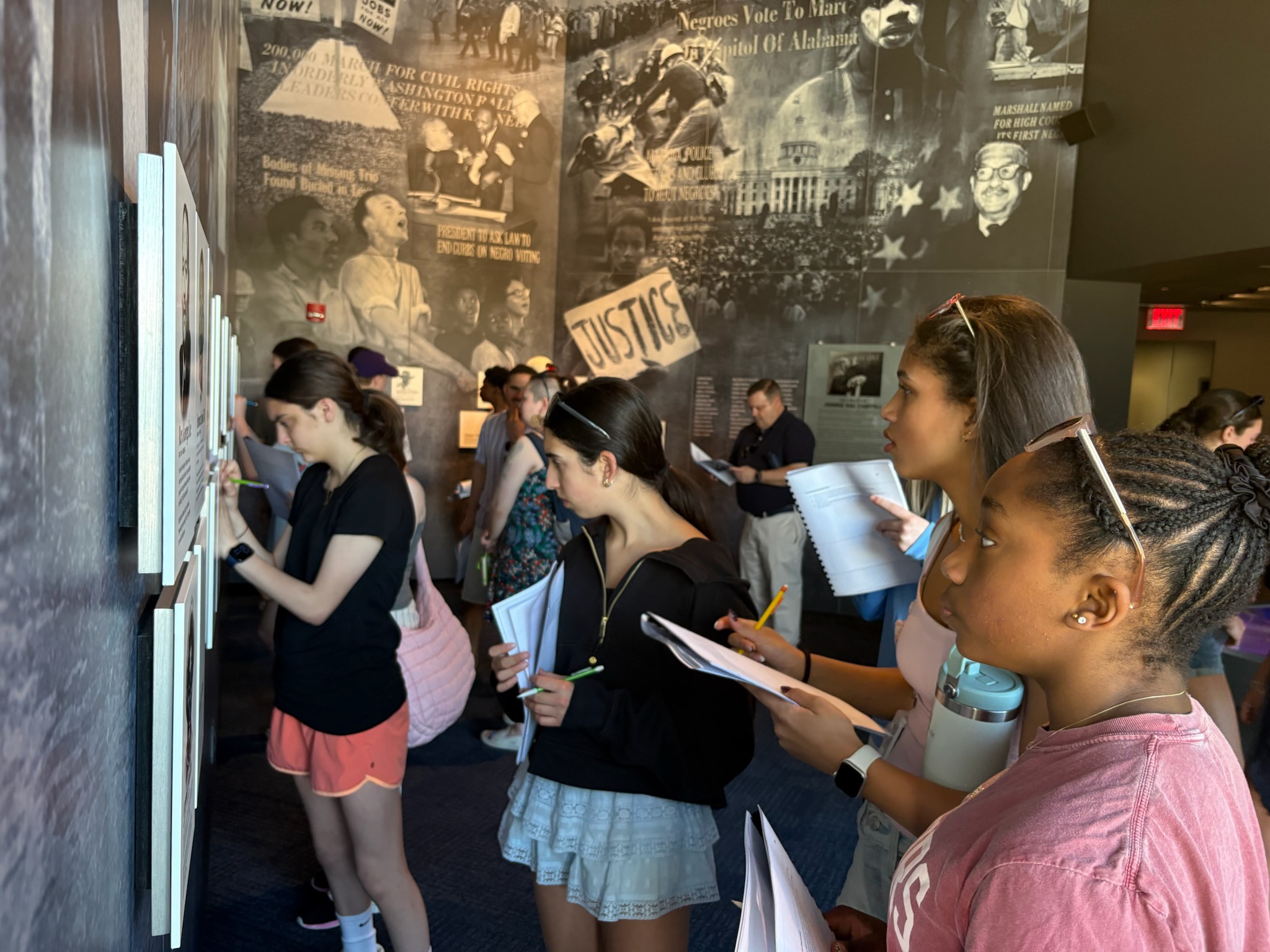
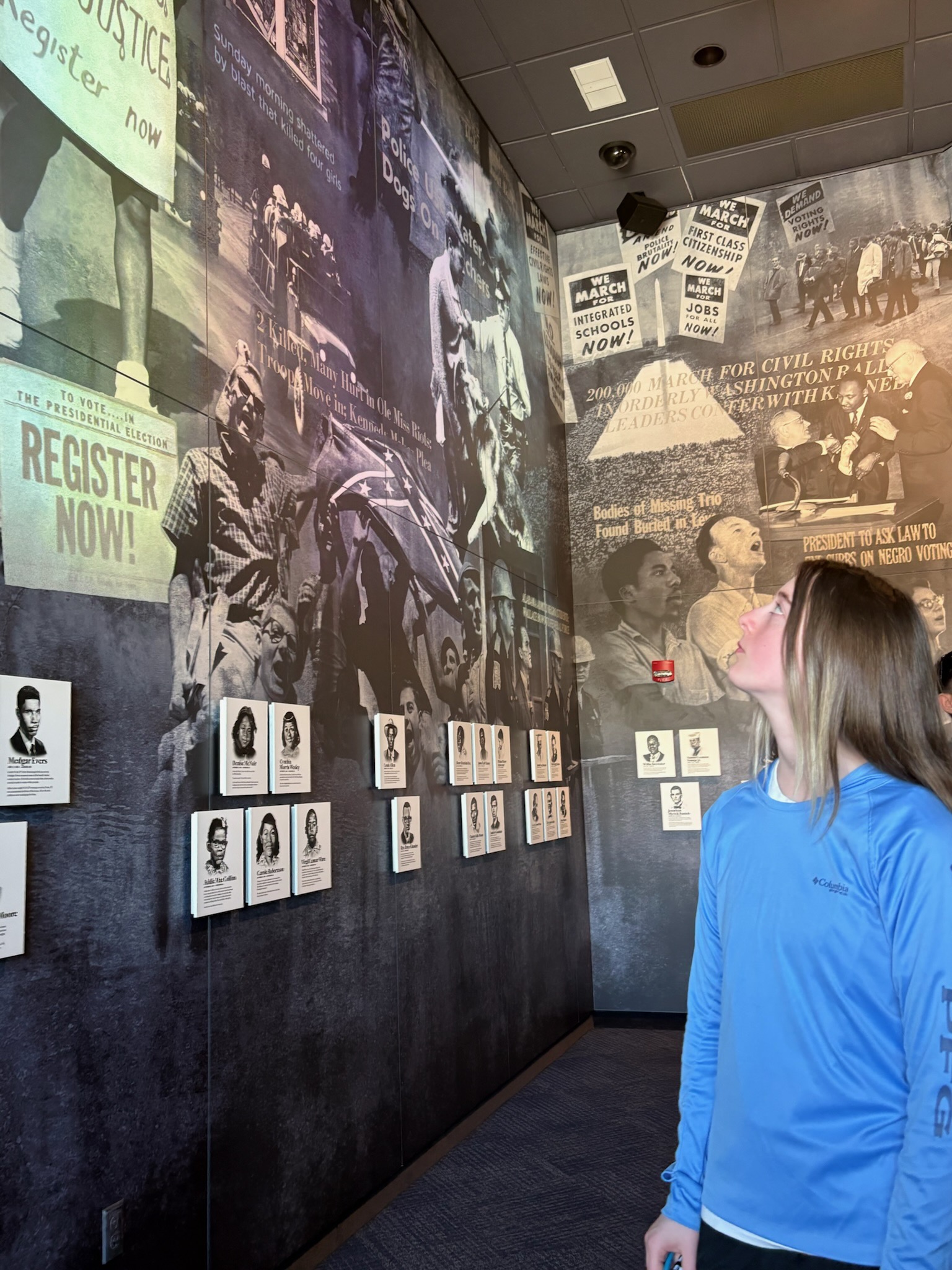
We visited each exhibit space: The Martyr Room, Apathy is not an Option, The March Continues, and the Wall of Justice and wrote down our thoughts and reflections on each.
We watched two short films. One focused on a timeline of figures from the Civil Rights movement that coincided with the Memorial including Jimmie Lee Jackson, Reverend James Reeb, Viola Liuzzo, Medgar Evers, Emmett Till, and George Lee. The film also shared testimonies from people who lived through the movement.
We then watched a 15 minute film titled “Apathy Is Not An Option.”
Prior to the film, Tessa Steinert Evoy asked the students to consider Julian Bond’s, the first chairperson of SPLC, famous quote about the“Master Narrative” of the Civil Rights movement: “Rosa sat down, Martin stood up, then the white folks saw the light and saved the day.” Students have used this quote to challenge the typical story of the movement and the ongoing struggles and progress 60 years later.
The film presents the Black freedom struggle as a continuation from the 1950 & 60s Civil Rights movement through the Black Lives Matter protests of 2020 to present day. It touches on John Lewis’ power of “good trouble” theory that has gone virtual in the 21st century.
The film also looked at voting rights and underscored that we cannot influence change without the right to vote.
“Until the world is just, there will always be a movement.”
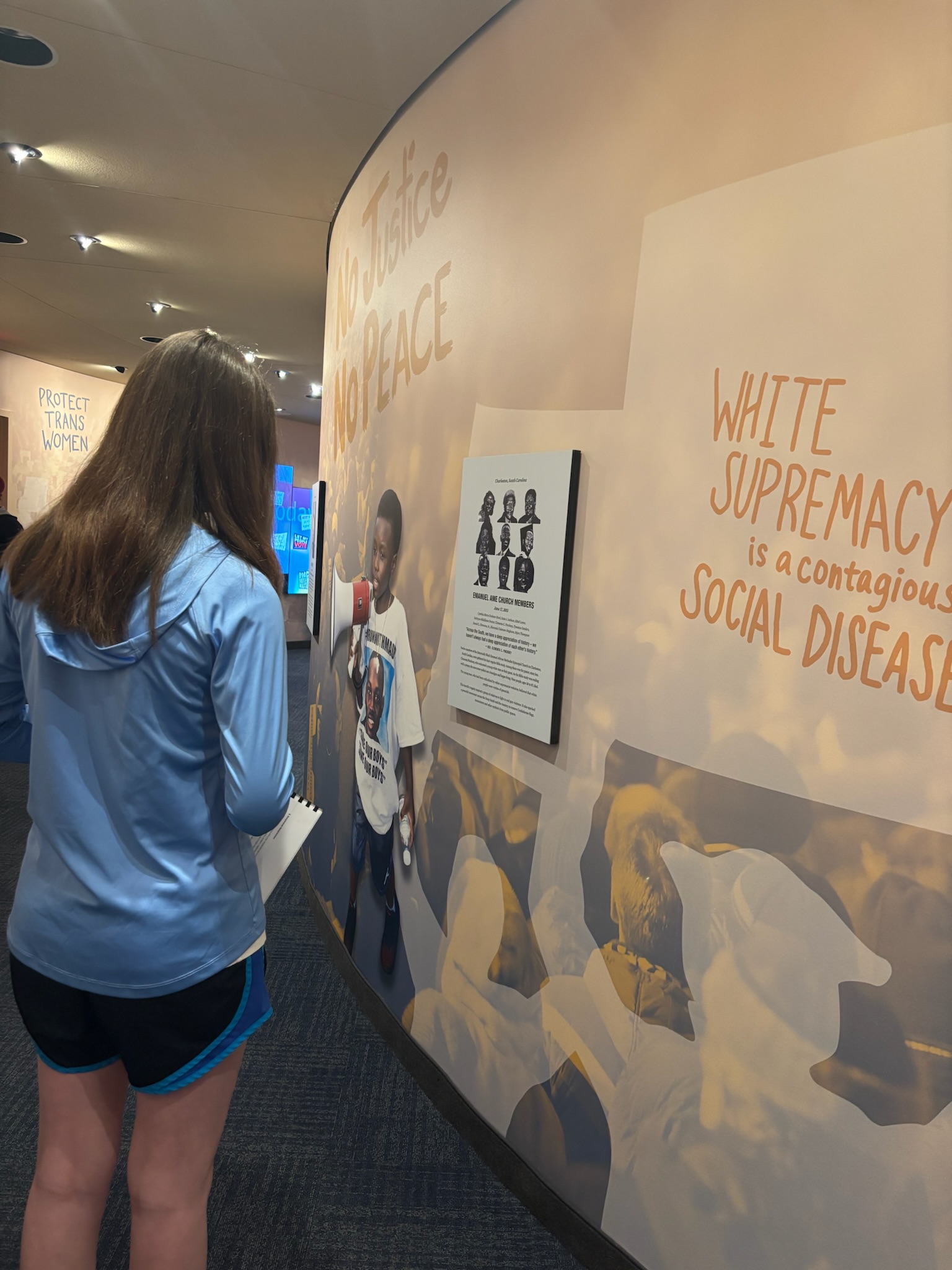
The SPLC is centered on what each person can do in their sphere of influence to fight for justice, equality, and human rights- the ideals for which the Civil Rights martyrs died.
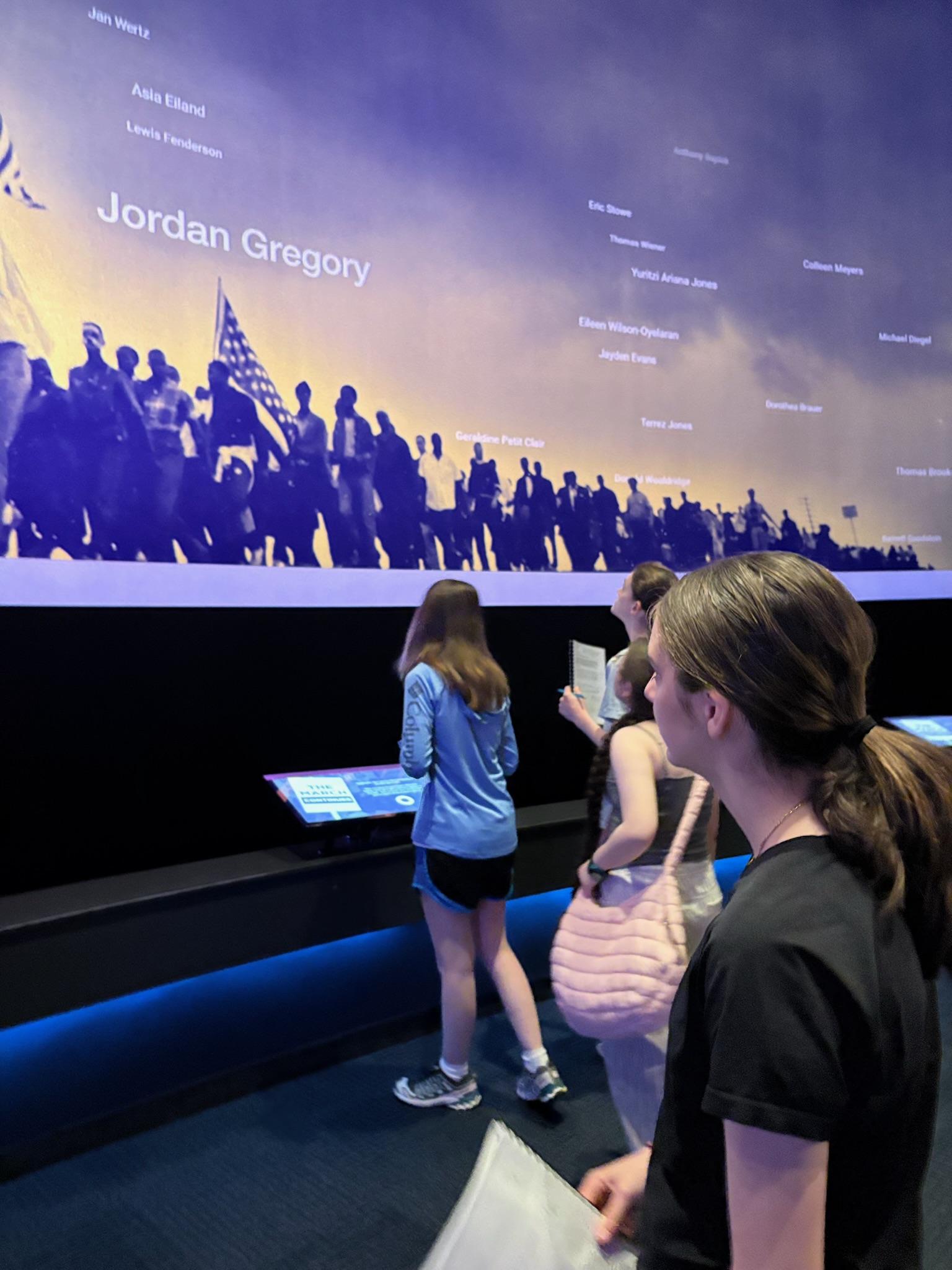
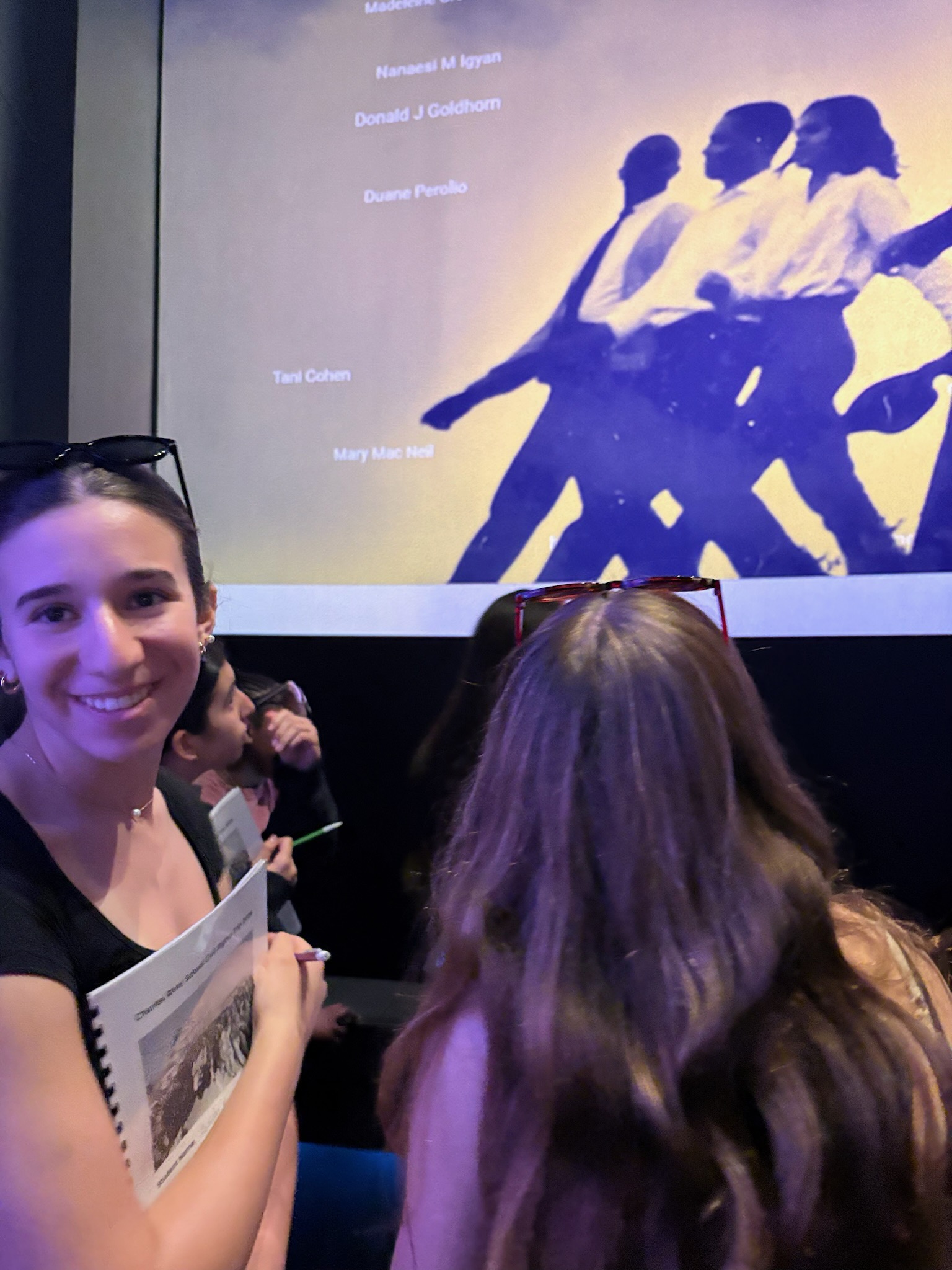
CRS students chose to sign the Wall of Justice and pledge to take a stand against hate, injustice, and intolerance. Their names cascaded digitally across the wall with many others, similar to the flow of water on the memorial.
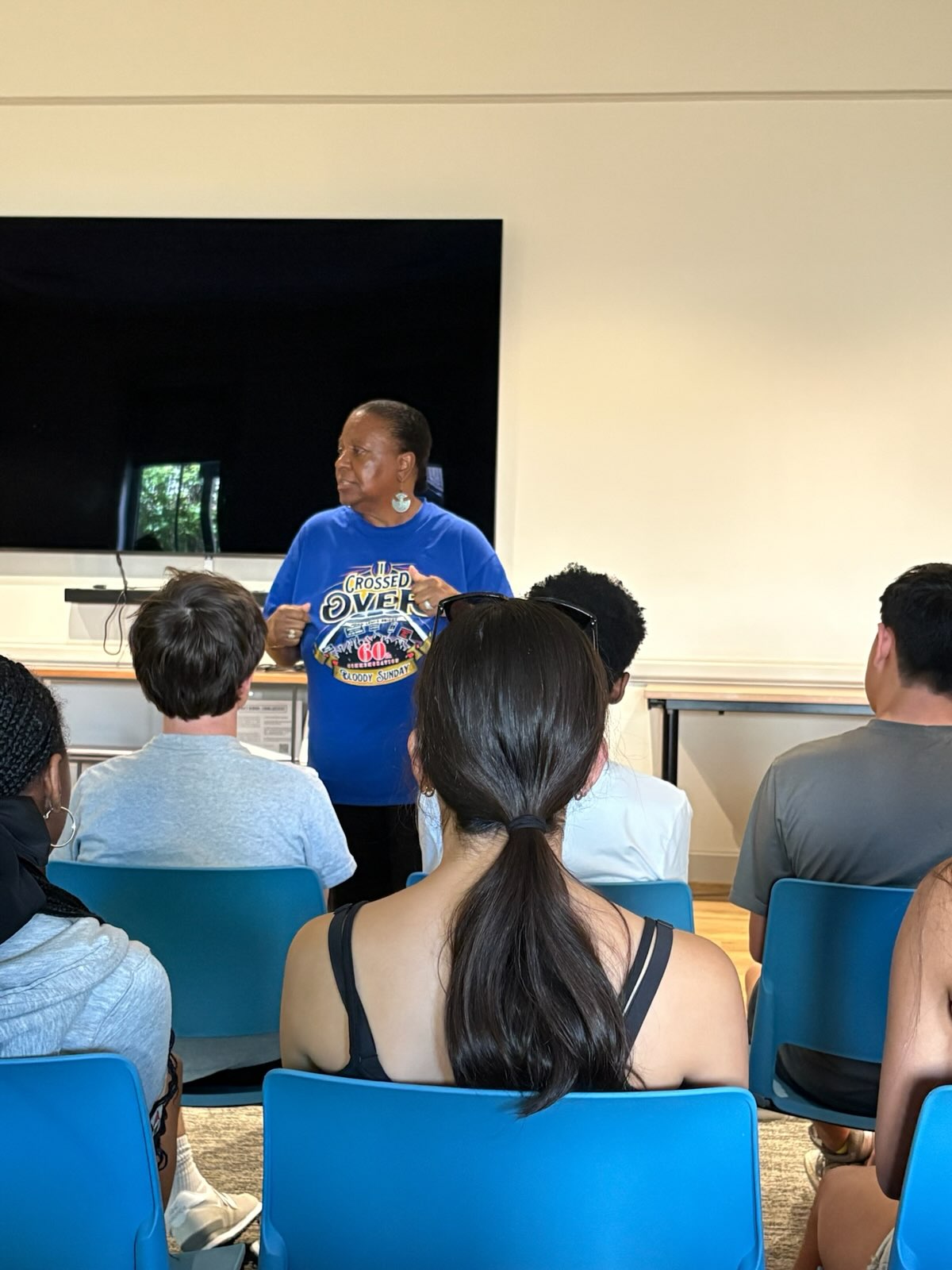
We fueled up with lunch on the ride to Selma. When we arrived, students had the opportunity to meet with Civil Rights activist Barbara Barge. Barbara is a lifelong resident of Selma who participated in the 1965 Voting Rights March with Dr. King. She is also a retired teacher who taught for 28 years.
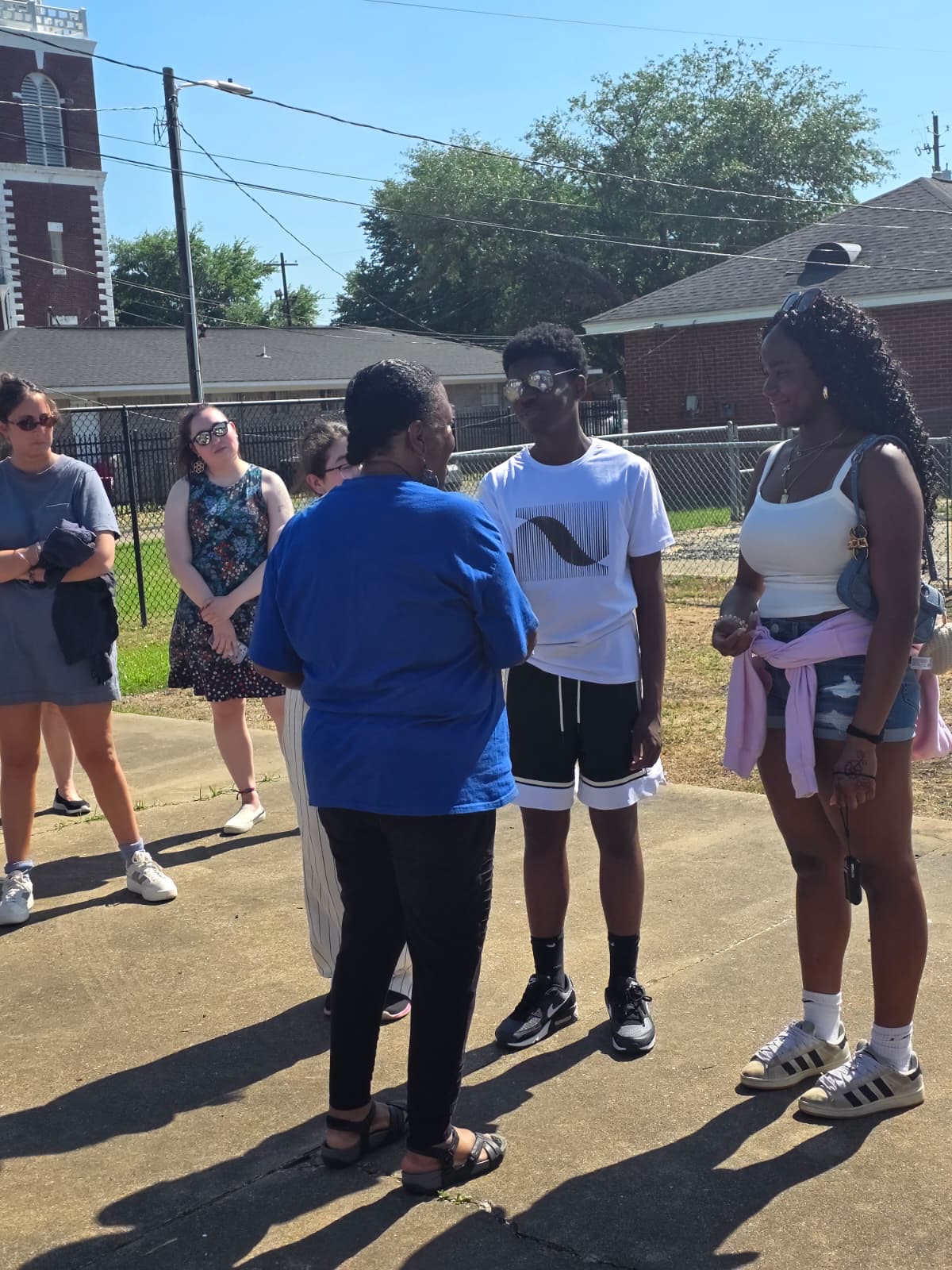
Barbara joined the movement at age 15. She joined because she heard her classmates shouting down the hallway “we need your bodies.” She learned that teachers and parents had been walking for the vote but the white employers threatened them when they would line the streets to see who was marching. So, students replaced the adults who could not continue to march for fear of losing their jobs.
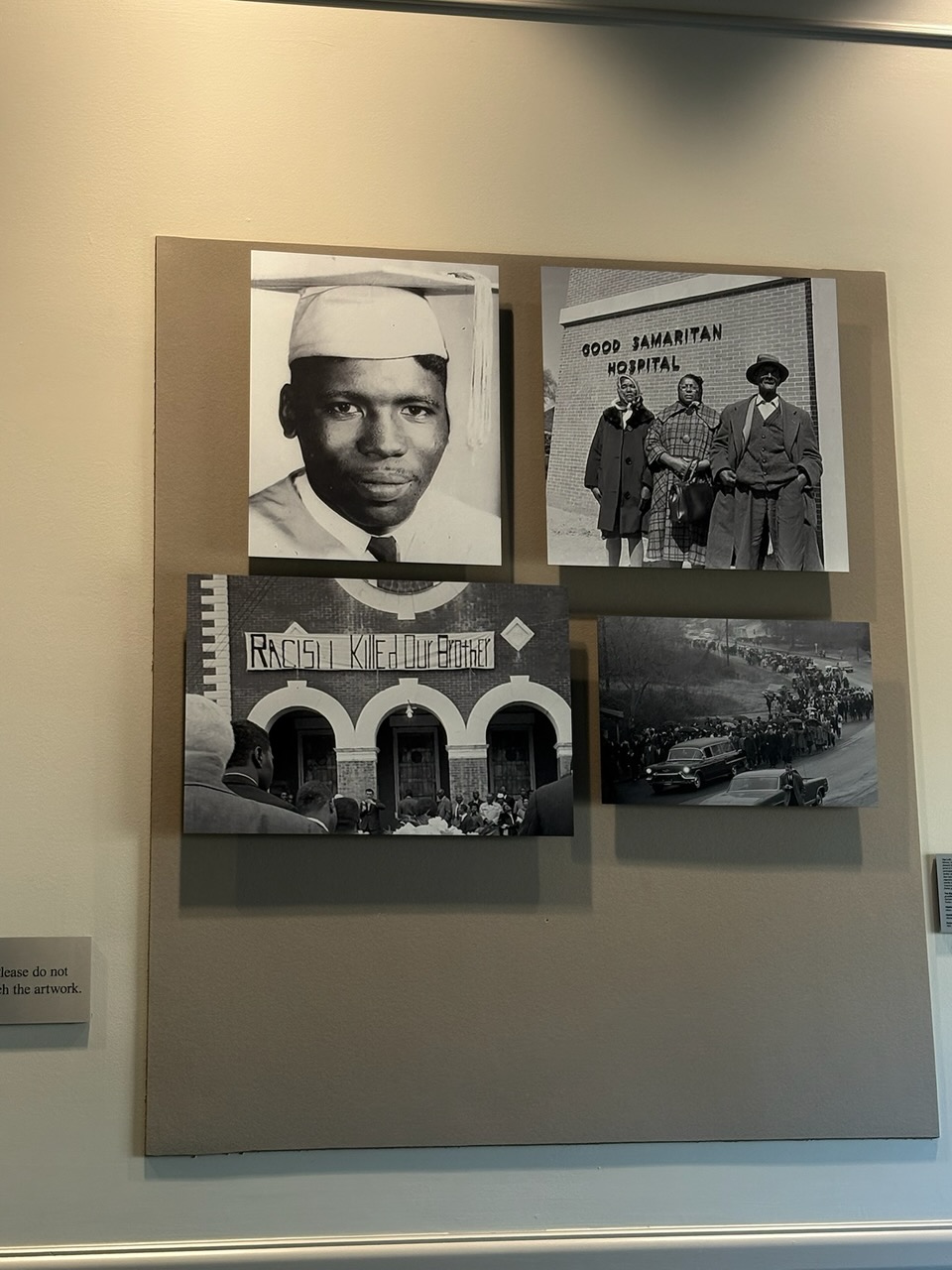
Barbara didn’t cross the bridge or get arrested, though her sister was arrested 4 times. Instead, Barbara was chosen as a support person to help during Blood Sunday, the initial march led by John Lewis and Hosea Williams.
She helped children who snuck across the bridge and shared a memory of being told to stop and wait. It then got really quiet. Next, they heard screams and loud booms and saw people running back across with police chasing on foot, on horses, and in cars. Barbara helped organize getting injured people to hospitals and to the church for minor injuries.
Barbara met John Lewis at 15 years old and thought he was a “square.” He didn’t talk much with others. She learned he had a speech impediment. “But I realized he wasn’t square, he was focused. He came to Selma for a reason,” Barbara told us. She also talked about how she learned nonviolent tactics and to fight with her brain.
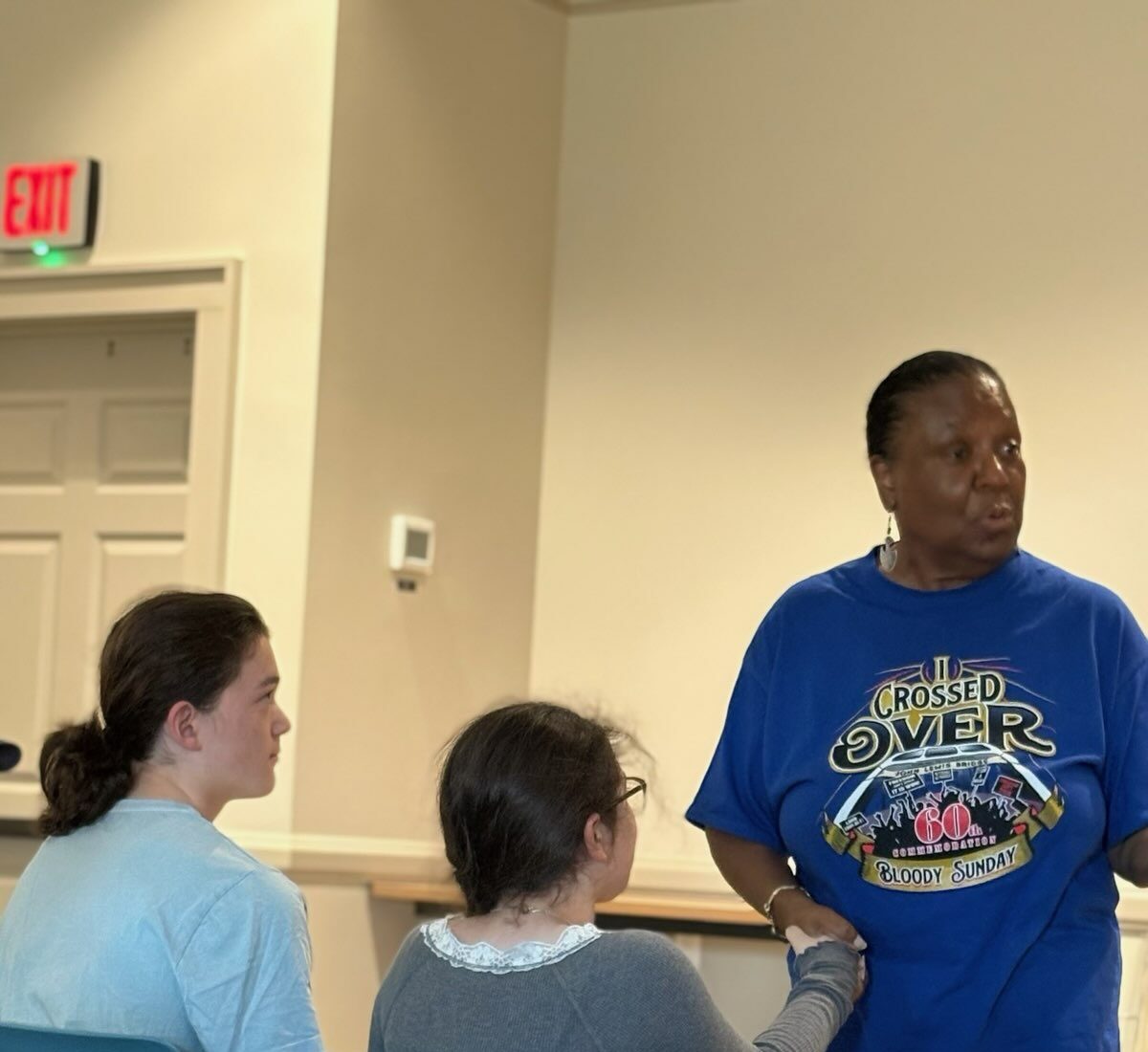
Barbara shared about how the last battle of the Civil War in 1865 was fought in Selma and 100 years later, people marched in Selma for the right to vote.
“It’s amazing to me that in my 70s, I’m still talking about this to you. When I was 15, I thought we had settled it. We brushed our shoulders off and said we did it.”
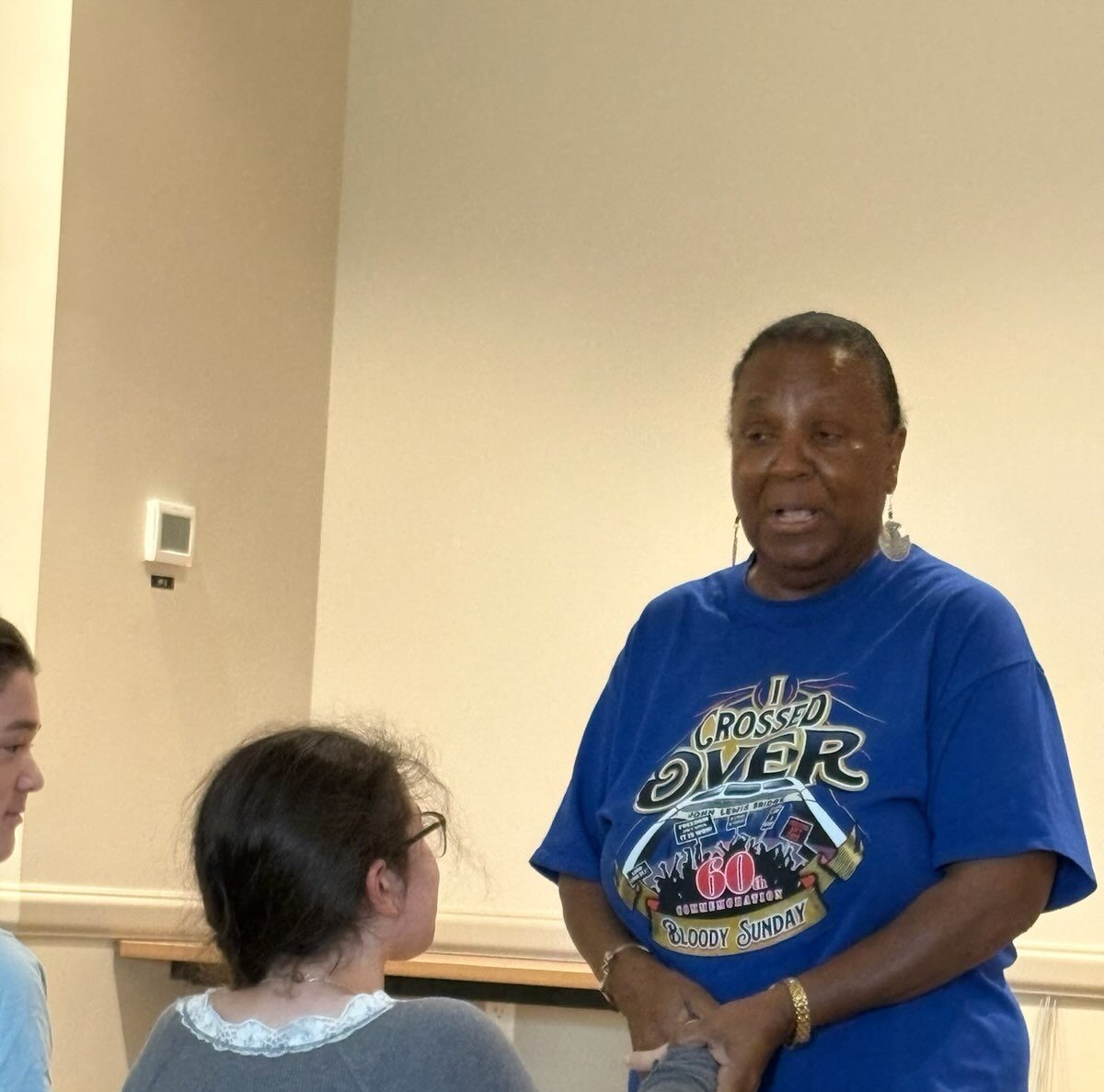
Barbara’s advice to us? Be proactive and pay attention. “While you’re watching TikTok and Facebook, include the news in your day,” she said. “Because you’re living in historical times and one day you may have to tell the story of how this happened.”
She advised students to talk from their head and their hearts and get into public speaking and reading, taking the time to get educated and pursue what they care about.
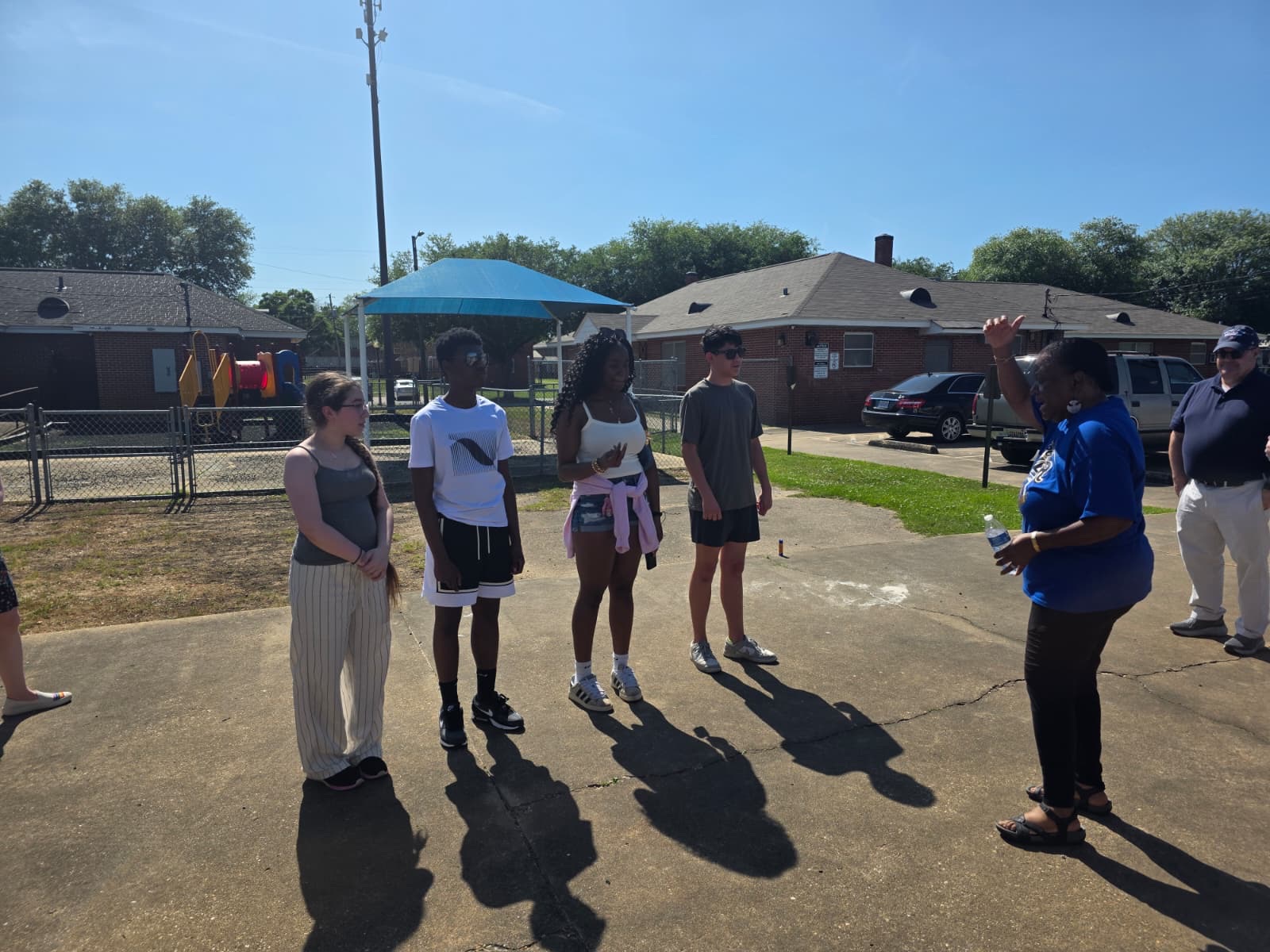
Perhaps most importantly, Barbara told our 8th graders “You are not too young. If your mom or dad go to a town hall meeting, go with them. Figure out what is important to you. Keep talking to each other.”
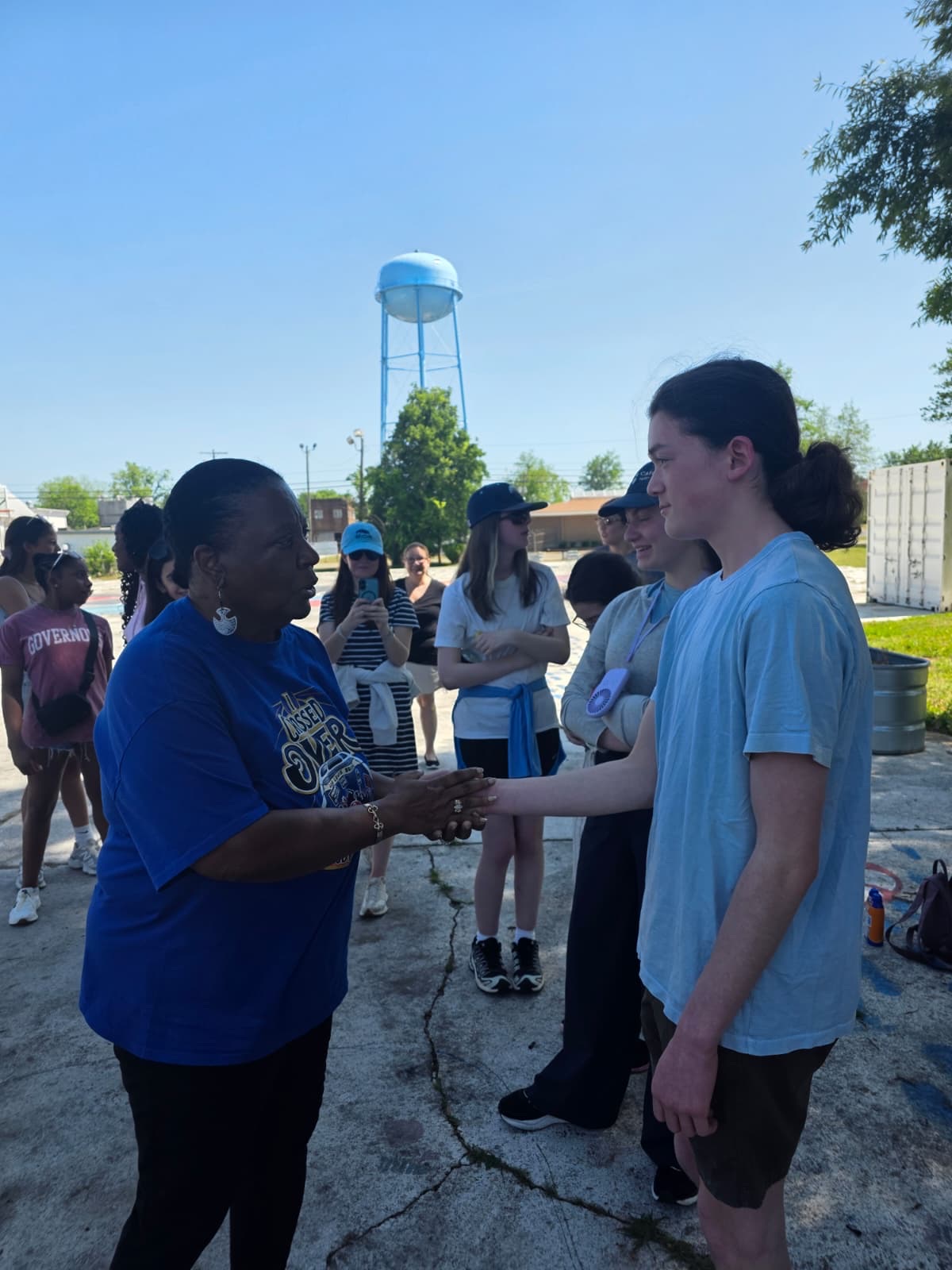
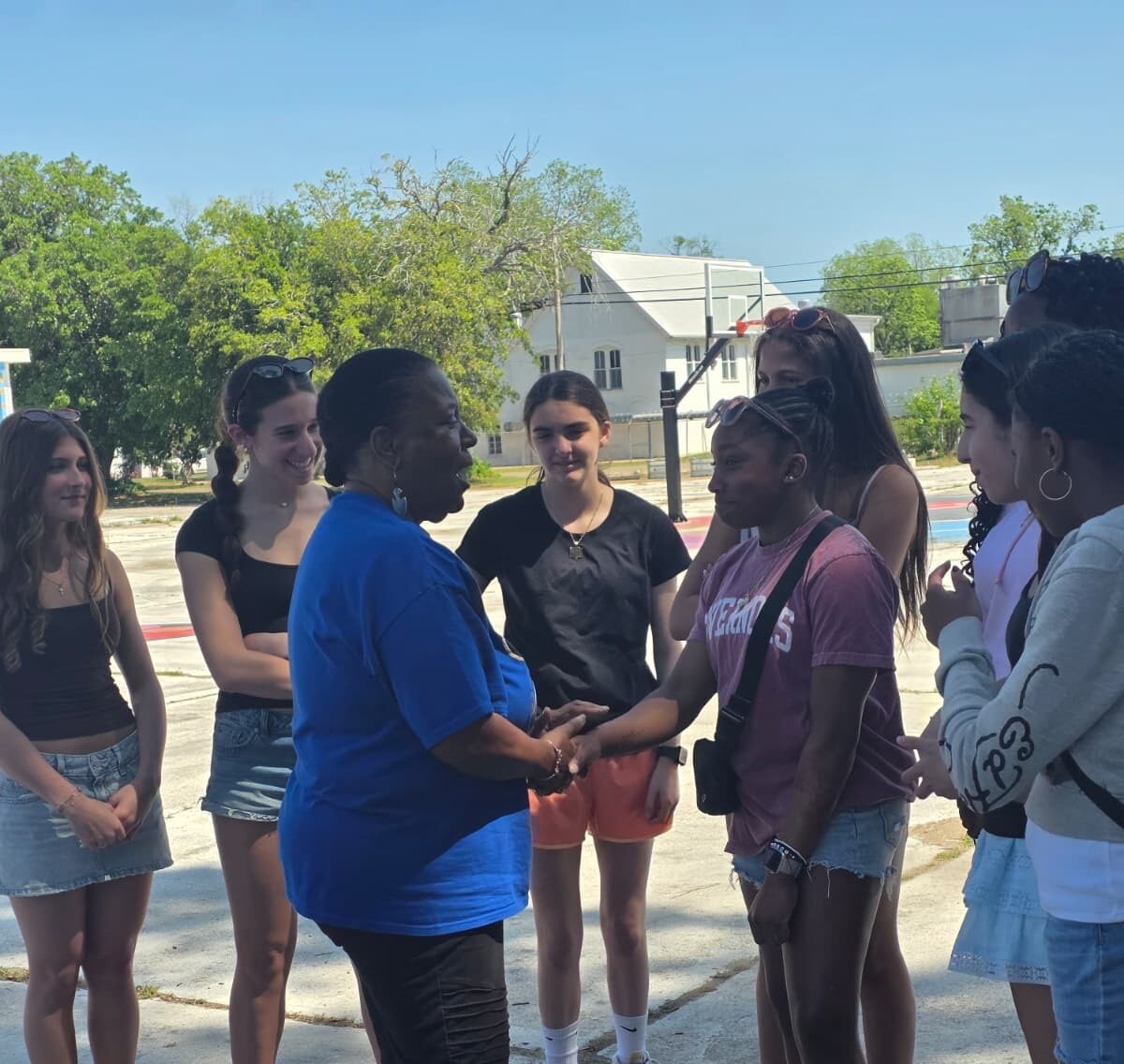
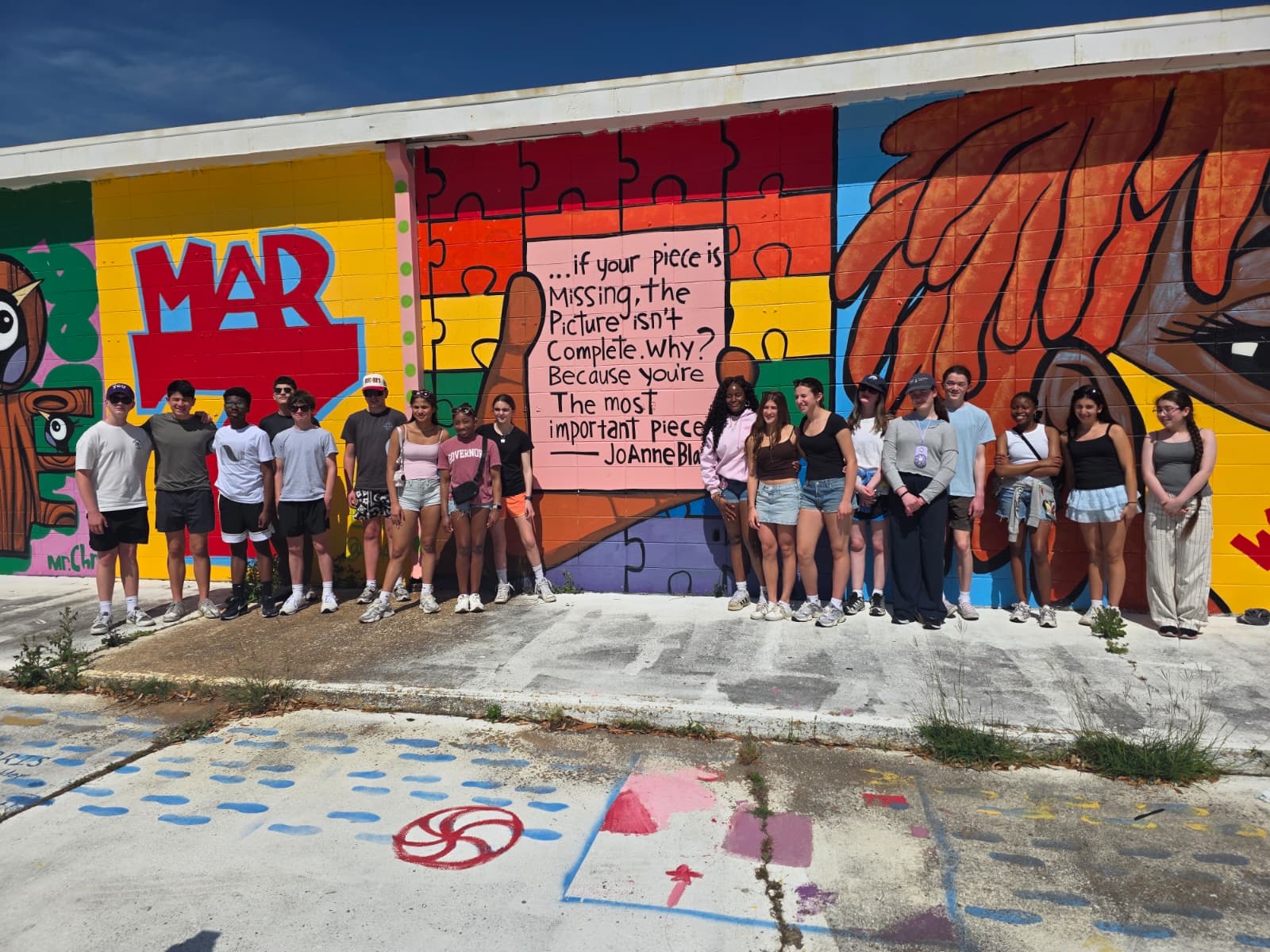
Barbara next brought us on a guided tour of Foot Soldiers Park in Selma. The park was created by JoAnne Bland, fellow foot soldier and civil rights activist.
When JoAnne was just an 11-year-old student, she joined her older sister Lynda on the day that became known as Bloody Sunday. Barbara showed us a mural of JoAnne, who passed away in February of this year. Last year, the Class of 2025 got to meet with JoAnne.
The park was created as a remembrance of the movement and a space for young people in the community to play outdoors, share their art, and plant in community garden beds.
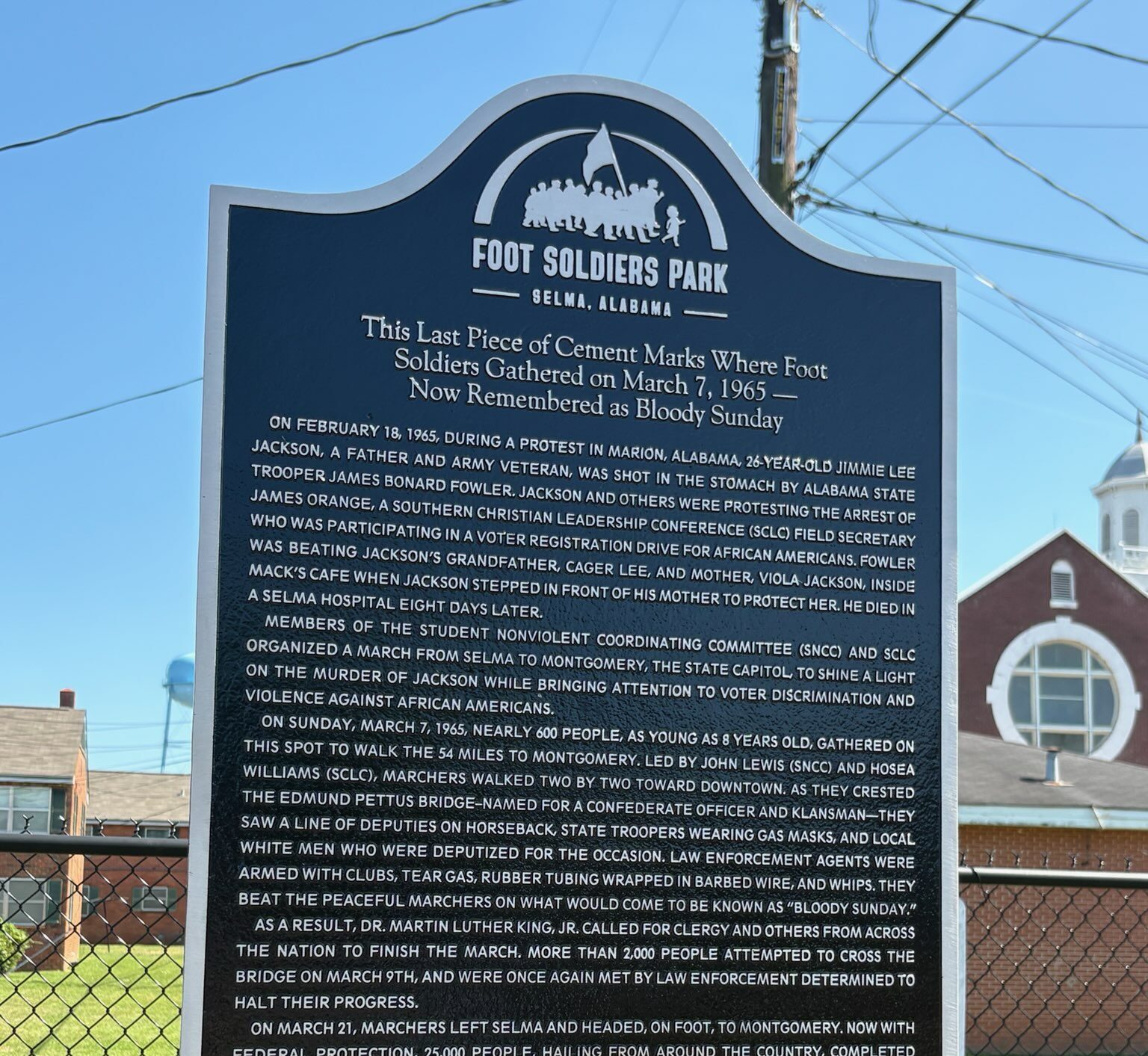
JoAnne wrote the language for this plaque and had it put up two days before she passed.
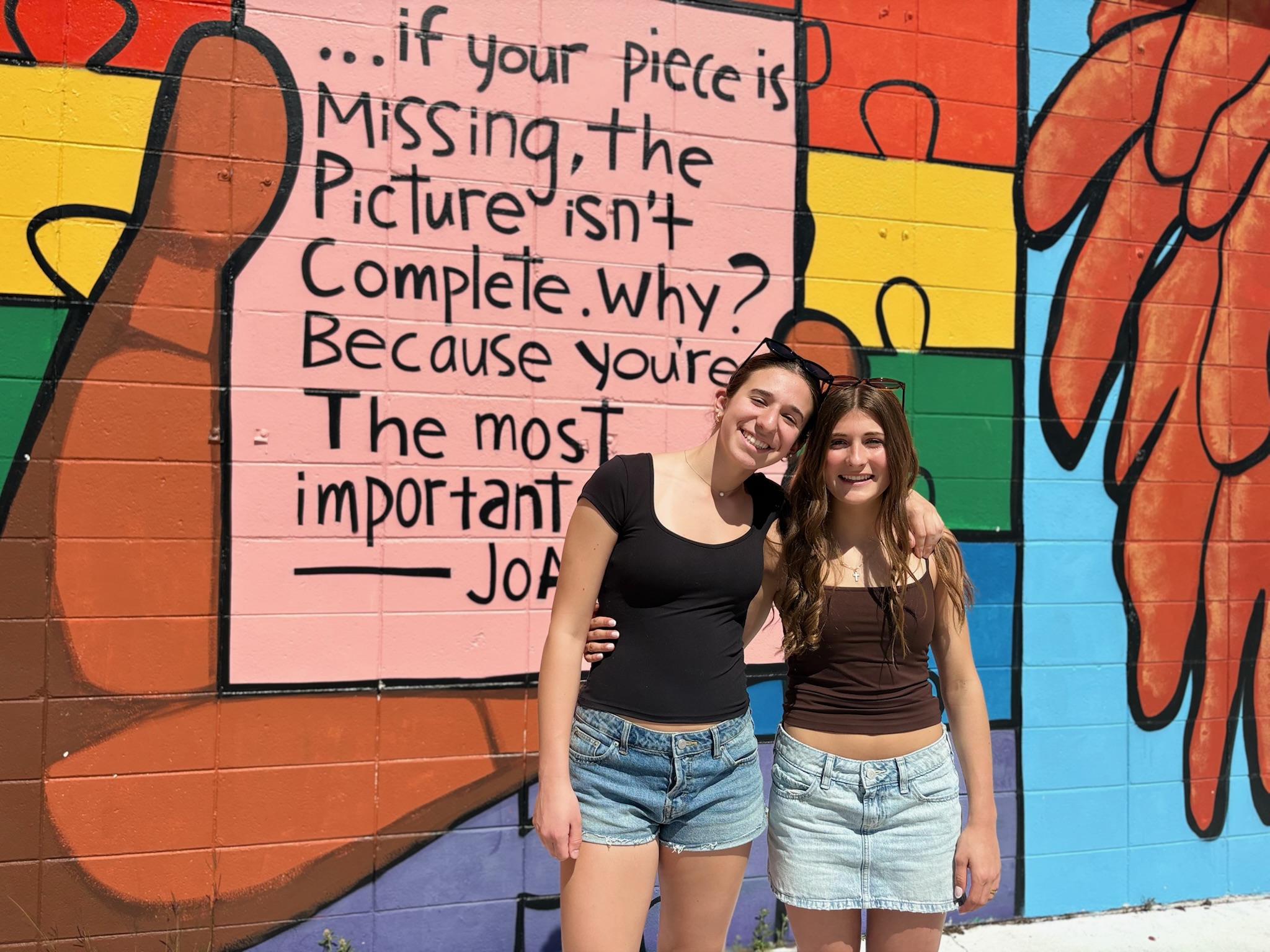
Barbara showed us a mural painted like a peppermint because MLK used to greet the children of Selma, talk with them and leave them with a peppermint in their hand. Barbara met him but he ran out of peppermints so he asked her if he could give her a kiss on the cheek instead.
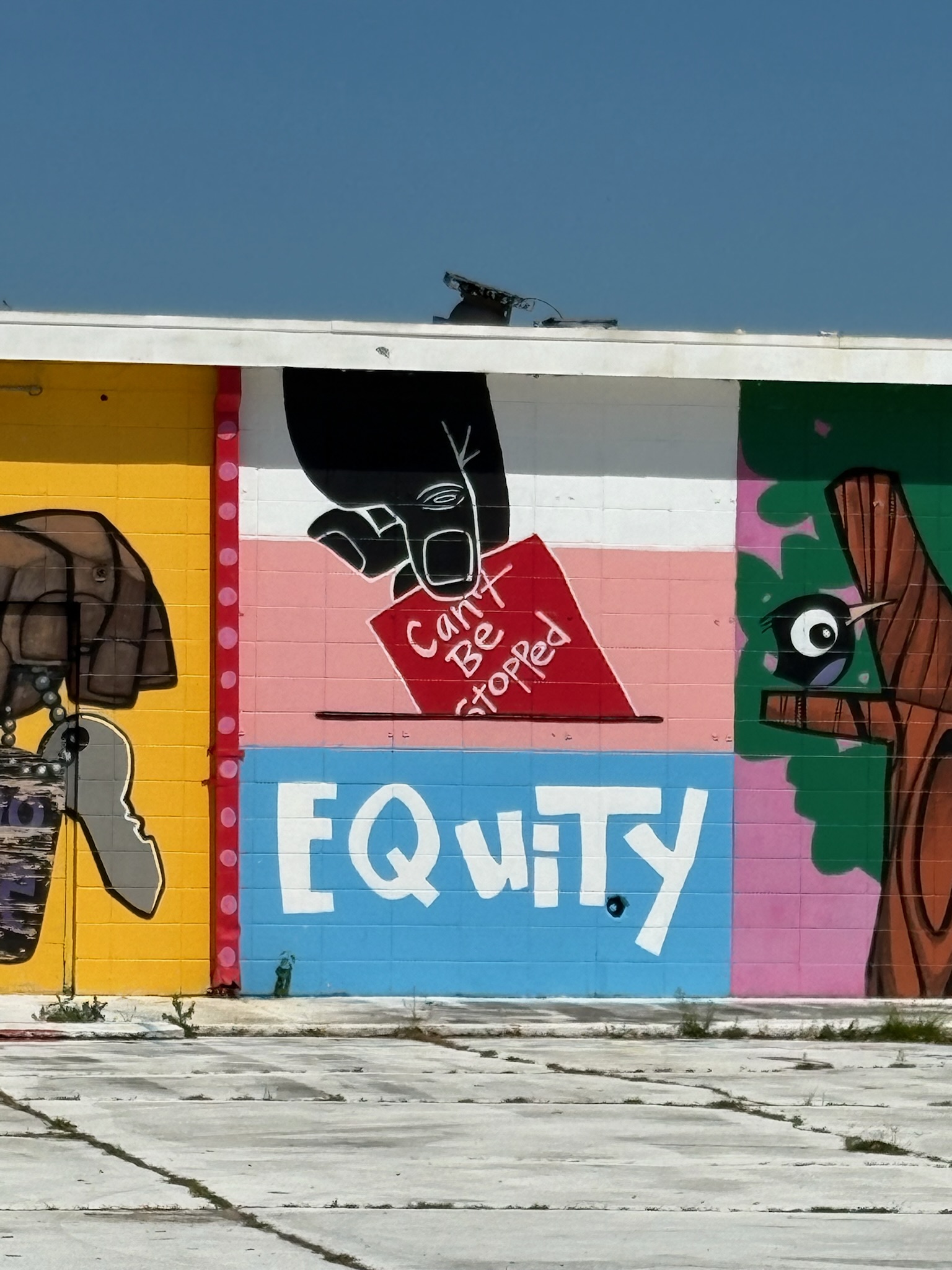
We looked at the Equity Mural.
Barbara shared “At 15, I understood equity. When the white kids got rid of their old stuff, they came to us. Or we didn’t get it at all. Justified with ‘separate but equal.”
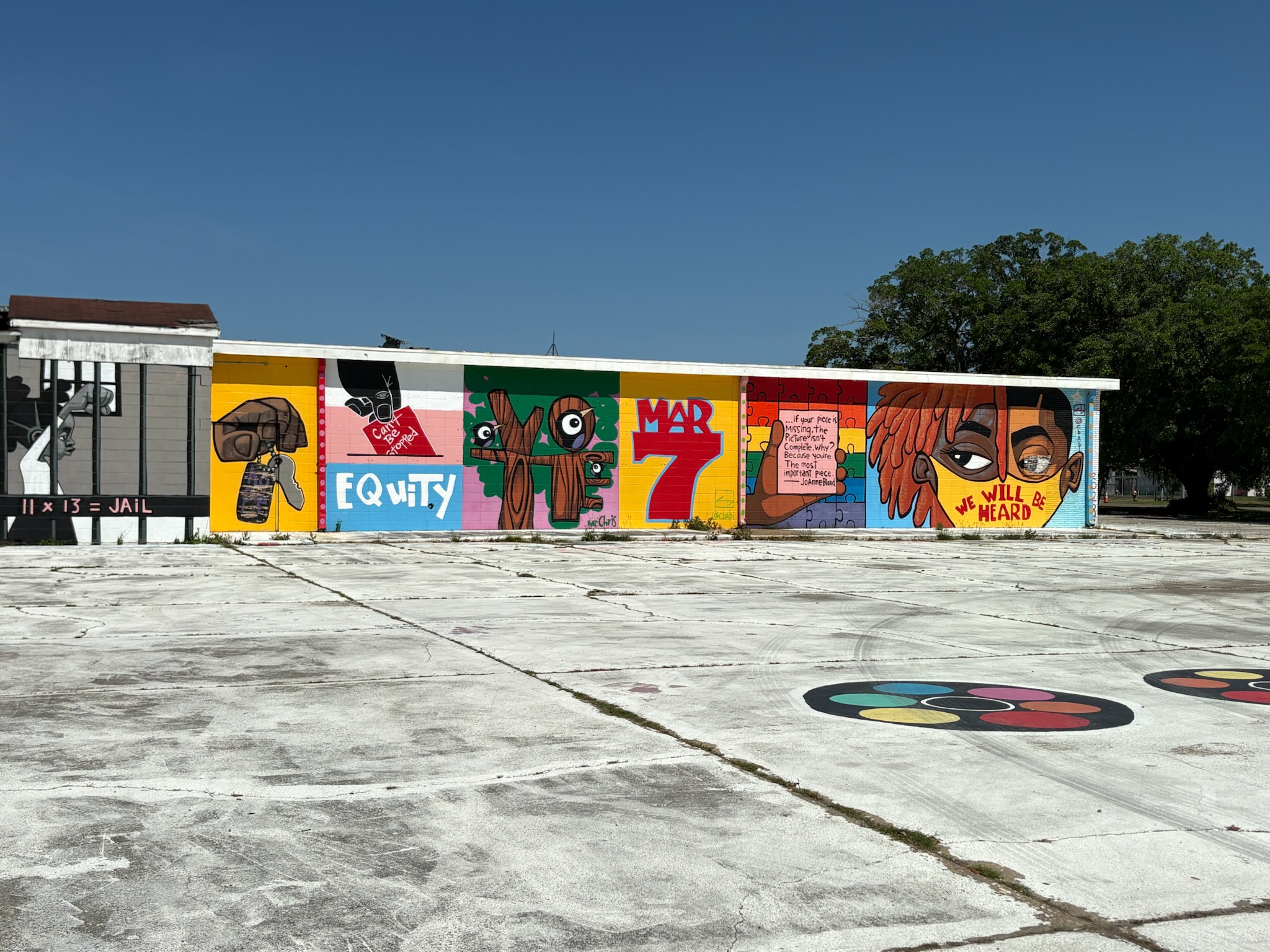
Then we saw the Vote Mural. “That vote must be mighty important because they don’t want you to have it.”
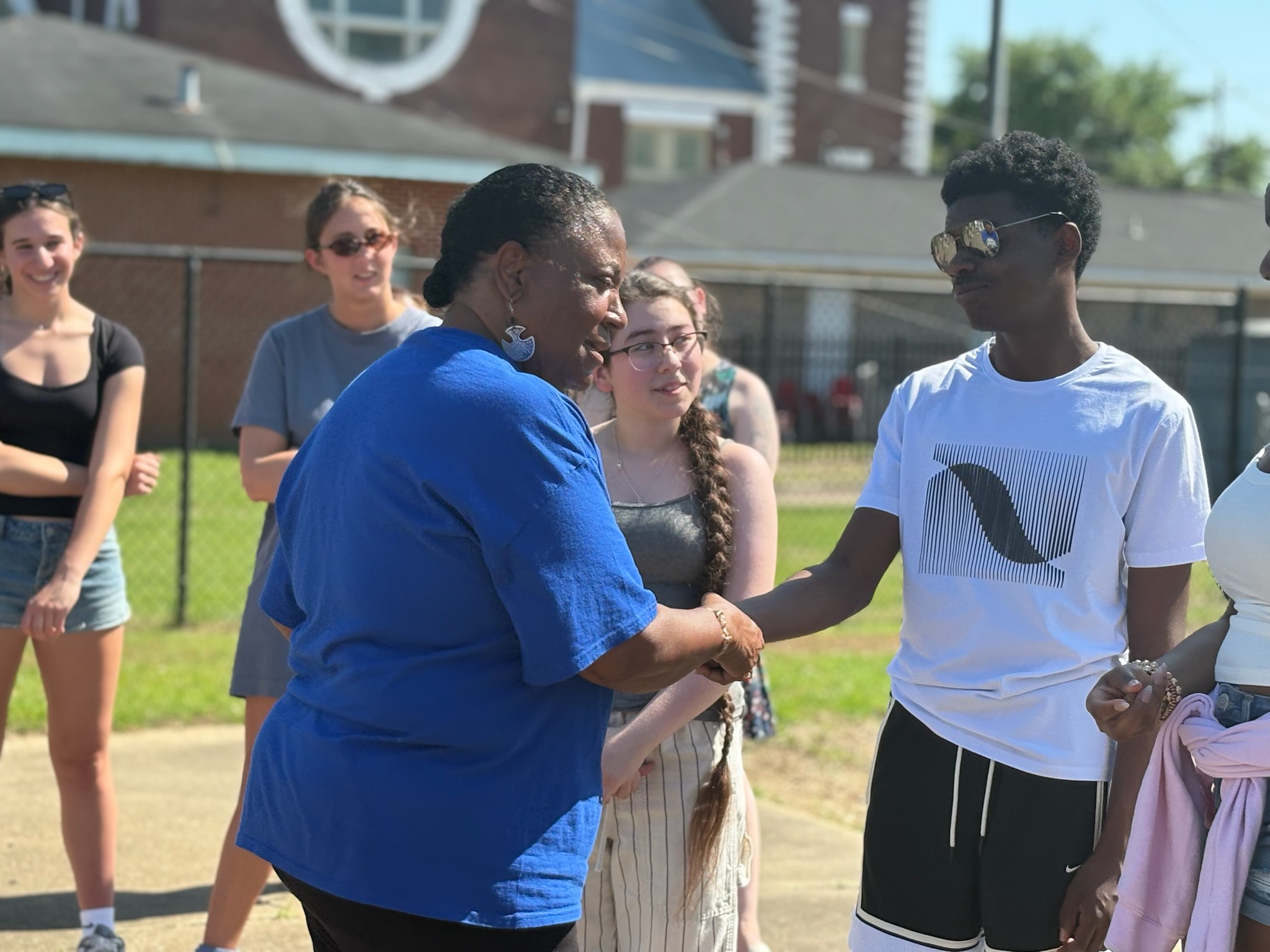
Students stood with Barbara on the patch where the marchers met on Bloody Sunday, facing the Brown Chapel AME church.
Each student picked up a rock and Barbara explained the rock today was in memory of JoAnne. She asked us to take the rock home and place it somewhere it can be seen every day. Then, when you find something that you feel you can’t change, go home, pick up your rock, and fist it in the air. “The spirit of JoAnne Bland will descend upon you,” she said.
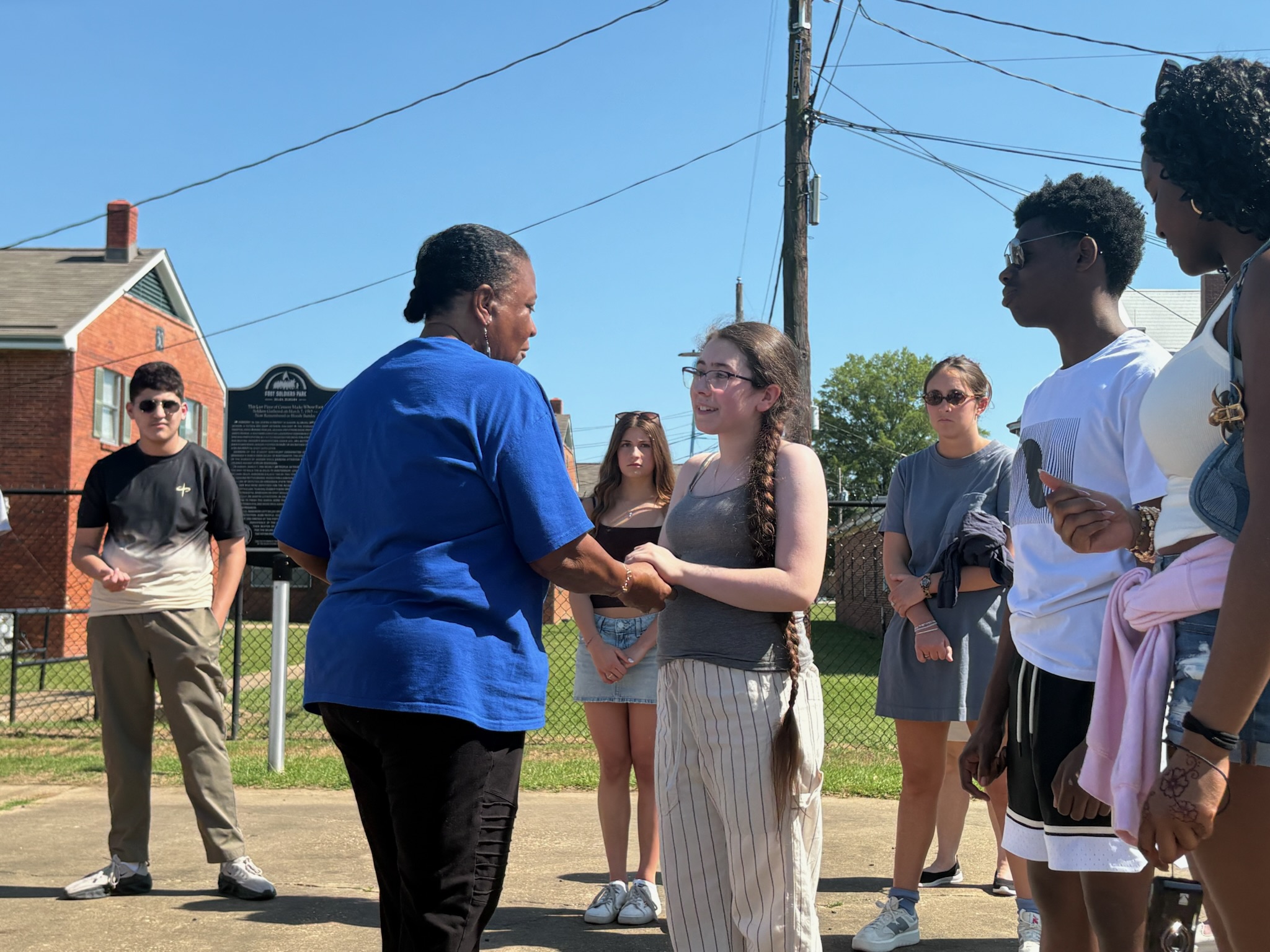
Barbara asked everyone to hold their rock, name a personal hero, and say “I am a history maker.”
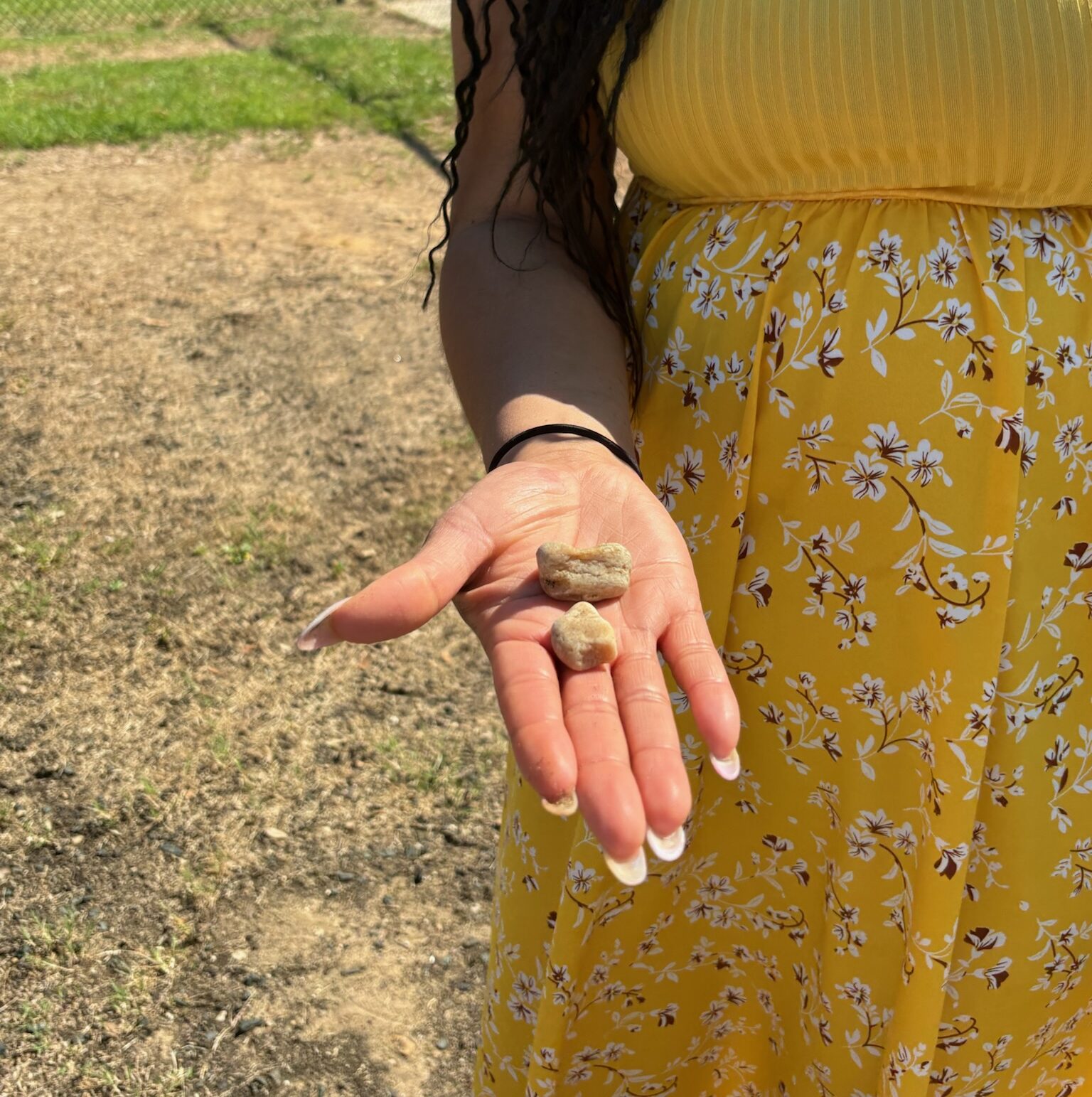
We did so proudly.
Heroes shared included Rosa Parks, Malcolm X, Dr. King, and Mamie Till.
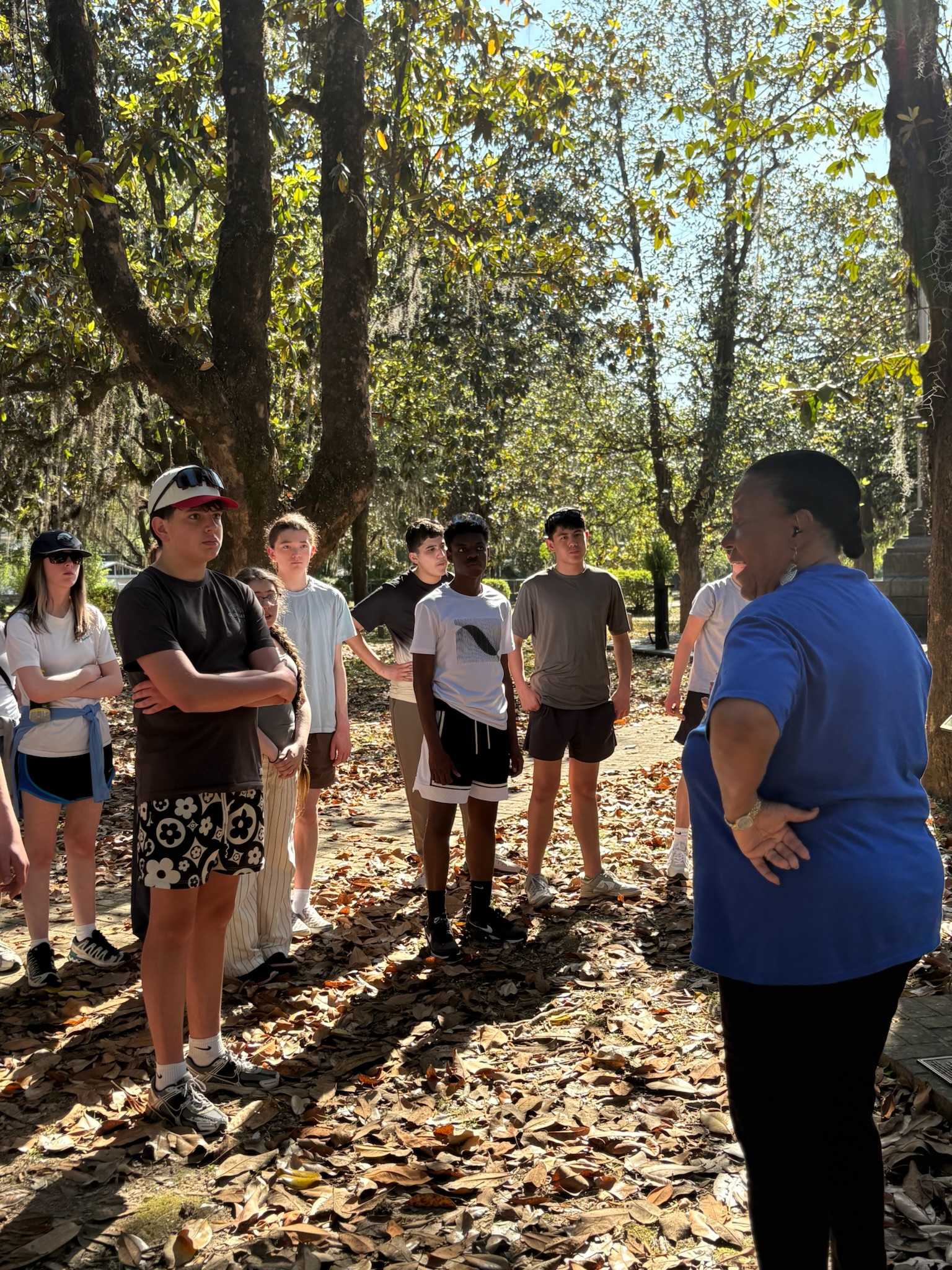
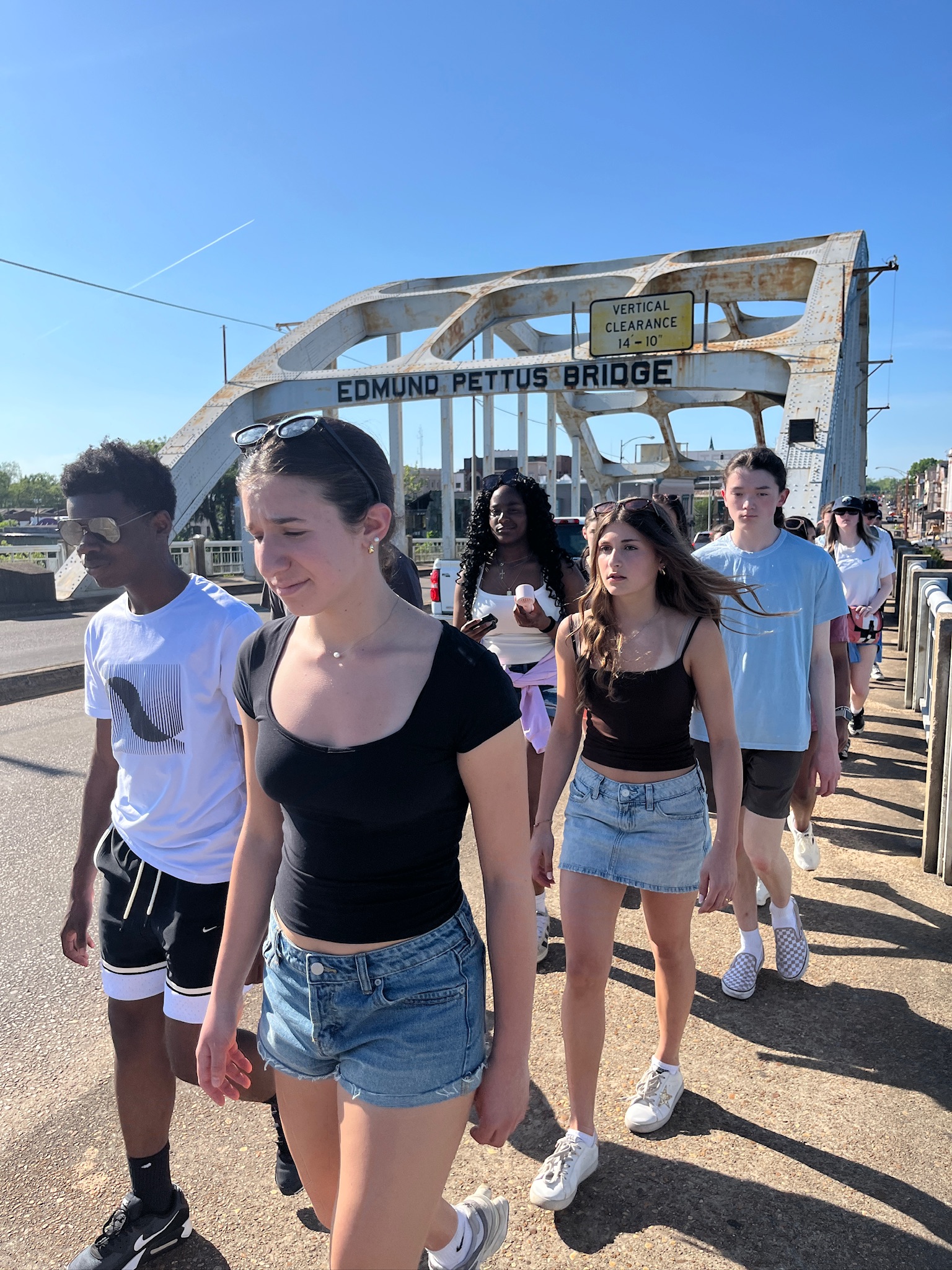
After meeting with Barbara, CRS students and teachers retraced the marchers’ steps over the Edmund Pettus Bridge.
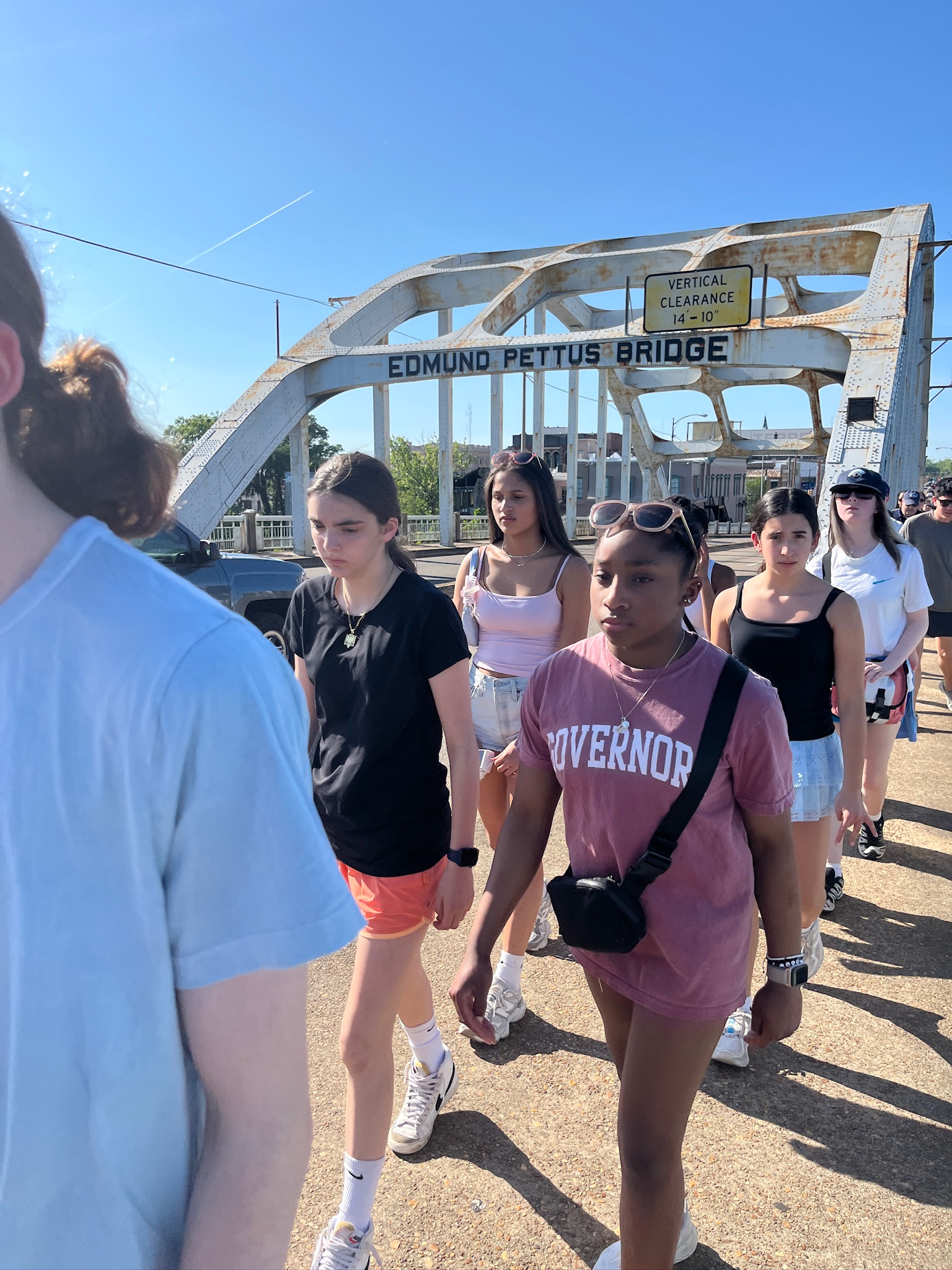
We paid tribute to JoAnne Bland by reading the 3 questions she asked the Class of 205 to consider as they walked the bridge on our inaugural Civil Rights trip:
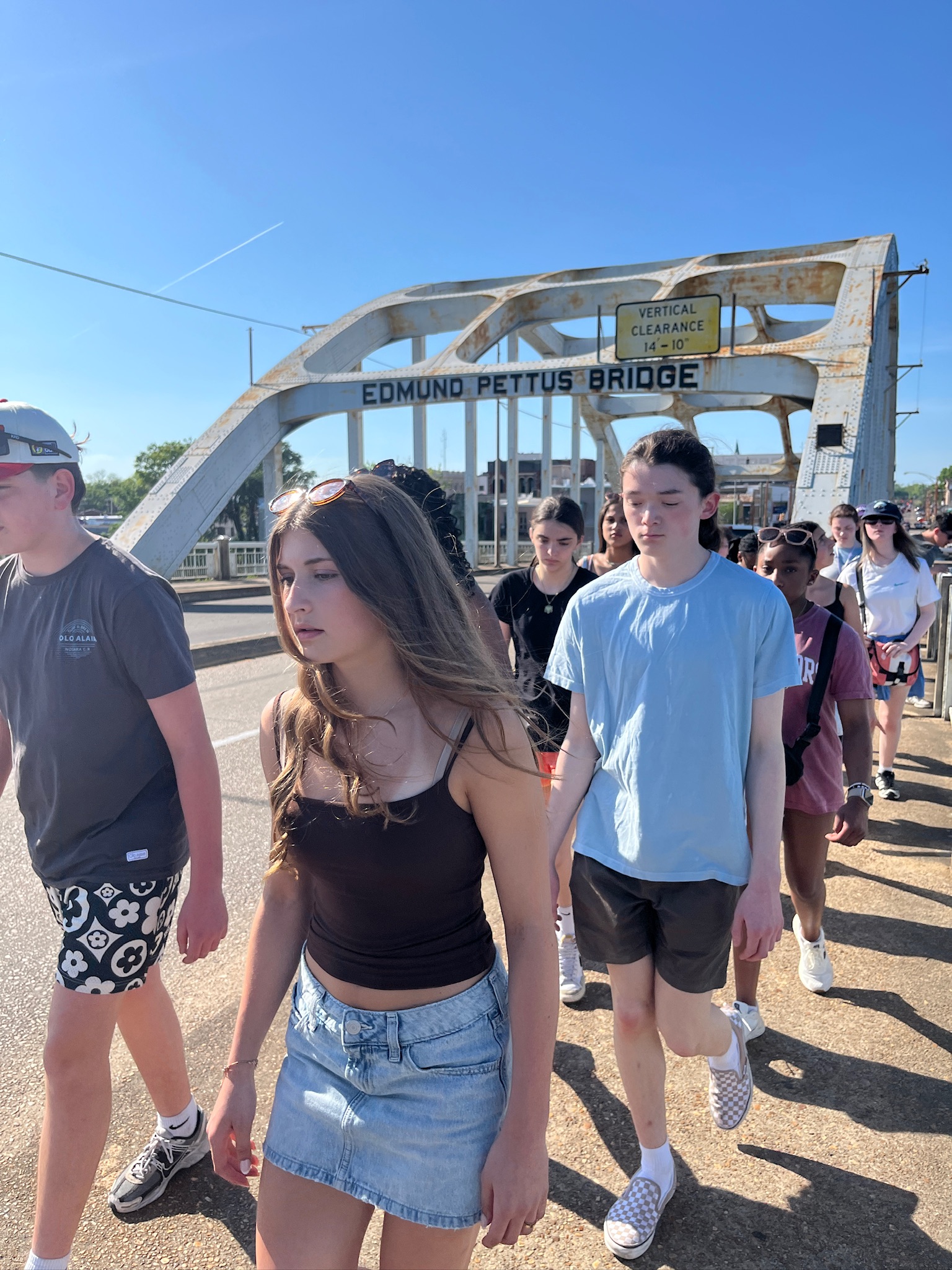
“What would you change?”
“What would you add?”
“What would you build?”
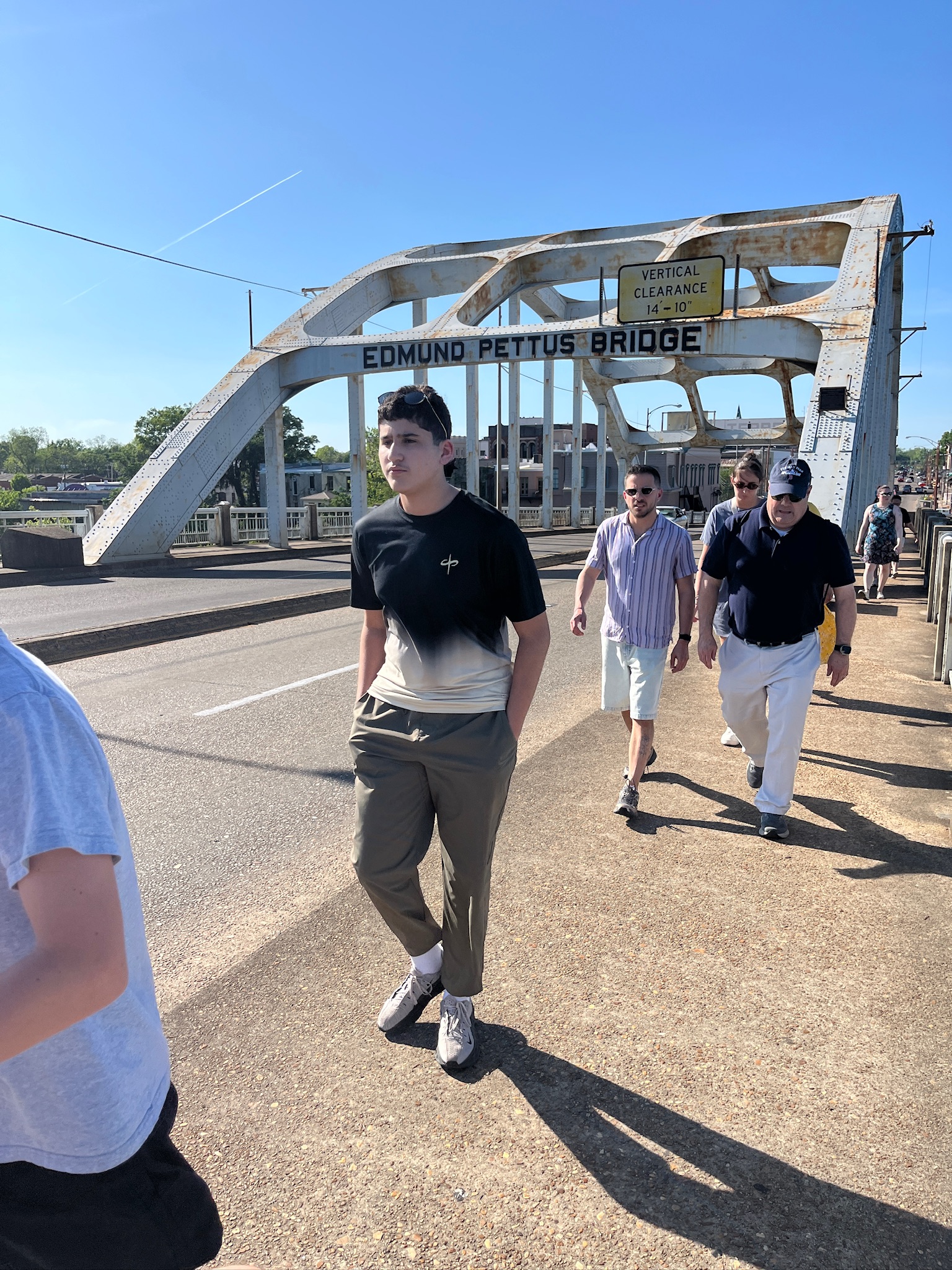
Students marched in a two-by-two line as they crossed the bridge in silent reflection.
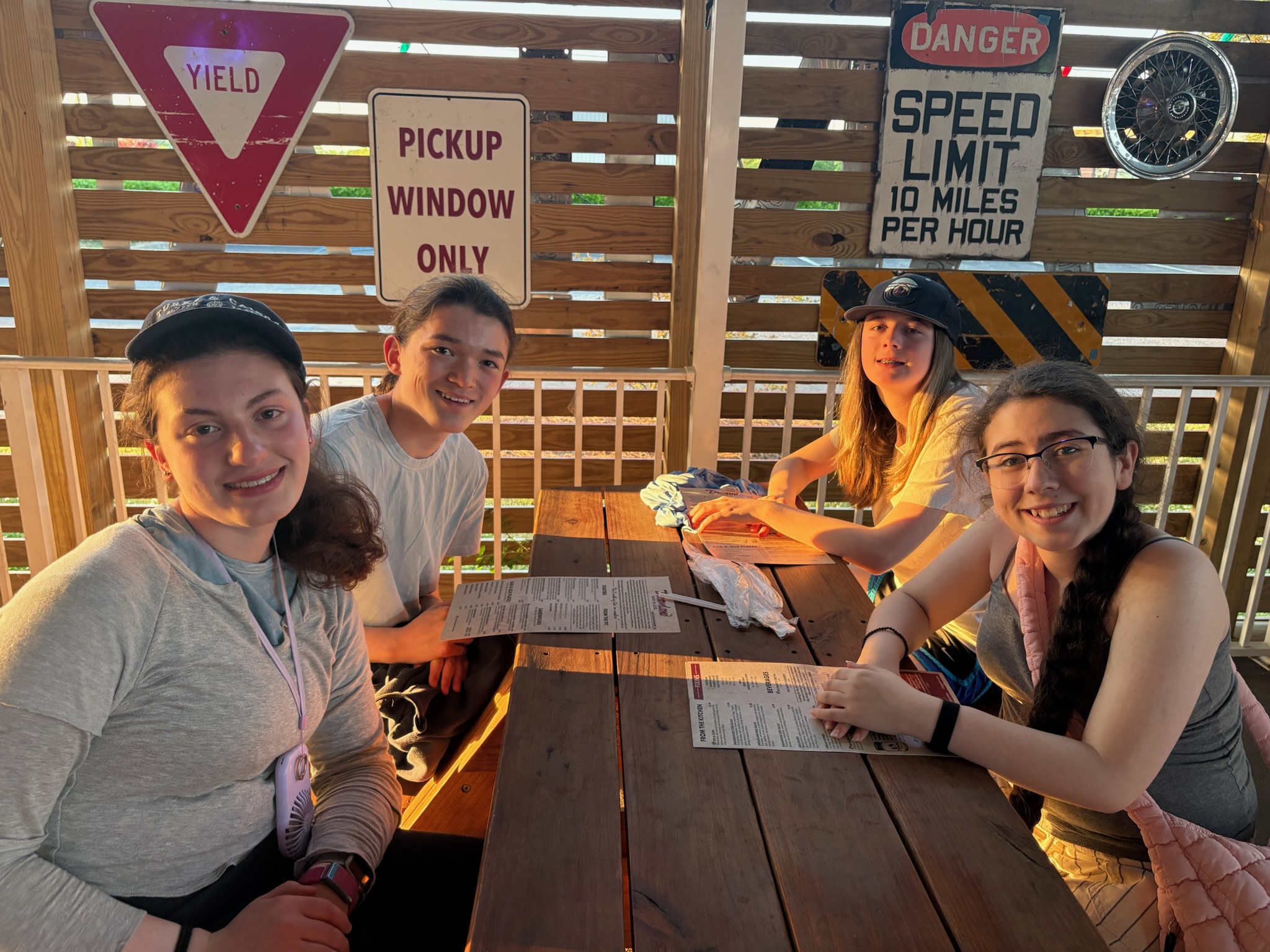
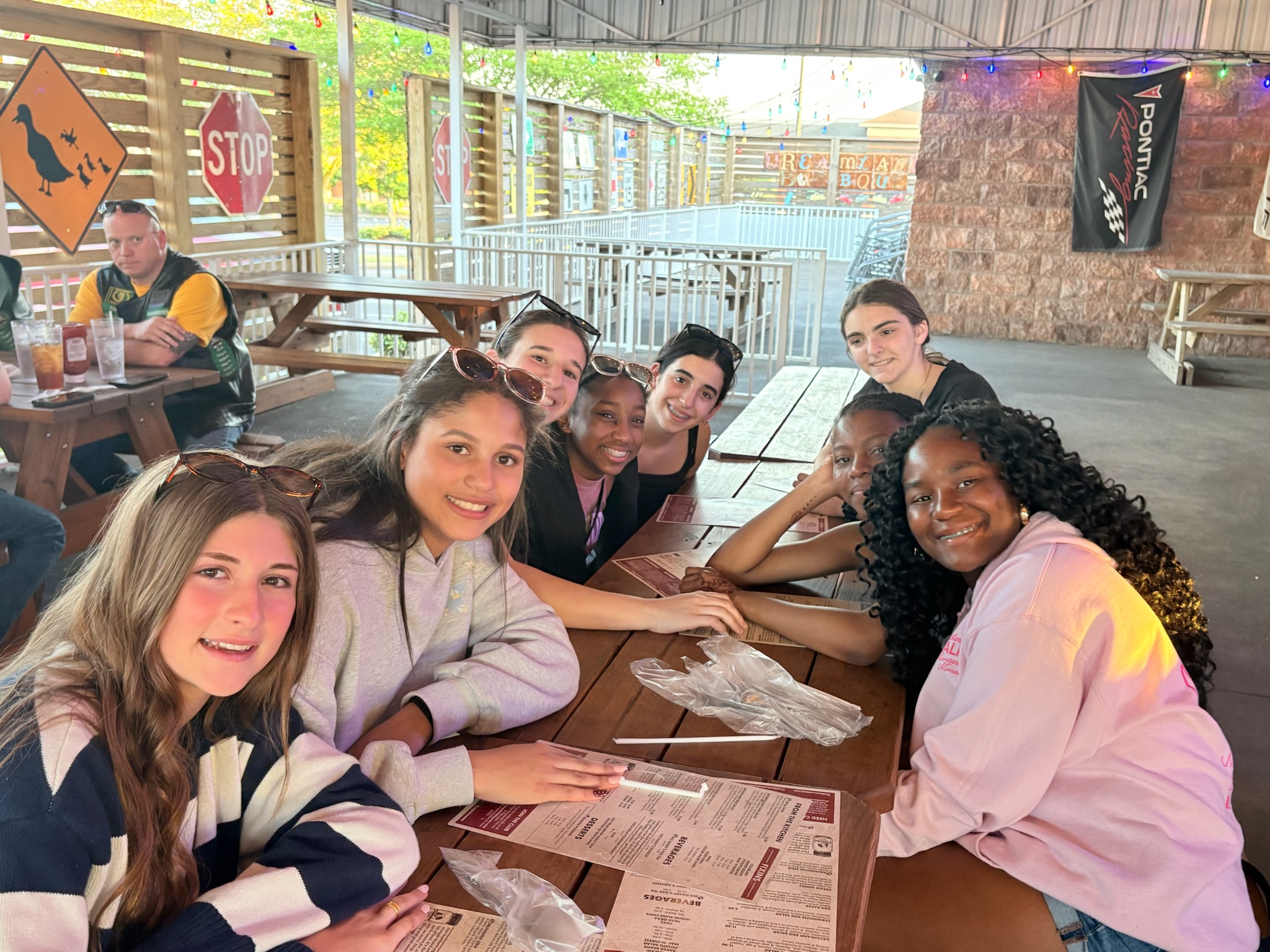
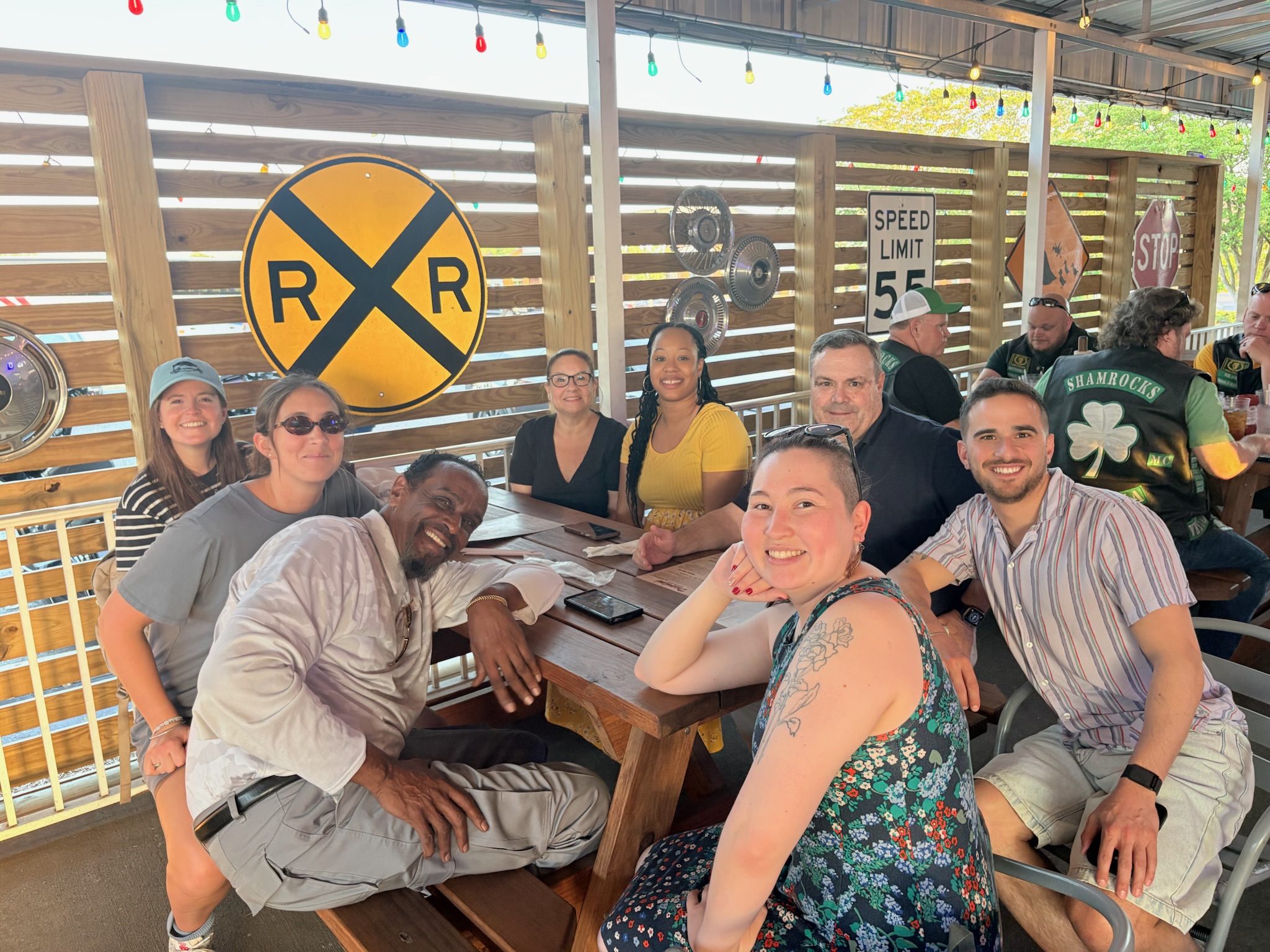
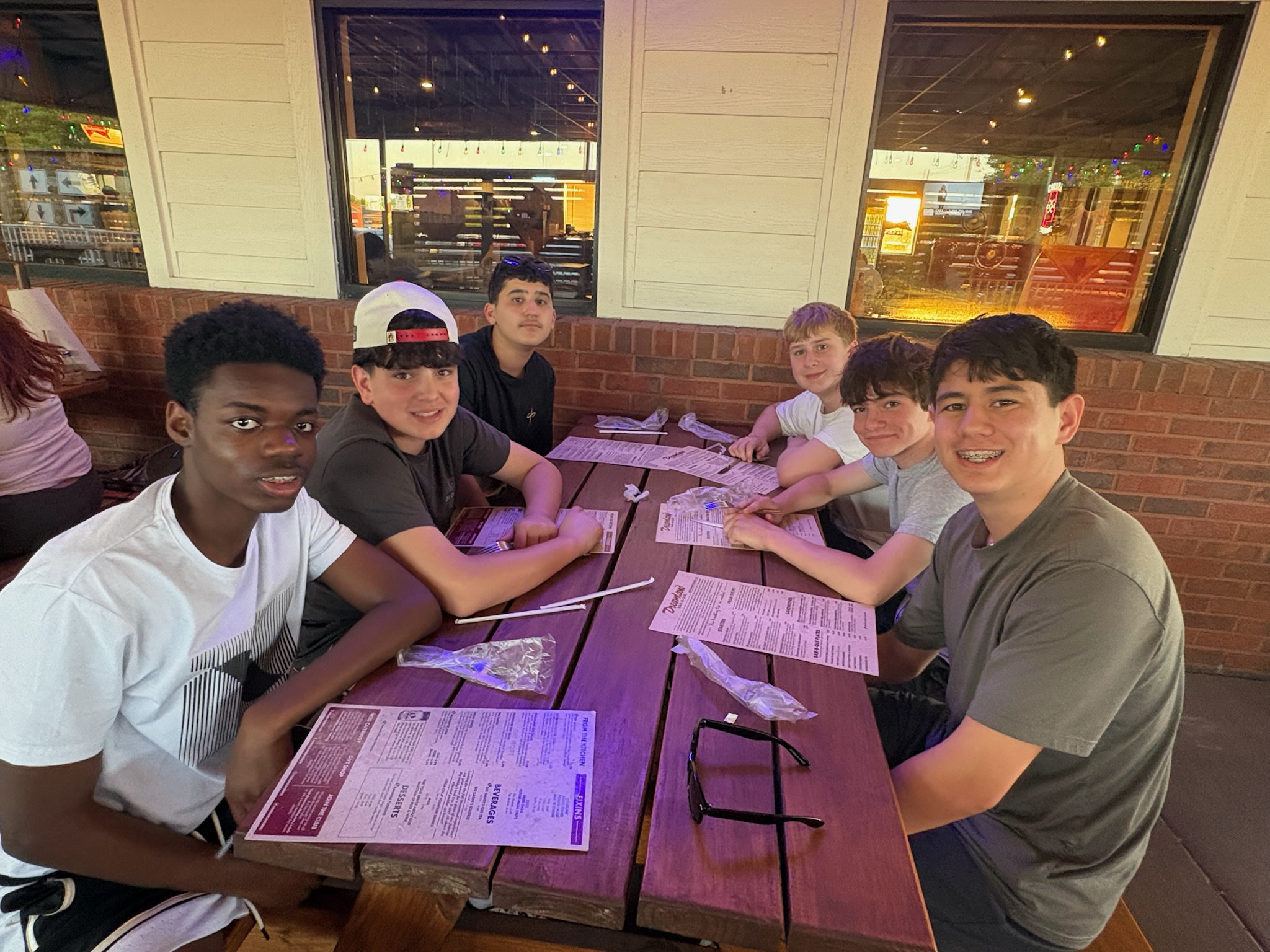
After a day of intense experiential learning, we visited Dreamland BBQ in Montgomery for a delicious dinner. The restaurant is known for their ribs, banana pudding, and Big Daddy’s iced tea (sweet tea and lemonade). We also enjoyed fried okra and mac and cheese.
After, students headed back to the hotel to meet in family groups to process the experiences of the day and discuss the impact Barbara’s powerful presentation. We talked about what we plan to do to take her words to heart, to pay attention, and to be history makers.