

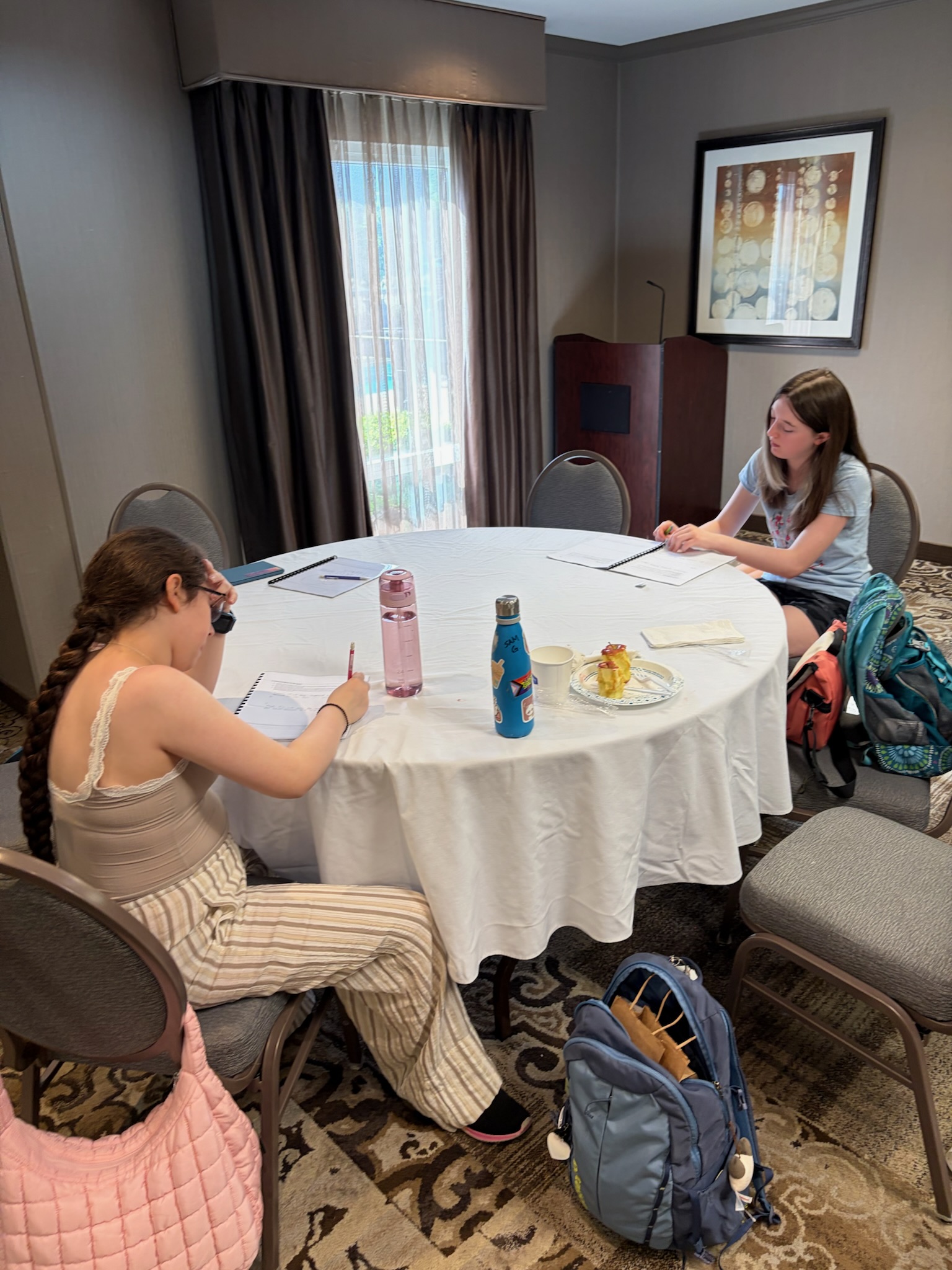
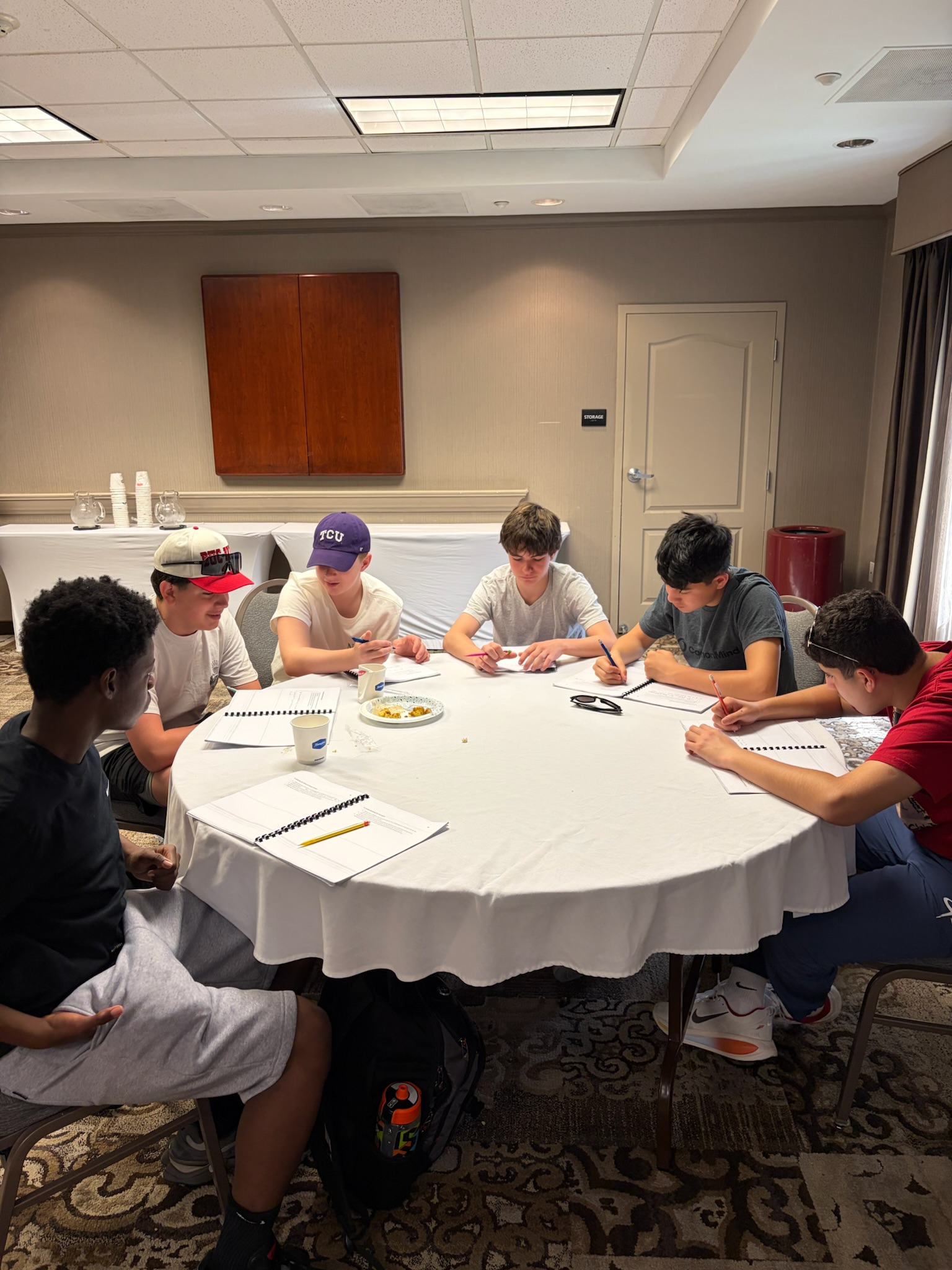
The day again began with breakfast and time in family groups at our hotel. We had a lot to discuss from our day in Selma with Barbara Barge.
We talked about what we learned about the importance of ordinary people taking extraordinary action.
We connected our learning to present day, discussing how the struggles and triumphs of the Selma marches relate to the issues of justice and equality in our society today.
And we prepared for our day ahead, visiting the Legacy Museum and the National Memorial for Peace and Justice.
In preparation for the day, Tessa had students read an article titled Those Who Try to Erase History Will Fail. Read it here.
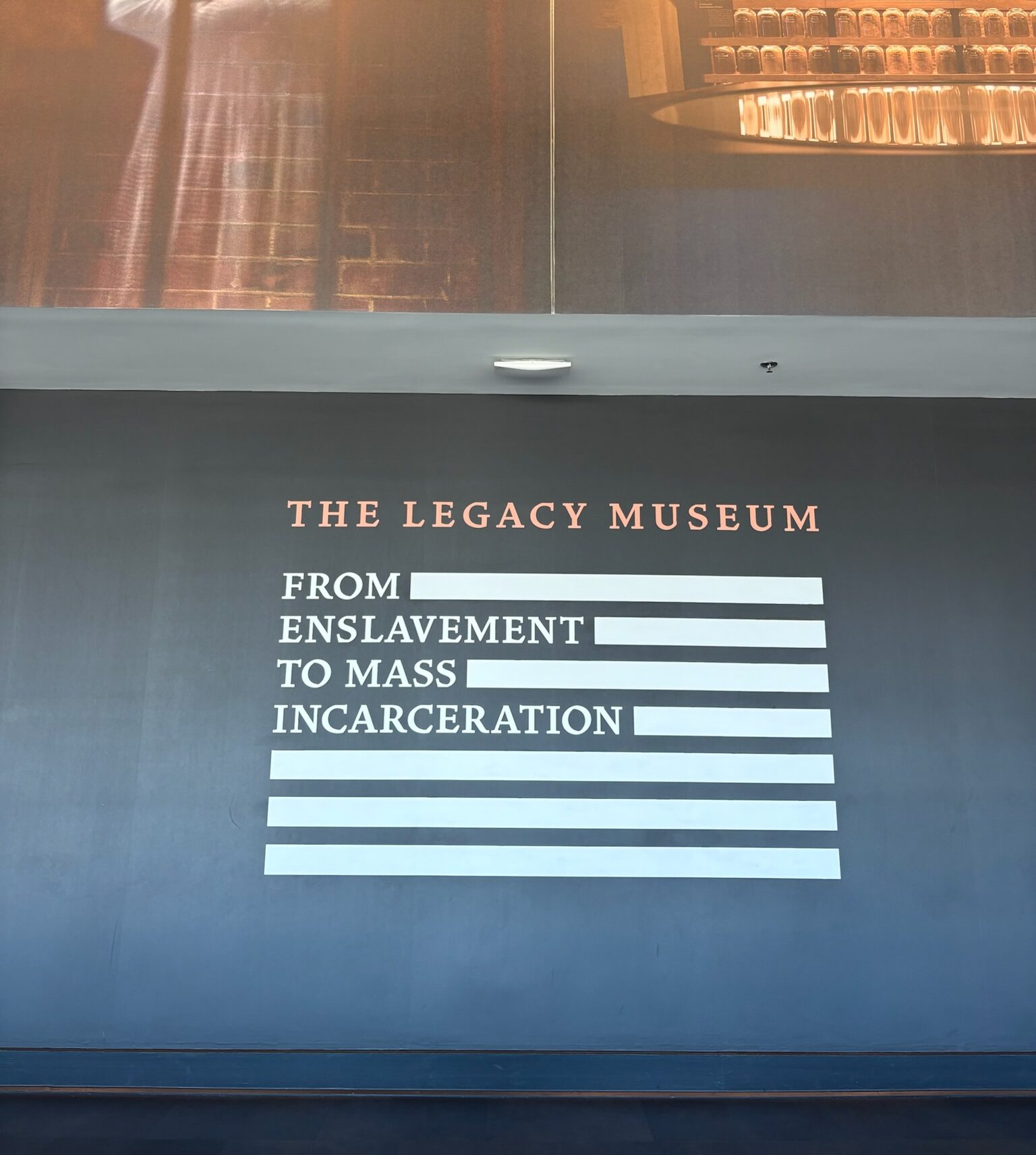
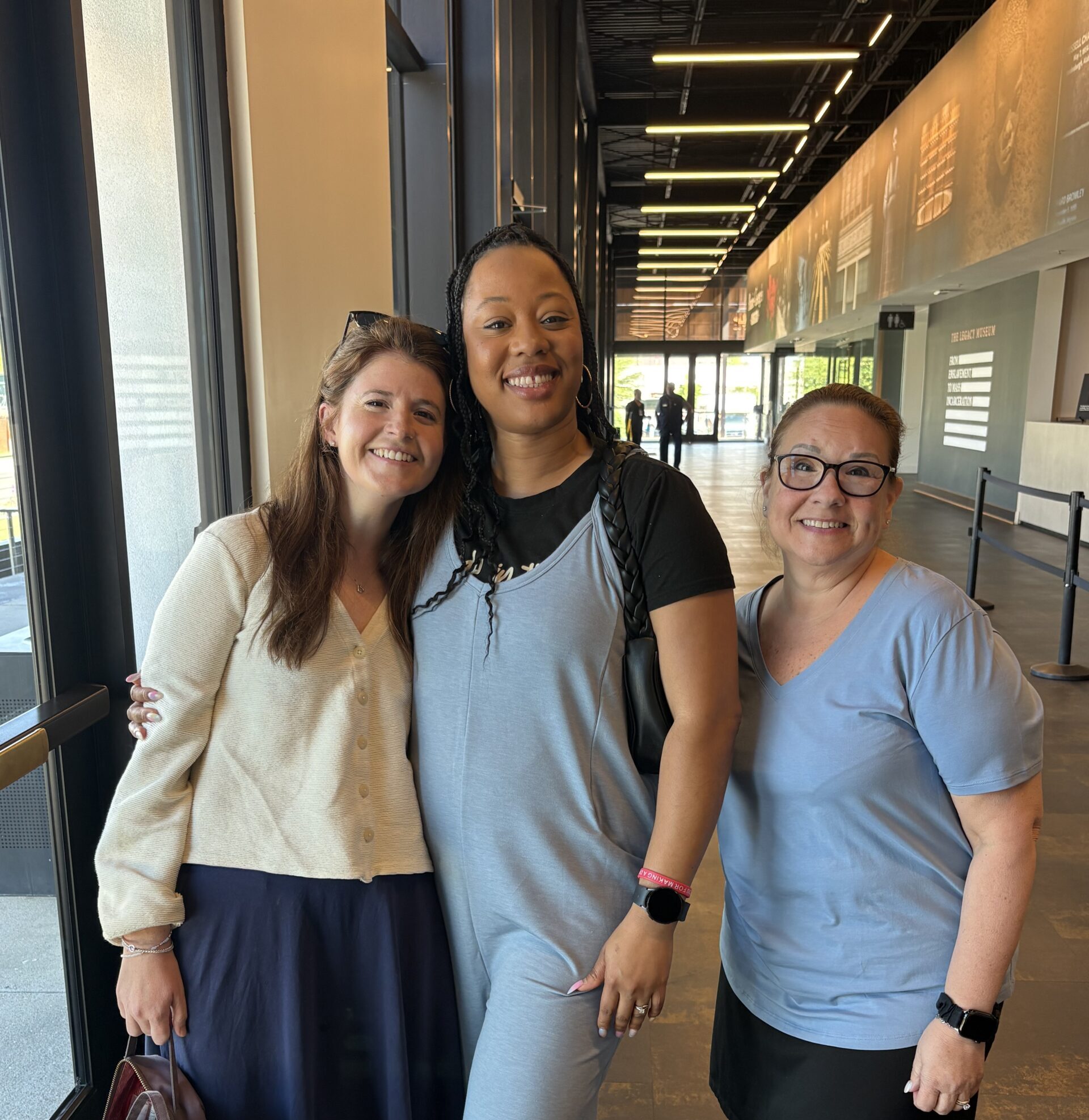
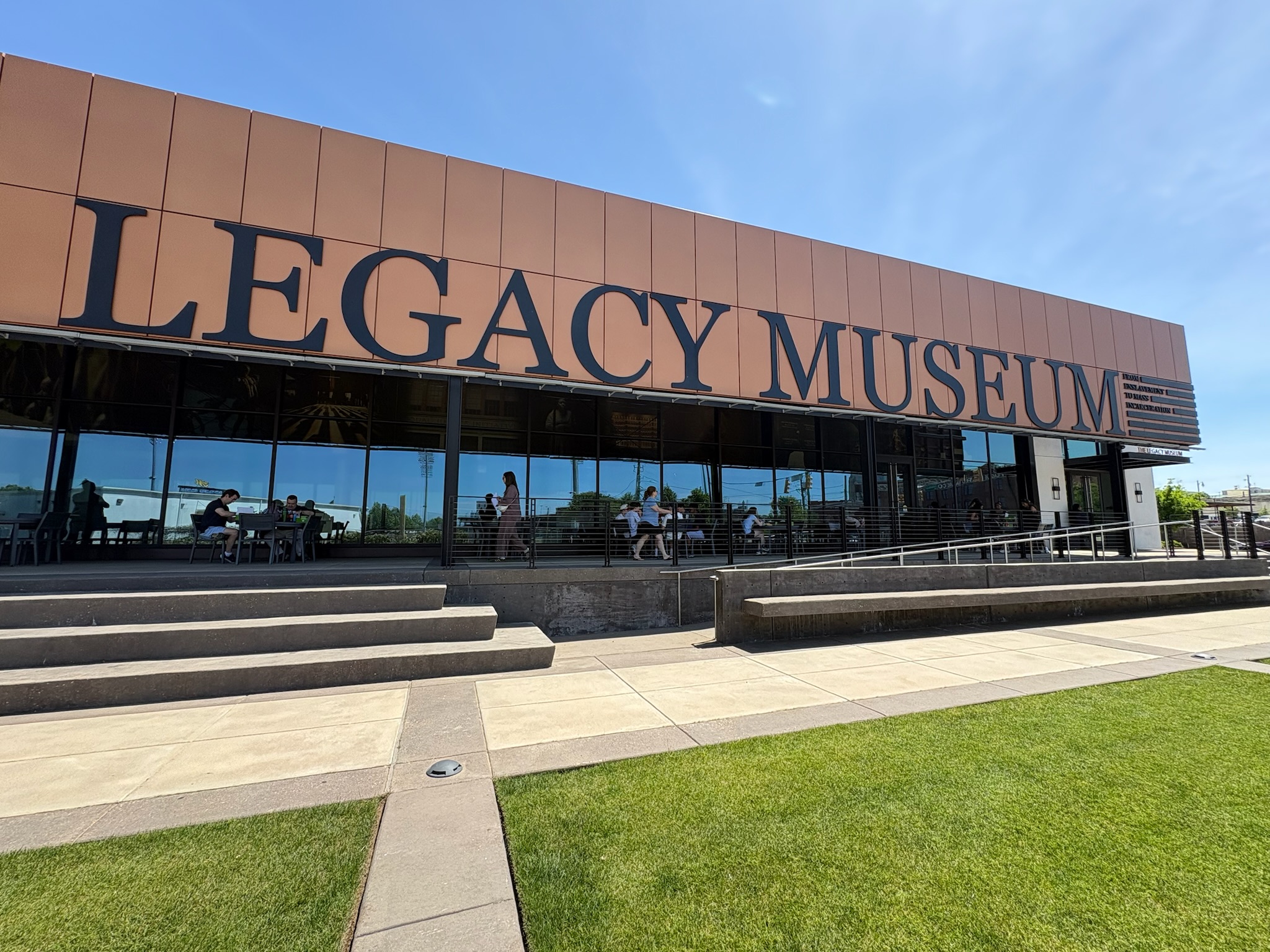
Students spent the morning at The Legacy Museum. The museum is founded by Montgomery’s Equal Justice Initiative. EJI is a nonprofit organization committed to ending mass incarceration and excessive punishment in the United States, to challenging racial and economic injustice, and to protecting basic human rights for the most vulnerable people in American society.
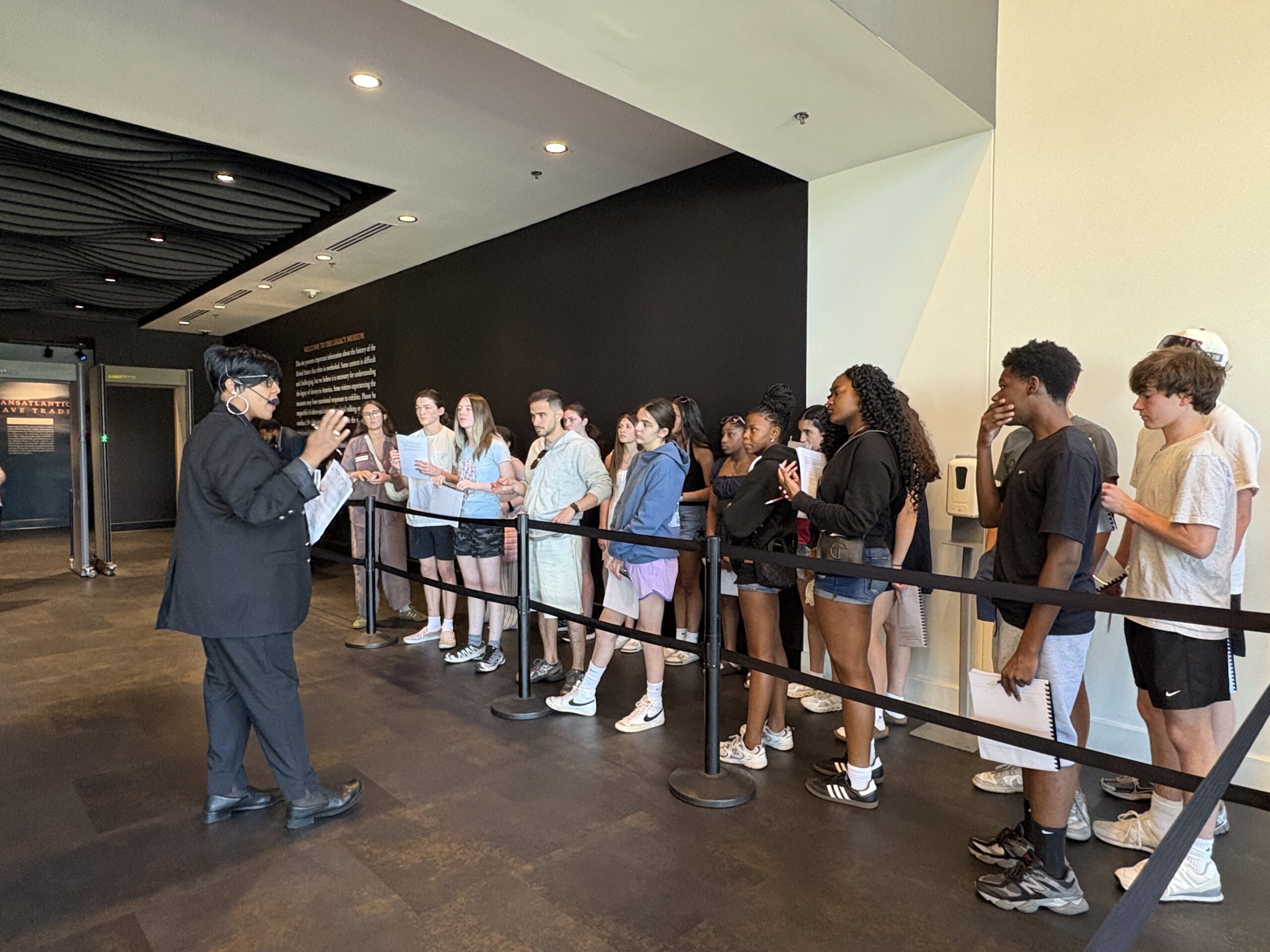
Students viewed the exhibit “From Enslavement to Mass Incarceration” which featured photos, written anecdotes, artwork, documentaries, and testimonials from currently incarcerated people.
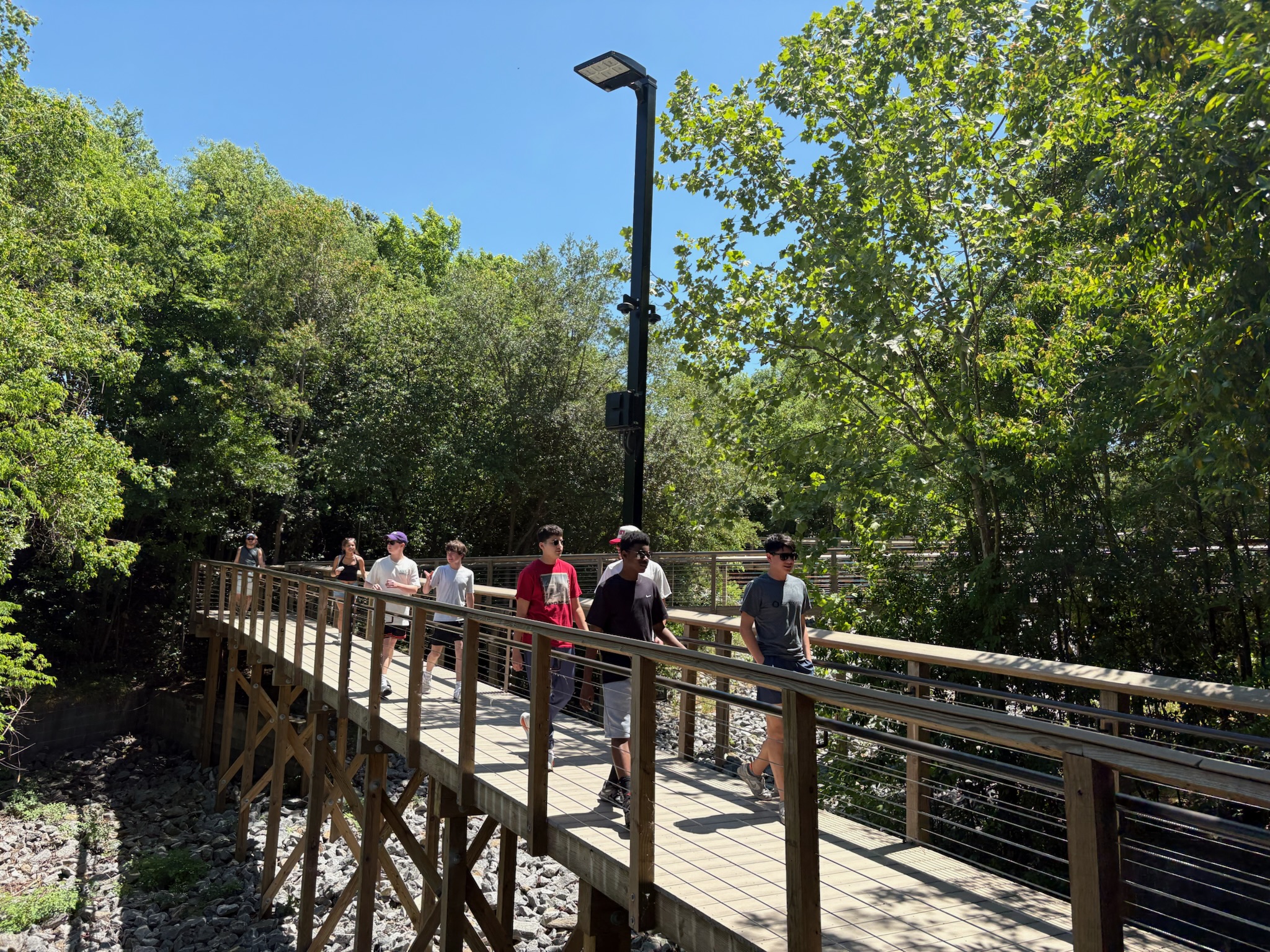
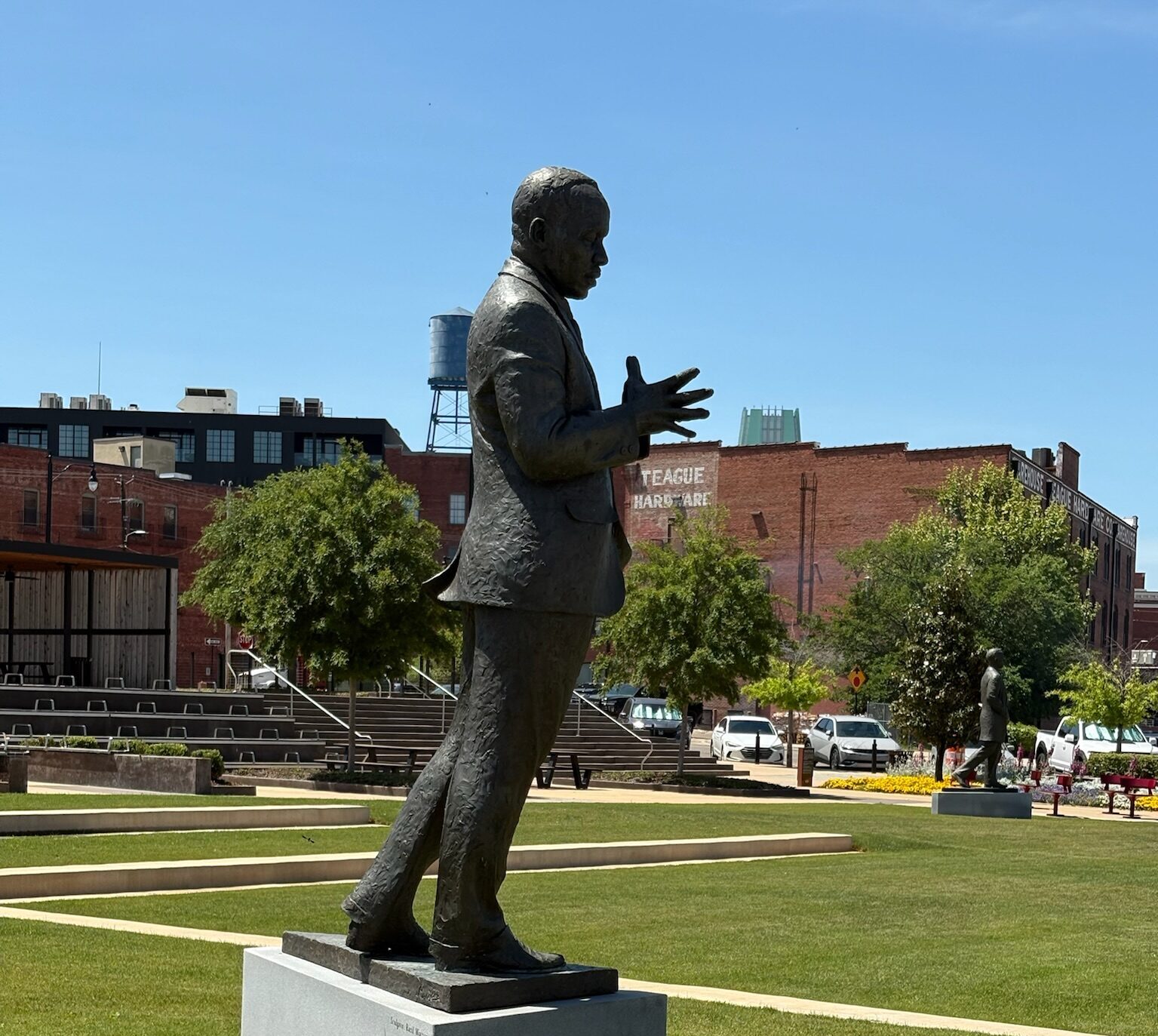
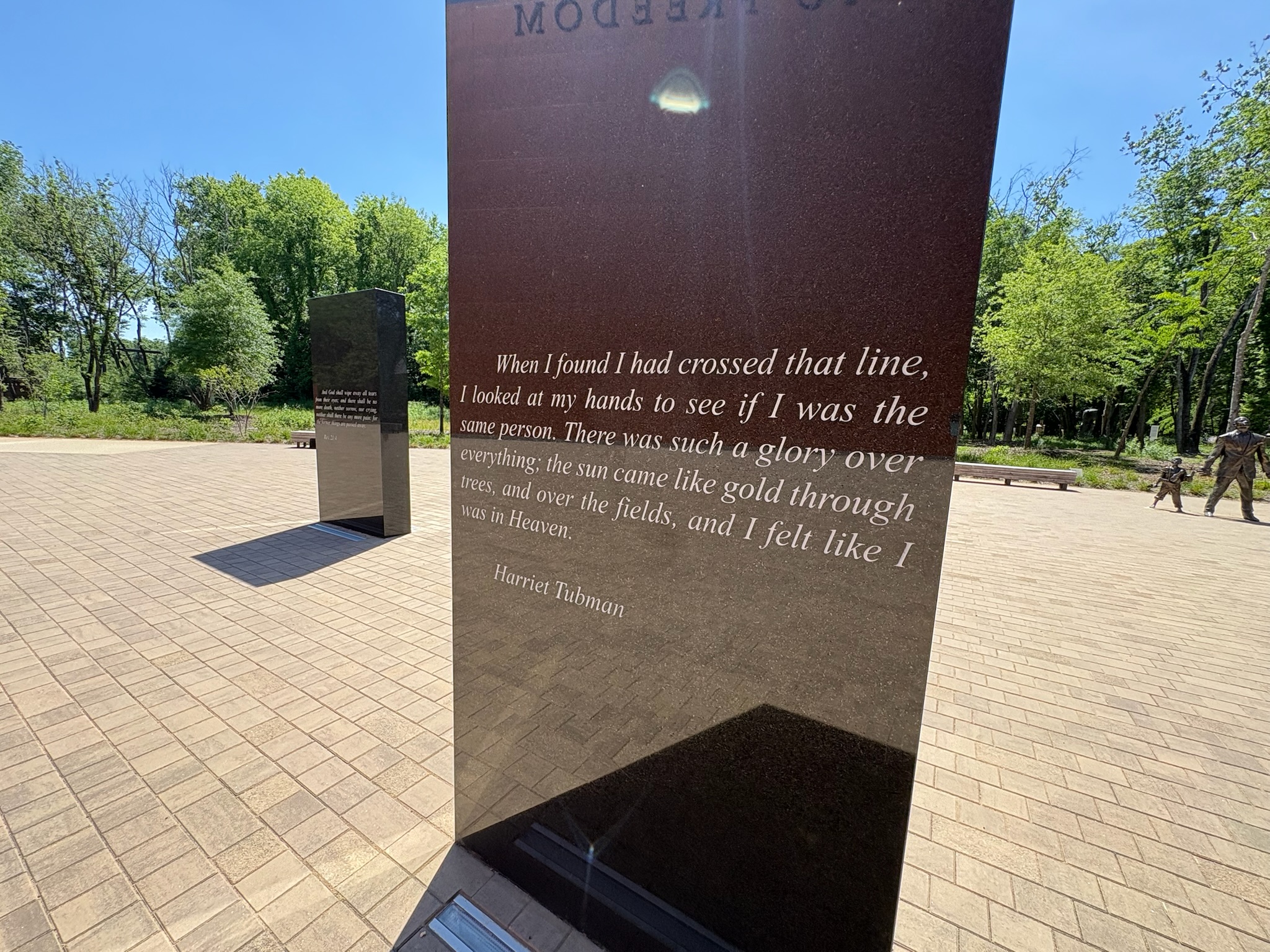
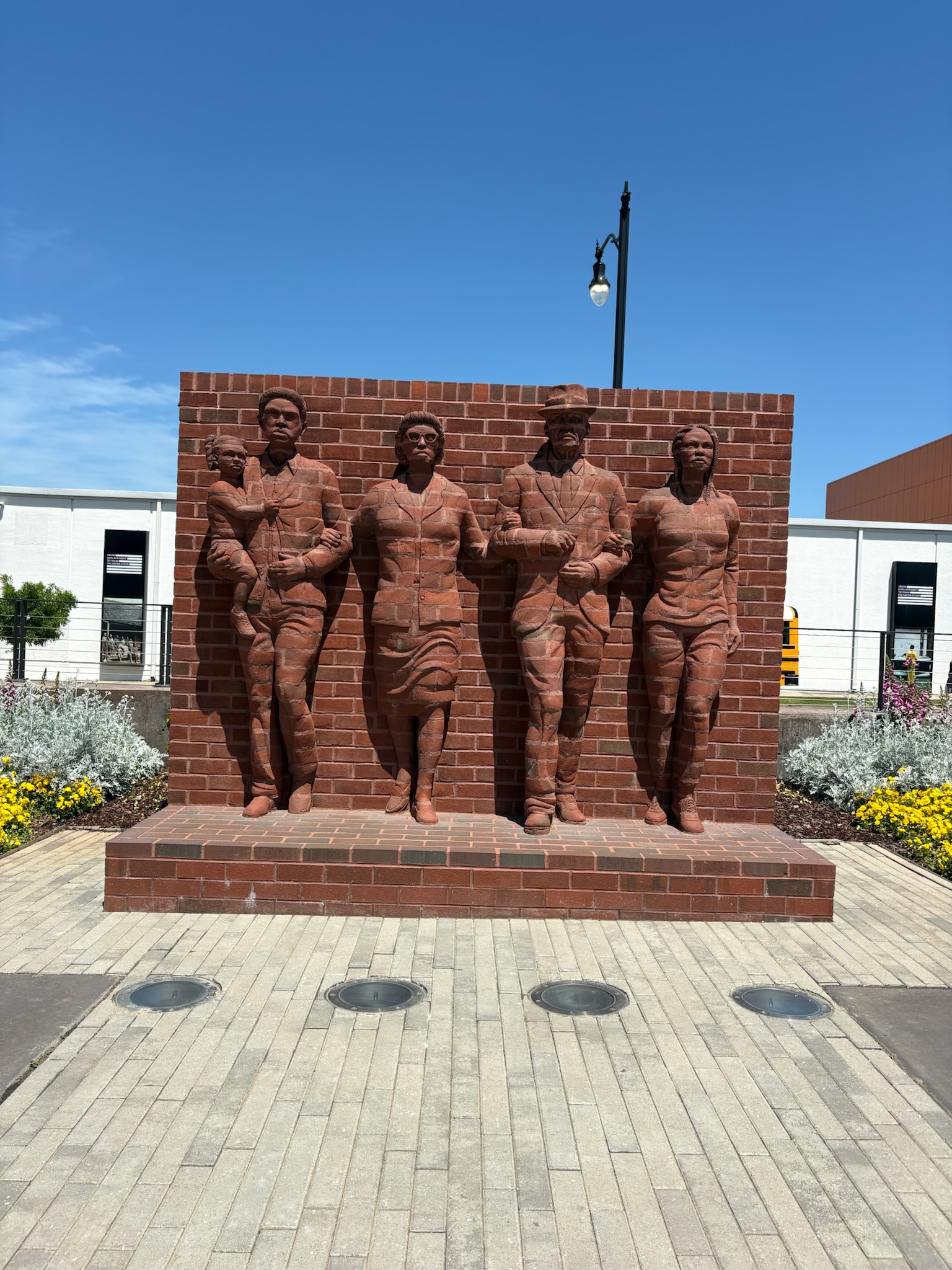
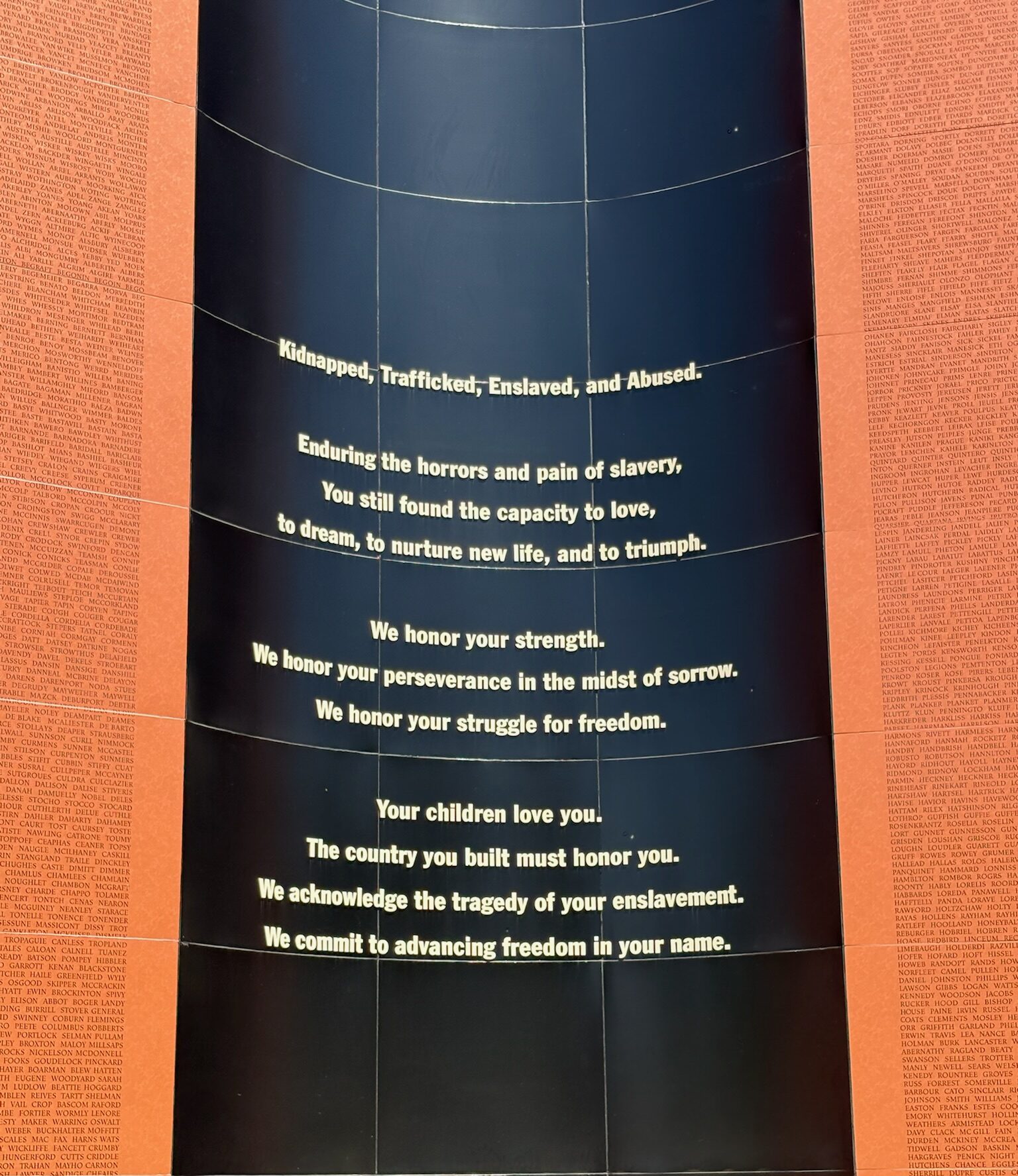
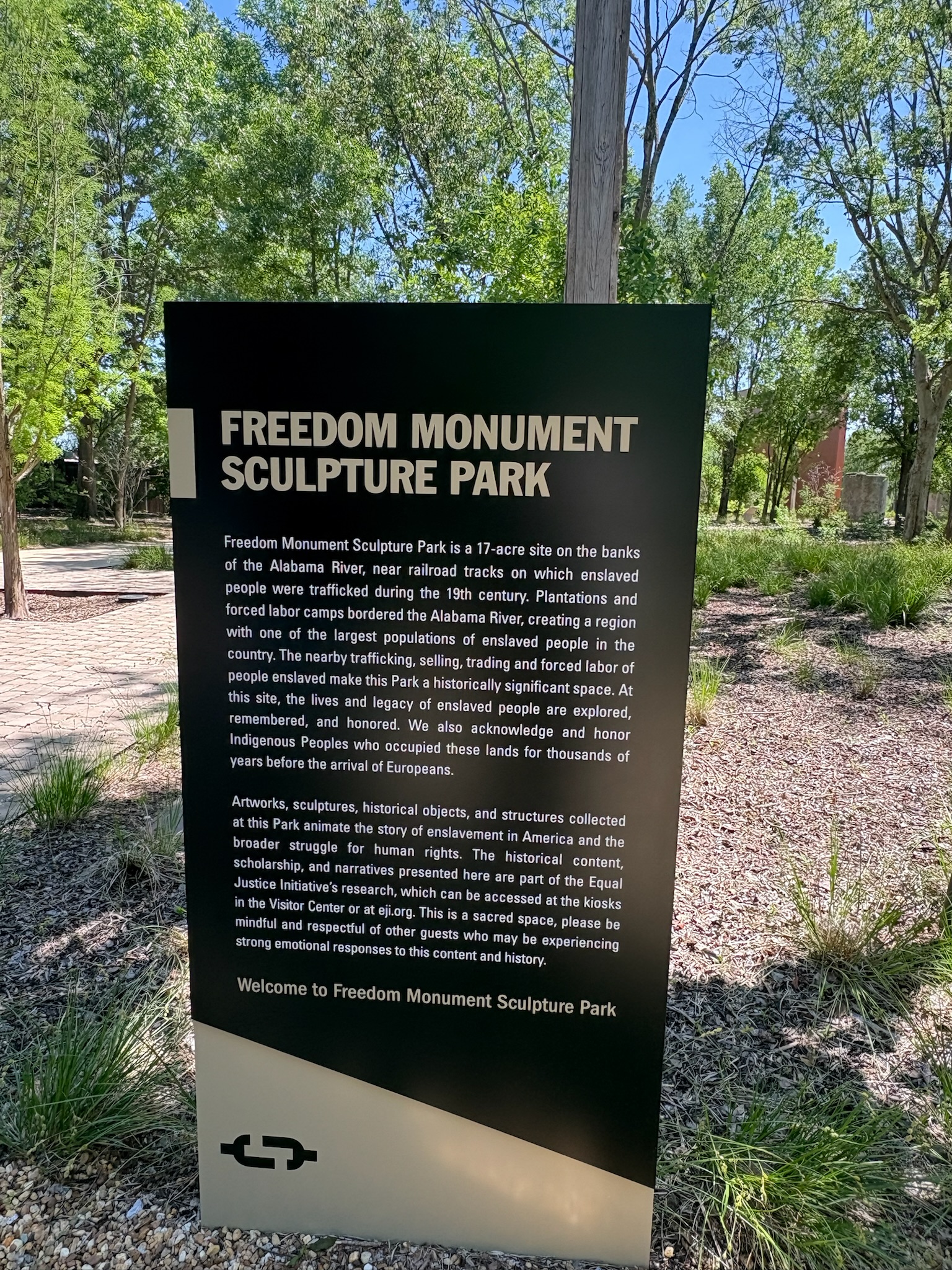
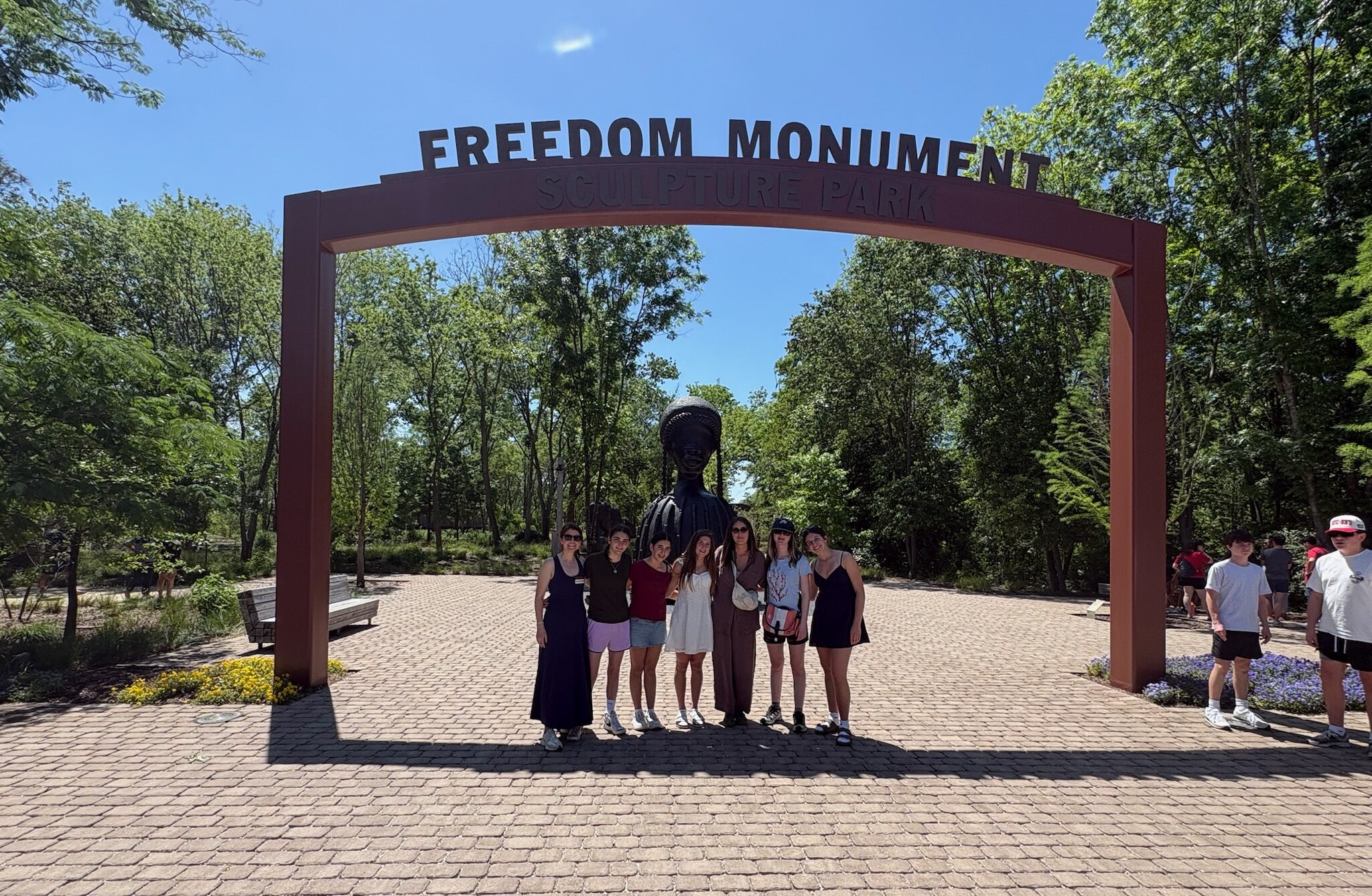
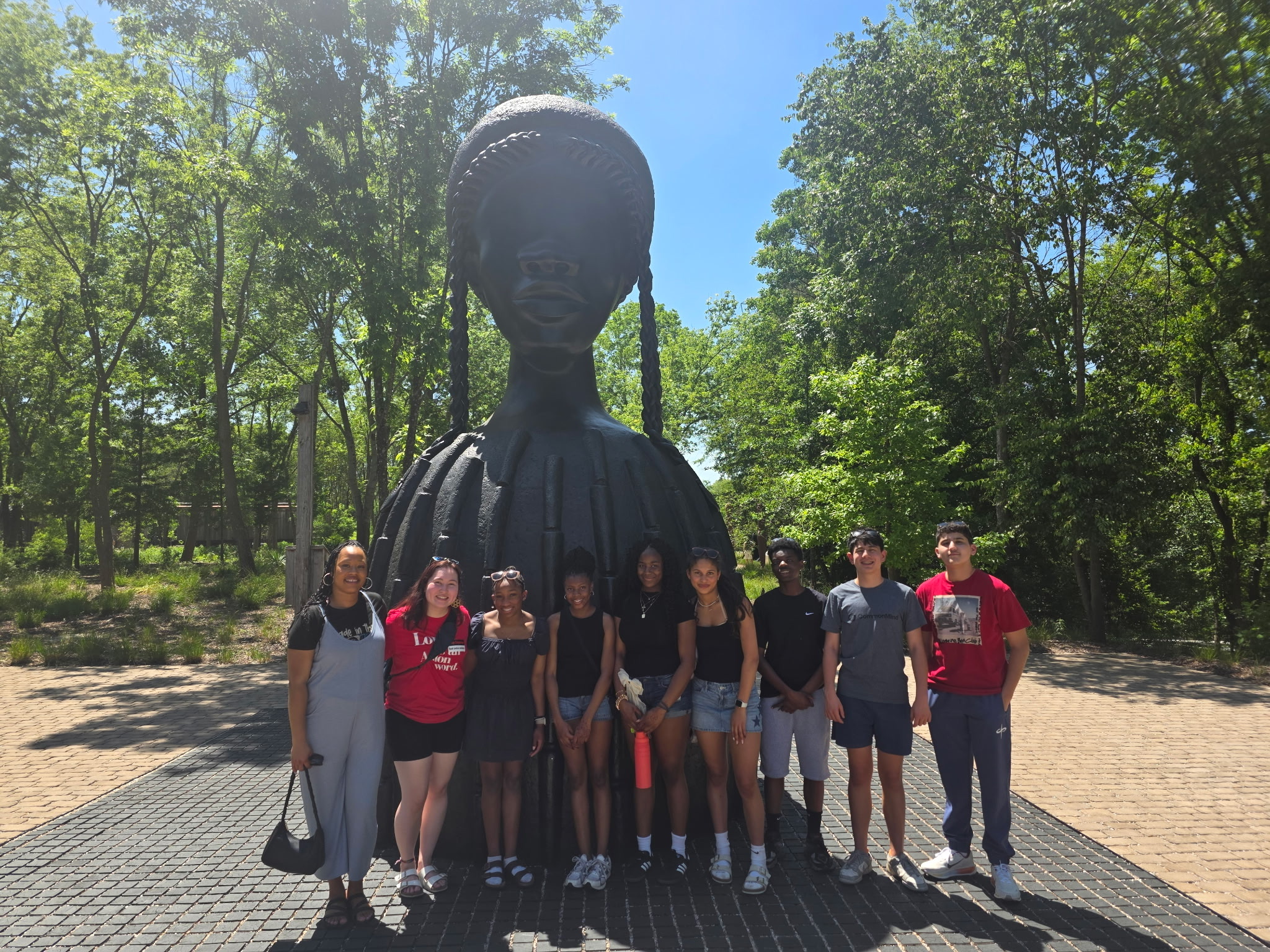
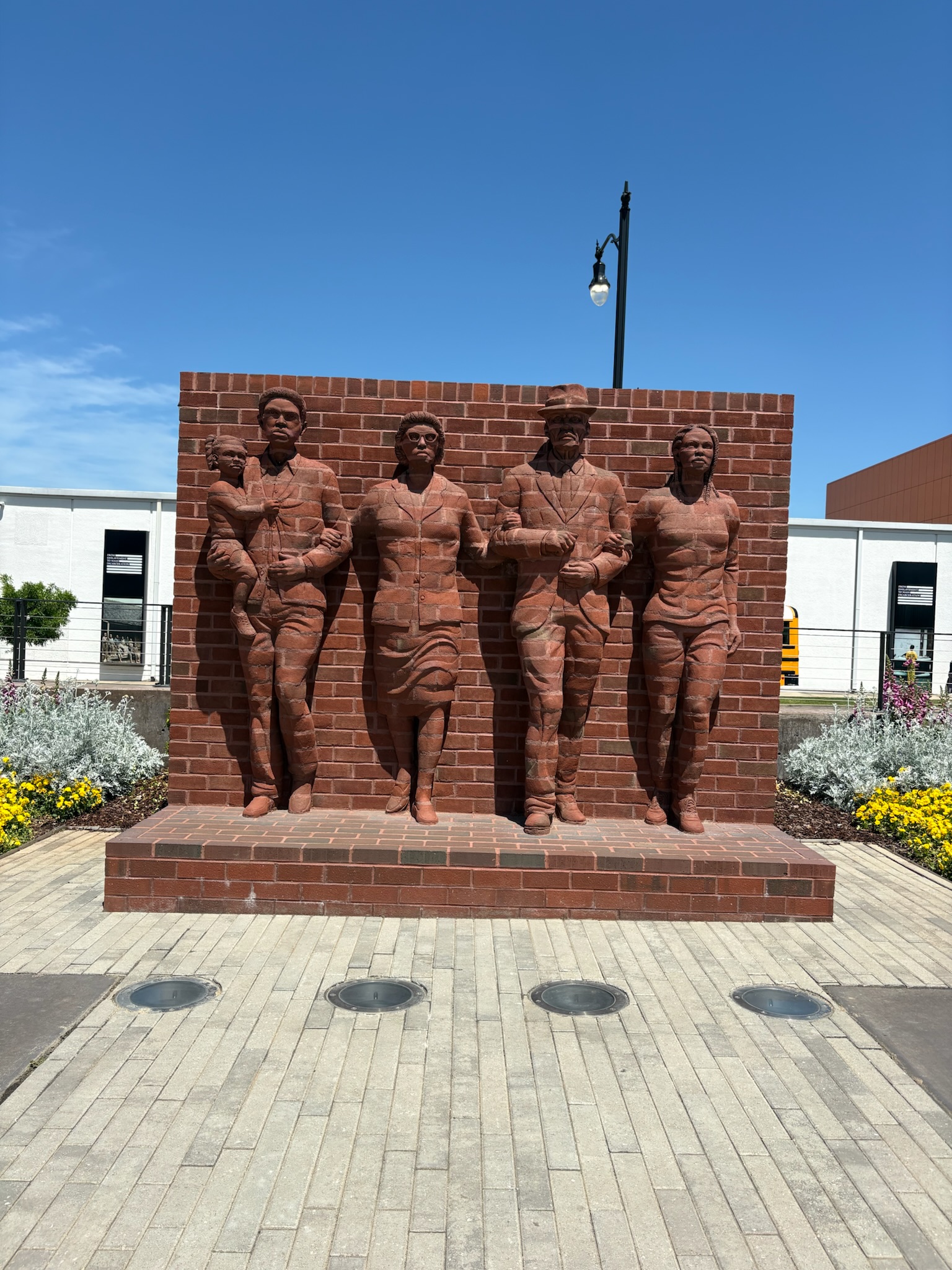
We were not allowed to take photos inside. Instead, you will see photos from the Freedom Monument Sculpture Park to accompany the text (more on this in the next section).
The exhibit took an in-depth look at the North and South’s role in enslavement and deeply drove home the understanding that the nation’s wealth and infrastructure was built through enslavement and is continued through oppression and incarceration strategies.
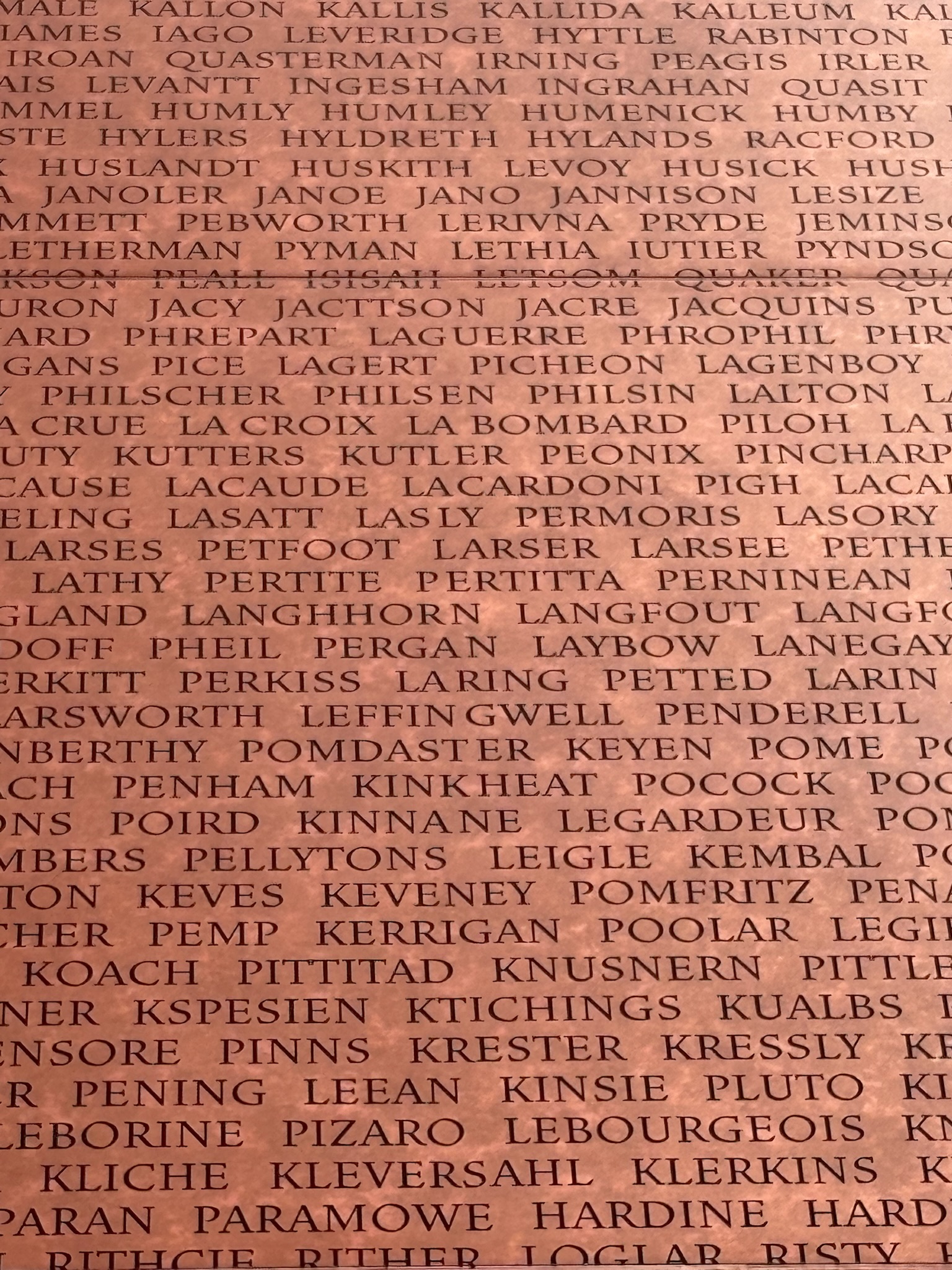
We viewed The Water Entrance: The Middle Passage & The Atlantic, paying close attention to the Sound and Sight of the Waves and reading the panels about the Transatlantic Slave Trade (and the number of people who died before reaching the shore), thinking to our time back at CRS discussing the Slave Trade Clause of the Constitution. Students thought about how the “legal compromise” of 1778 feels different when confronted with the physical reality of the ocean as a graveyard.
We learned that Massachusetts was the first state to legalize slavery in 1614. We heard stories of families separated as we stood on the site where enslaved Black people were forced to labor in bondage. Videos showed reenactments from the actual testimonies of enslaved people.
One student commented, “Many people were separated from their families and children. Even when they were free, they still couldn’t find their families. ”
We heard an interview with MLK Jr. about political and racial terror. “It is a cruelty to tell a bootless man to lift himself up by the bootstraps,” MLK shared in the video.
An 8th grader said “The exhibit makes you see the hard parts instead of just sharing the ‘easy’ parts of history. You can’t miss it.”
“Yeah, it challenges you,” another agreed.
Students spent time writing reflections on prompts including:
- What were your initial reactions to the Legacy Museum? How did it make you feel?
- What were some of the most impactful exhibits or stories you encountered?
And:
- How did the museum connect the history of slavery to the present-day reality of mass incarceration? What did you learn about this connection?
- How does the history you learned about today relate to current events and issues in our society?
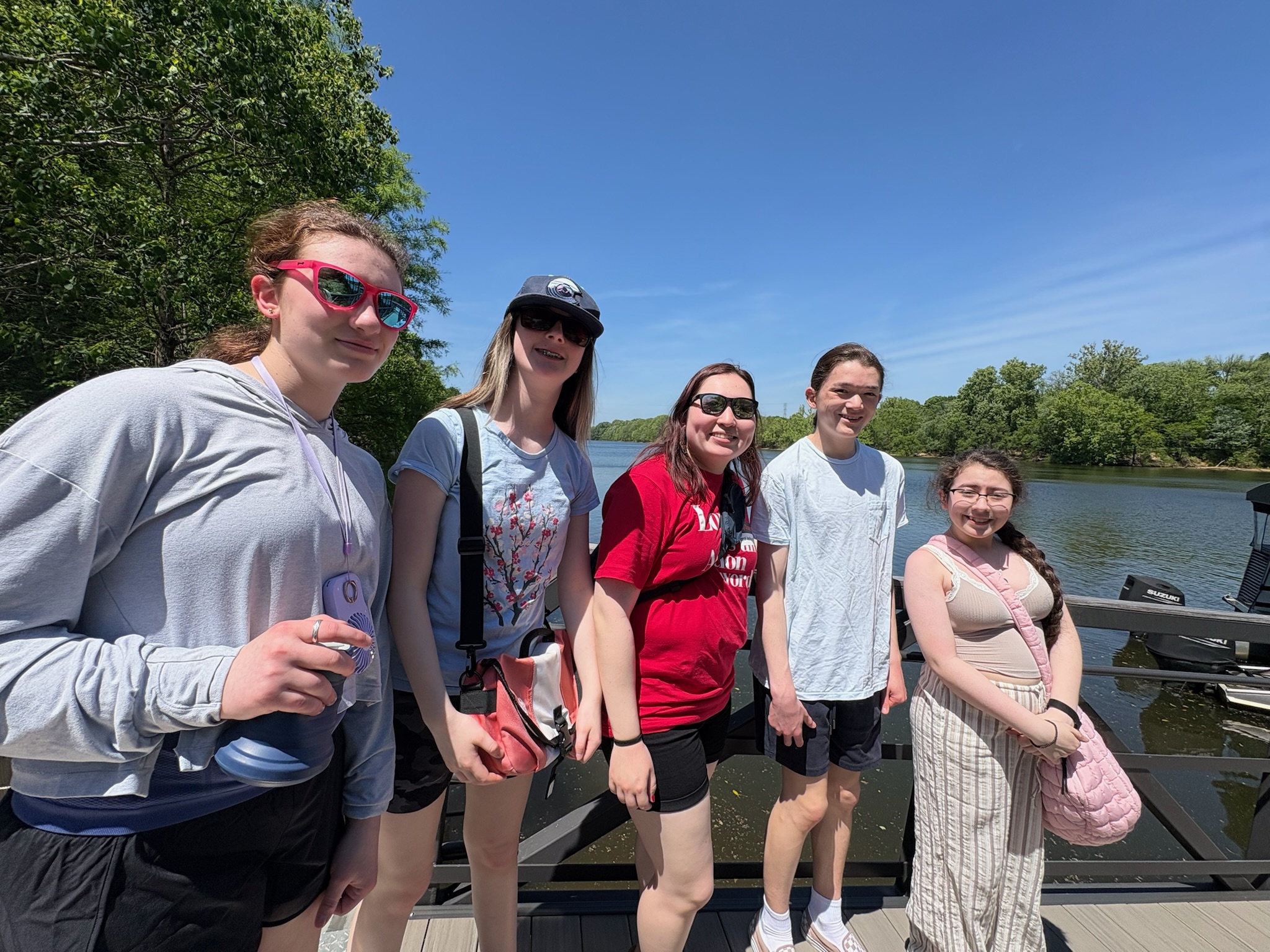
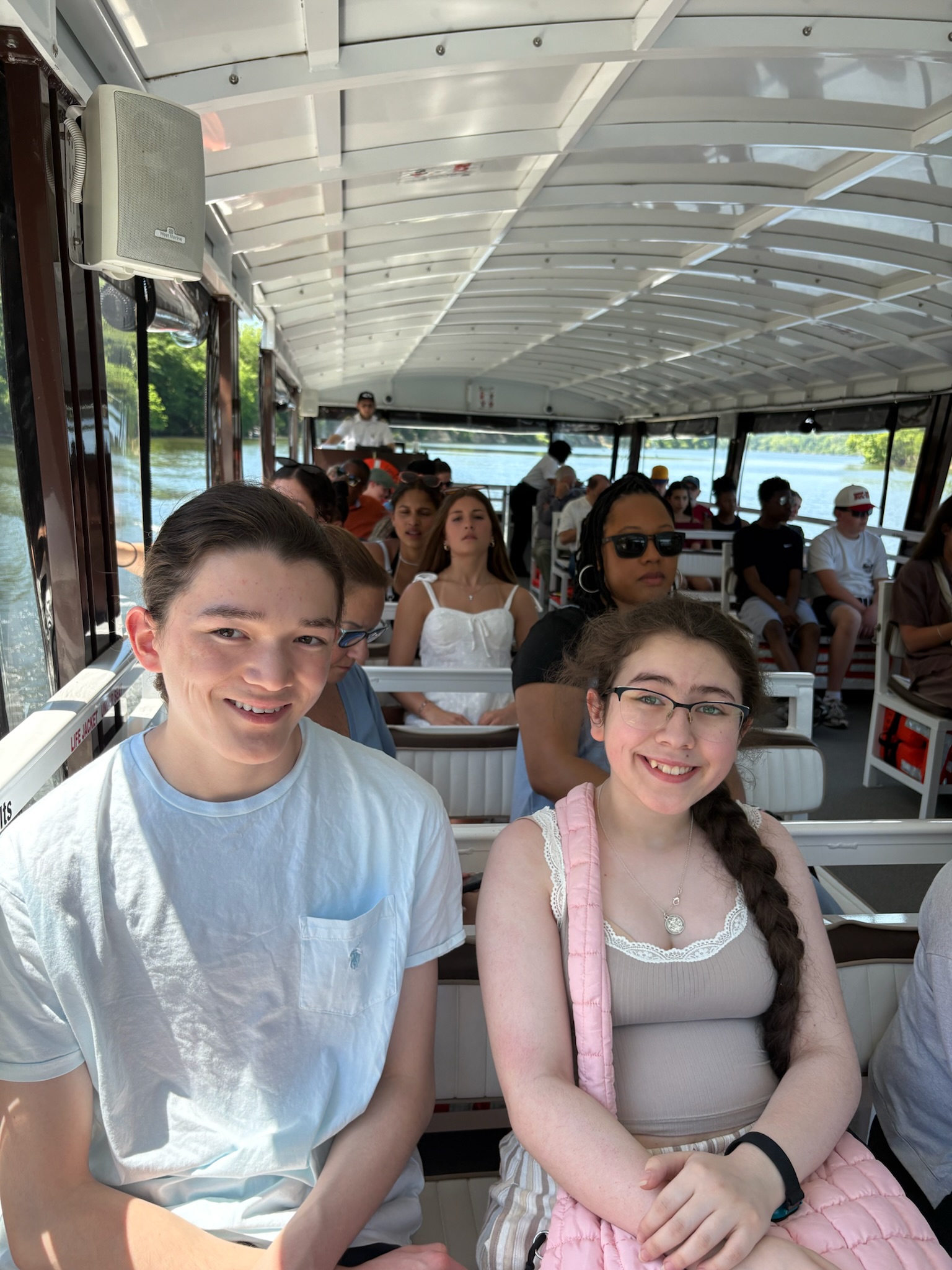
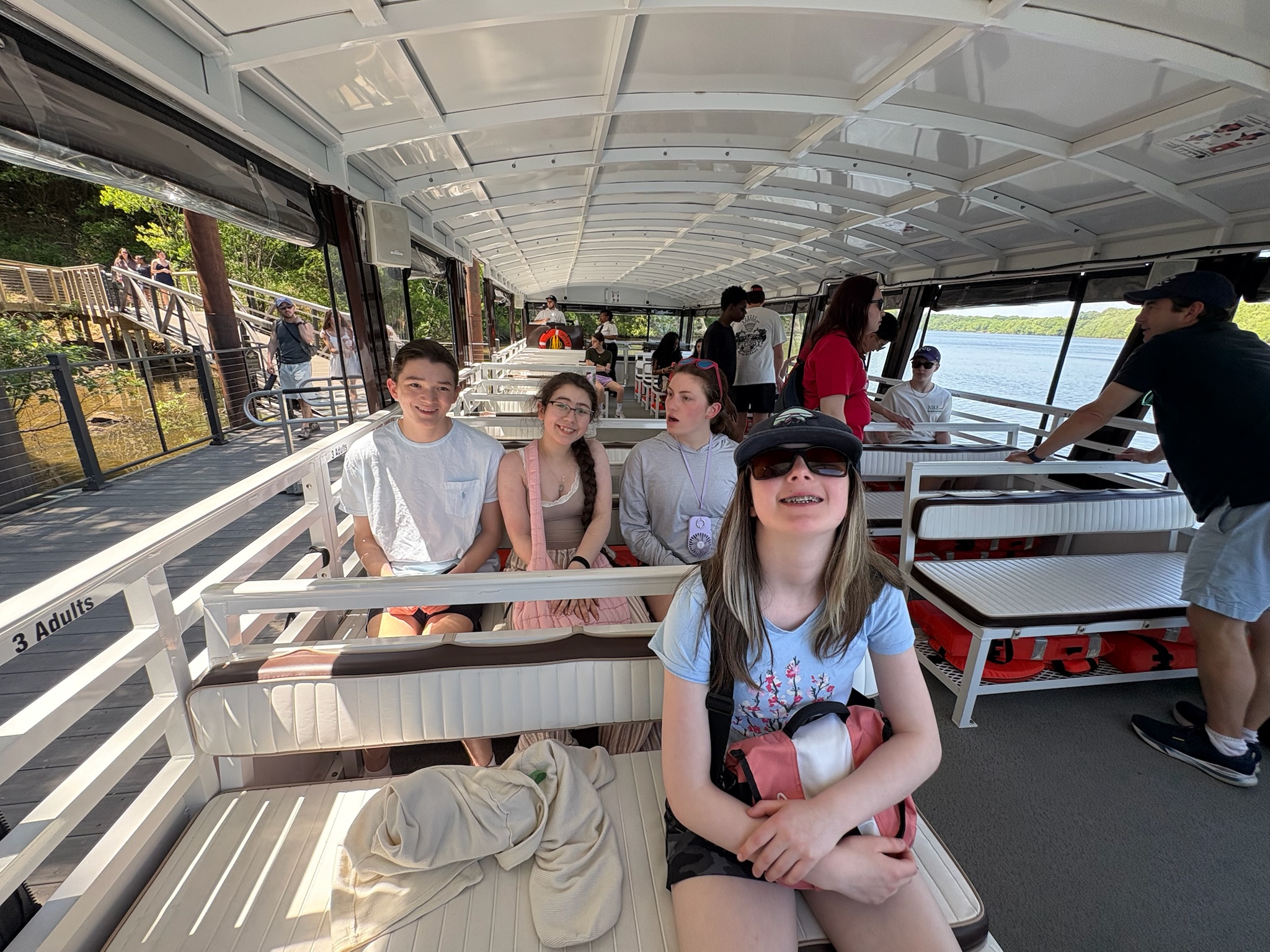
From the Legacy Museum, we took a 15 minute boat ride over to EJI’s Freedom Monument Sculpture Park.
The 17-acre site overlooks the Alabama River. The sculpture park honors the lives and memories of the 10 million Black people who were enslaved in America and celebrates their courage and resilience.
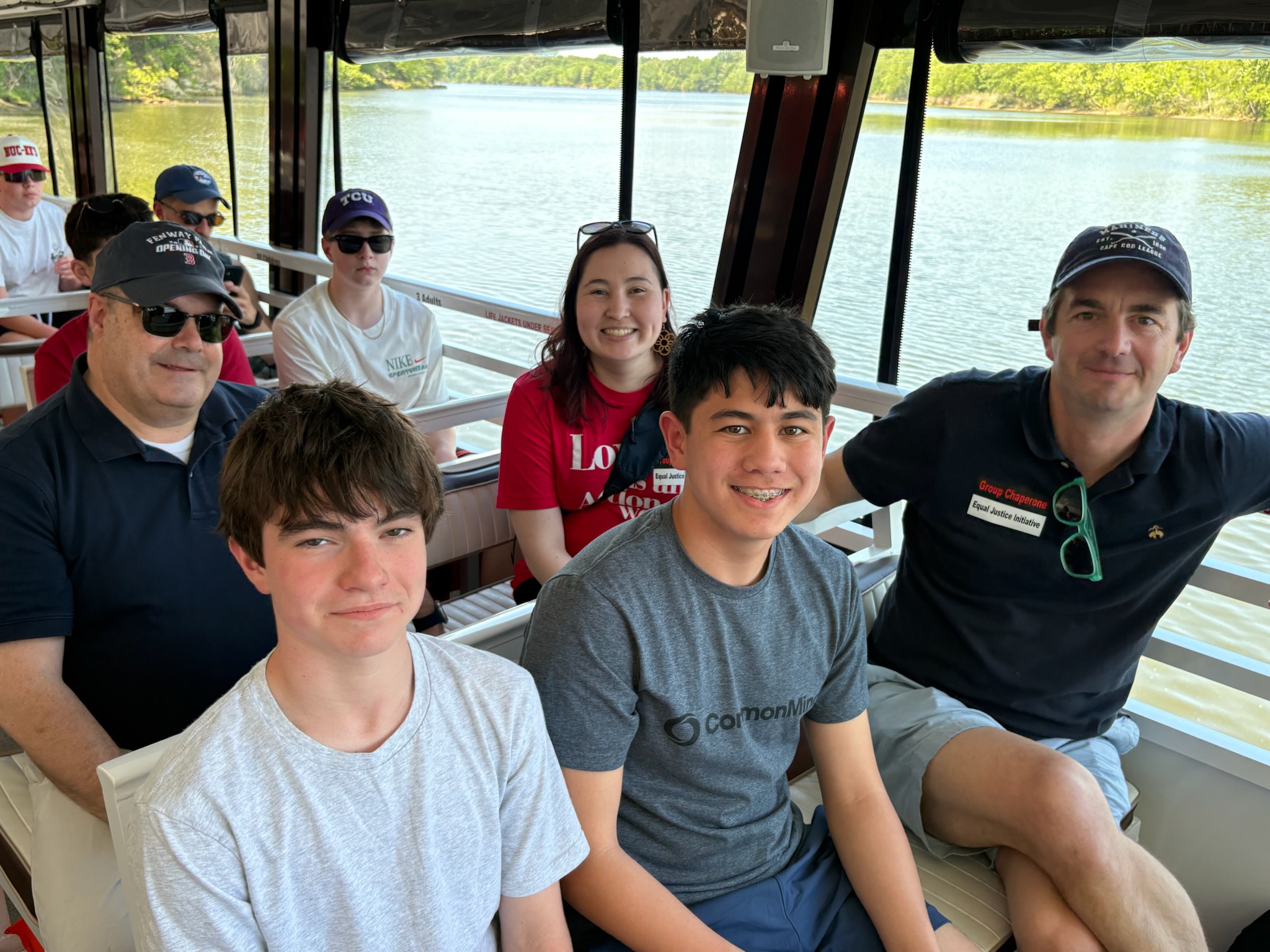
On the boat ride over, we heard a narration about the history of the Alabama River as related to the slave trade, and enslaved people. It talked about how the river functioned as both a site of white leisure and a space where enslaved people were controlled.
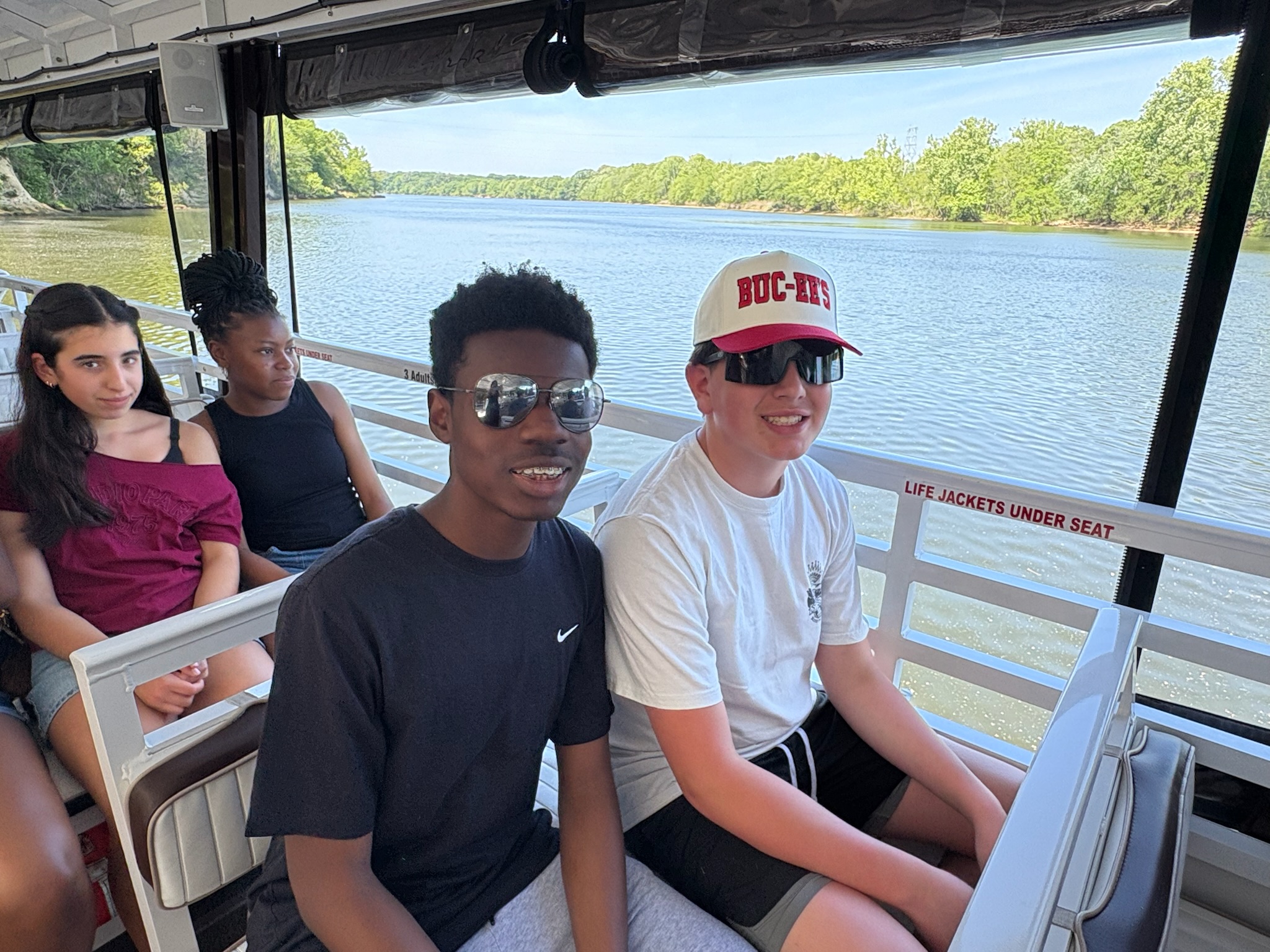
We learned about the Muscogees, the Indigenous people that inhabited the area (referred to as Creeks by European settlers) and the Treatise on Slavery by Alonso de Sandoval.
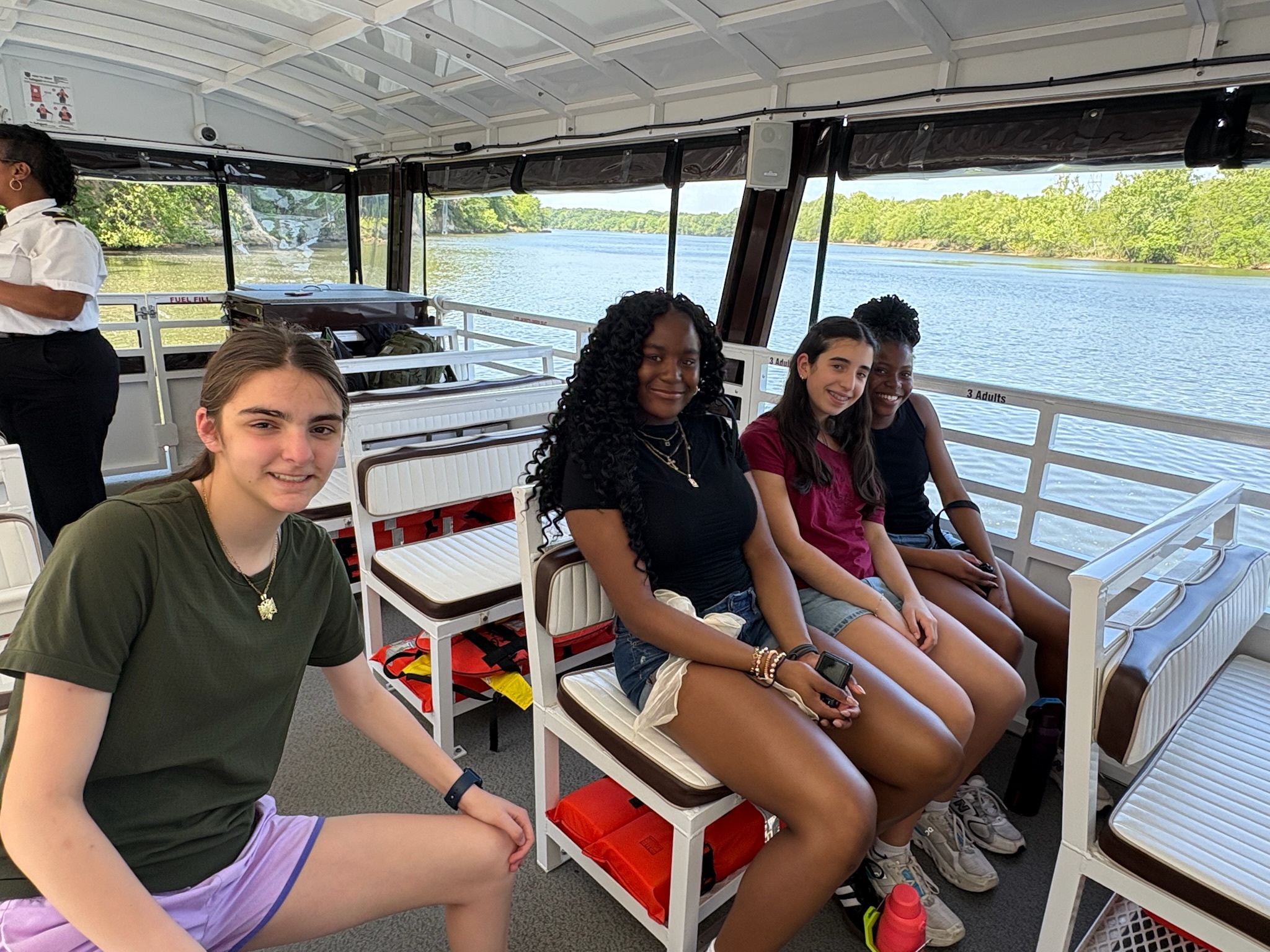
When we arrived, we saw Langston Hughes’ poem The Negro Speaks of Rivers at the park with the Alabama River as the background and were reminded of the consistent theme of water throughout our trip.
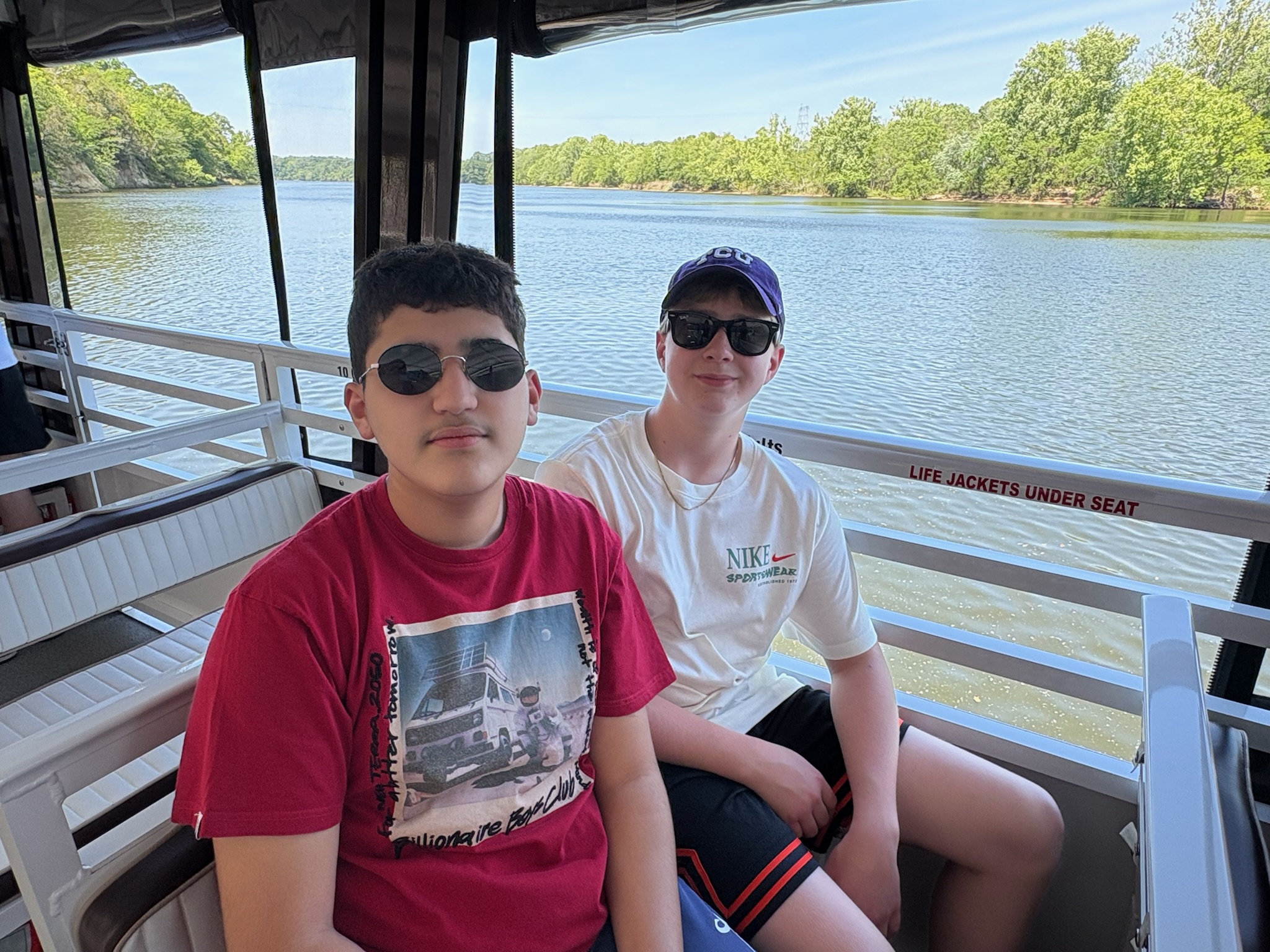
Students commented:
“I feel astonished by the justifications for the behavior”
“Things can never get better if they are ignored.”
“Visiting this place makes history feel real.”
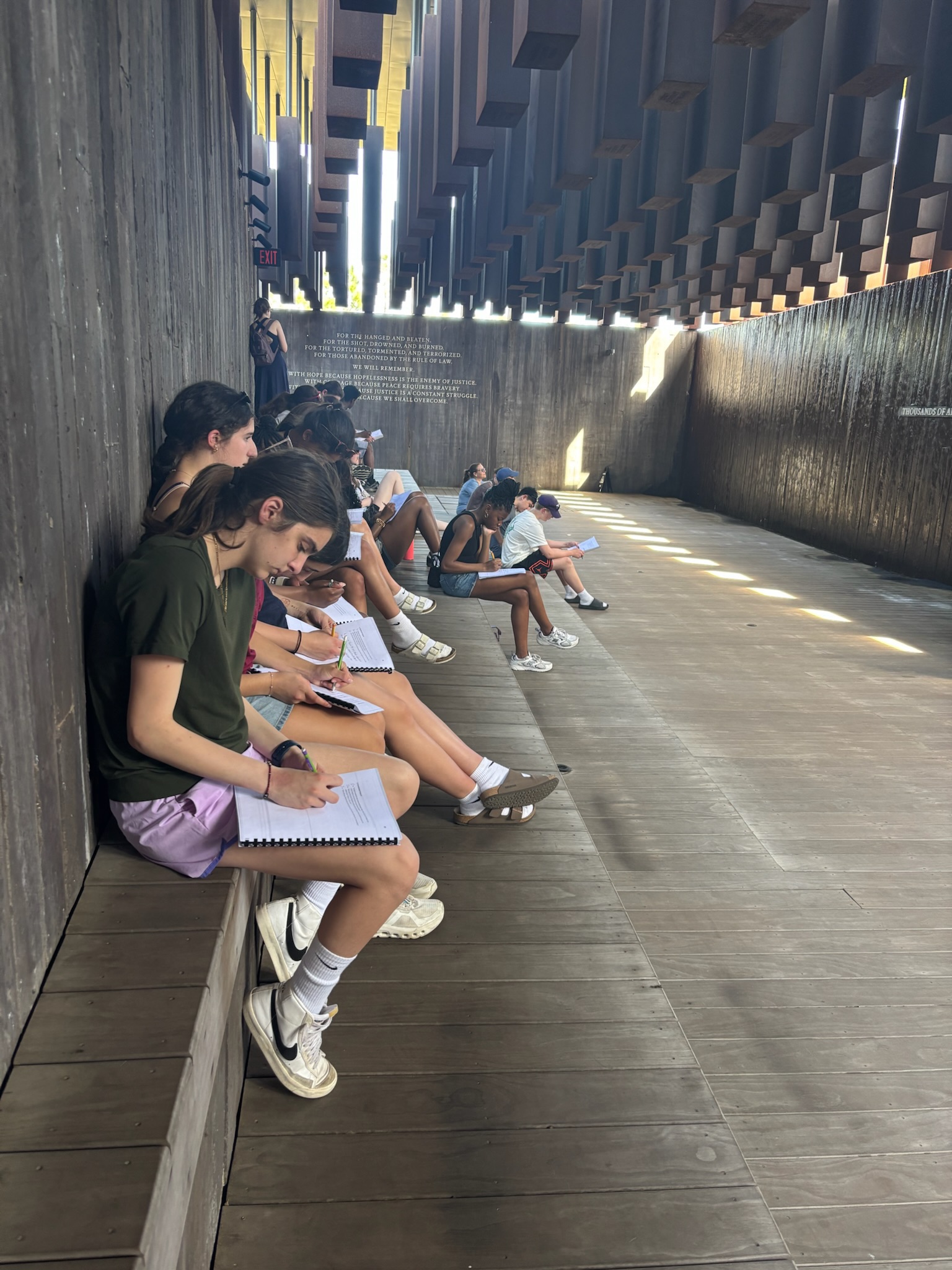
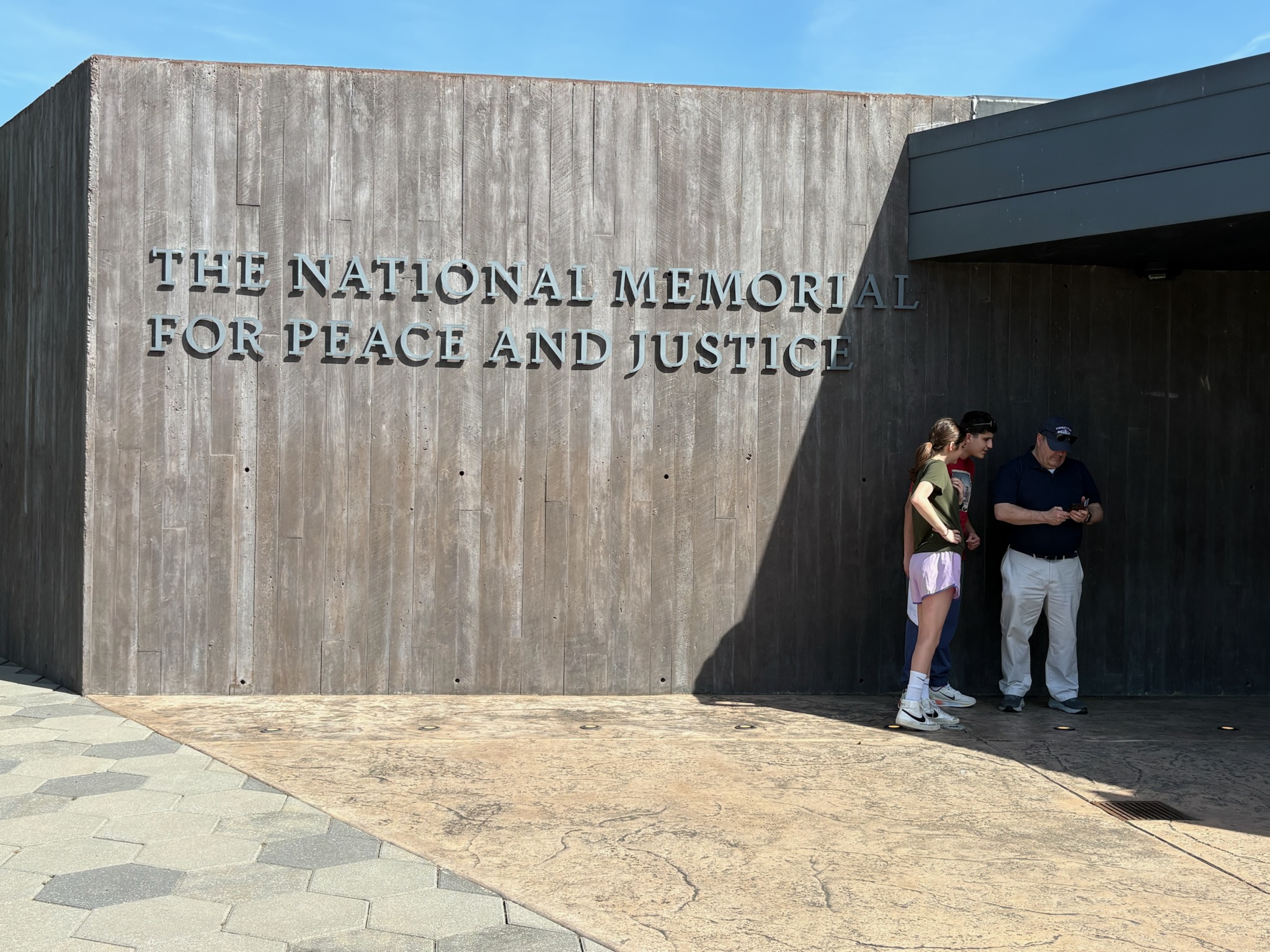
Next, we visited The National Memorial for Peace and Justice, dedicated to the Black victims of lynching in America in the post-Reconstruction era and the racial terrorism these lynchings intended to cause.
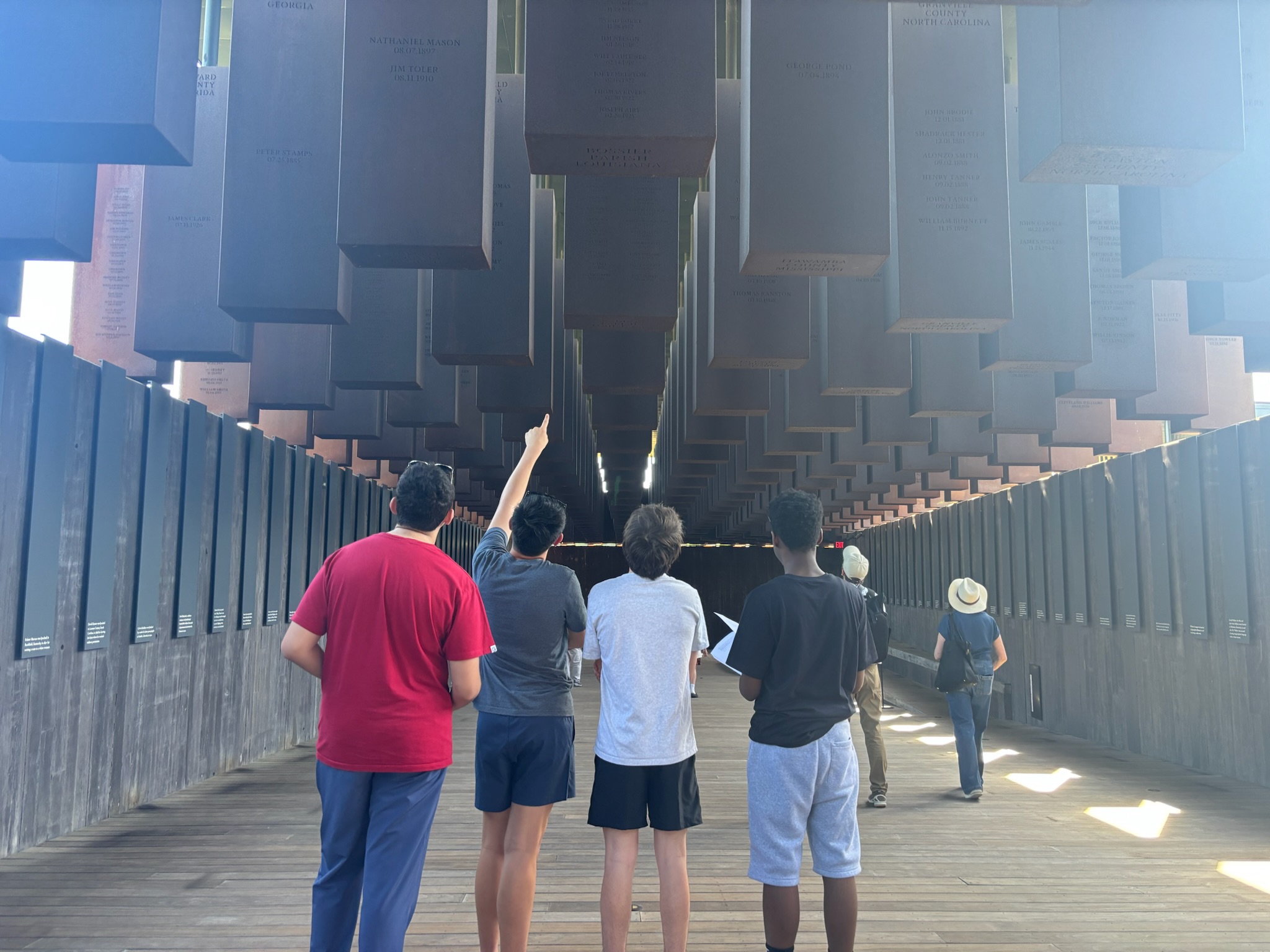
Strikingly, the memorial reminds visitors that most of these lynchings were unacknowledged by the communities in which they occurred, and the perpetrators were never brought to justice. The hanging slabs represent the 805 counties where over 4000 Black Americans were killed in racial terror lynchings between 1877 – 1950.
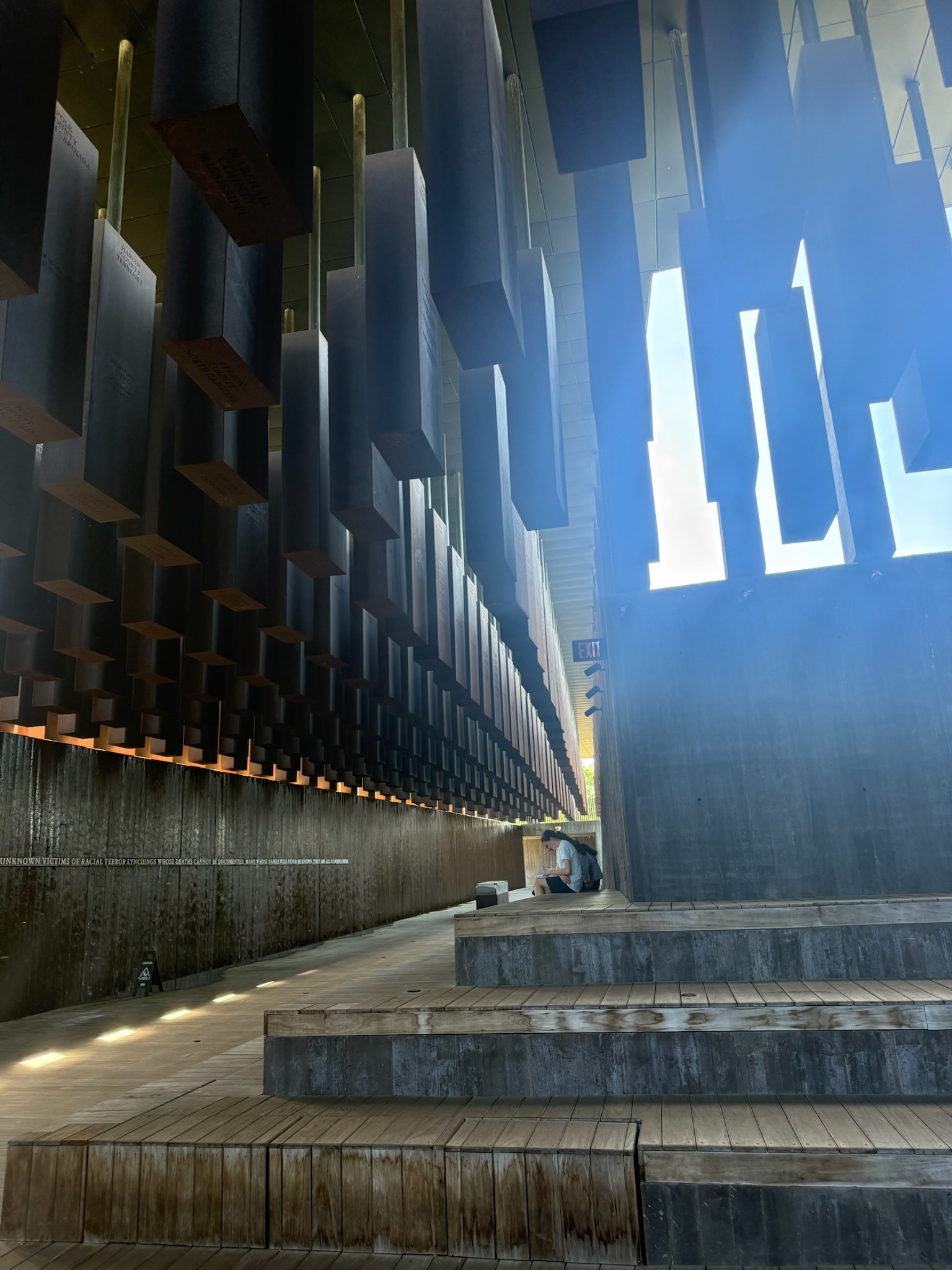
As you’re walking, the pillars rise and move from being on level with you, to rising in the air above you.
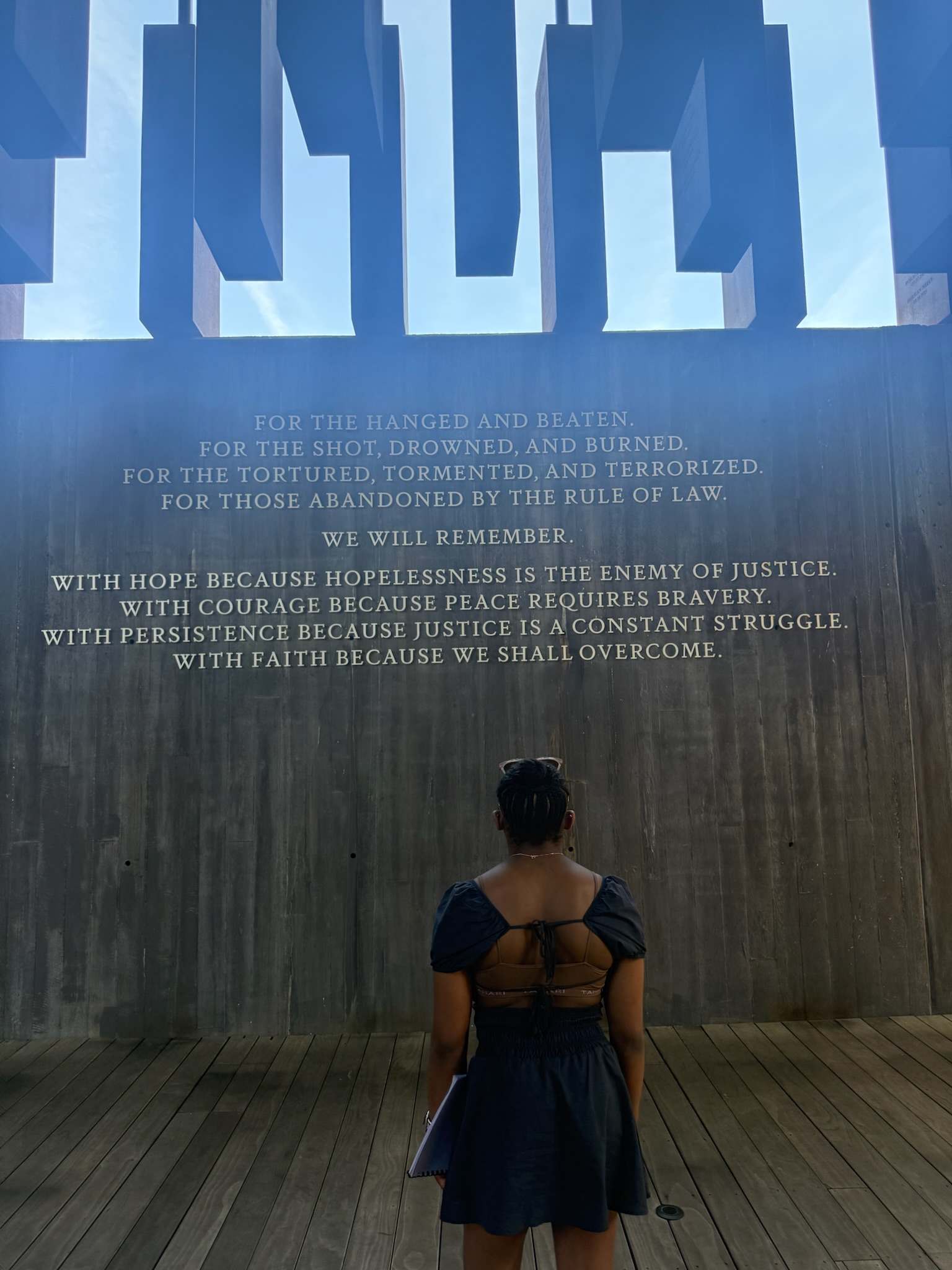
The lynchings were distinct from hangings and mob violence committed against white people and other groups because they were intended to terrorize Black Americans and enforce racial hierarchy.
Students had the opportunity for quiet reflection, journaling, and discussion while at the memorial. They thought about: What responsibilities do we have as individuals and as a society to address the legacies of slavery and racial violence? What actions can we take to promote justice and healing?
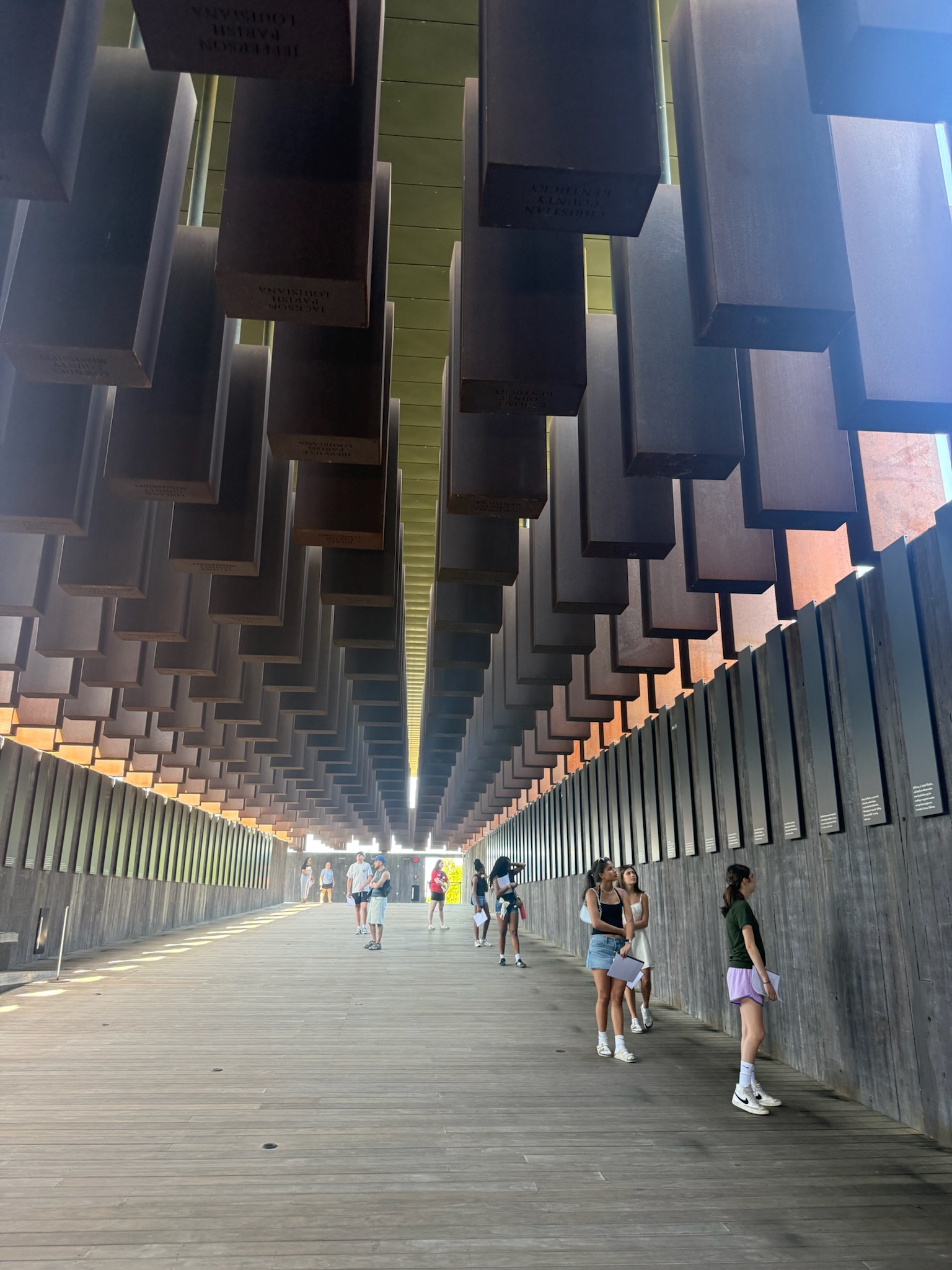
Members of the Class of 2026 shared about the importance of learning this difficult history, and they also thought deeply about the memorial’s construction — the intentional choices that went into its creation.
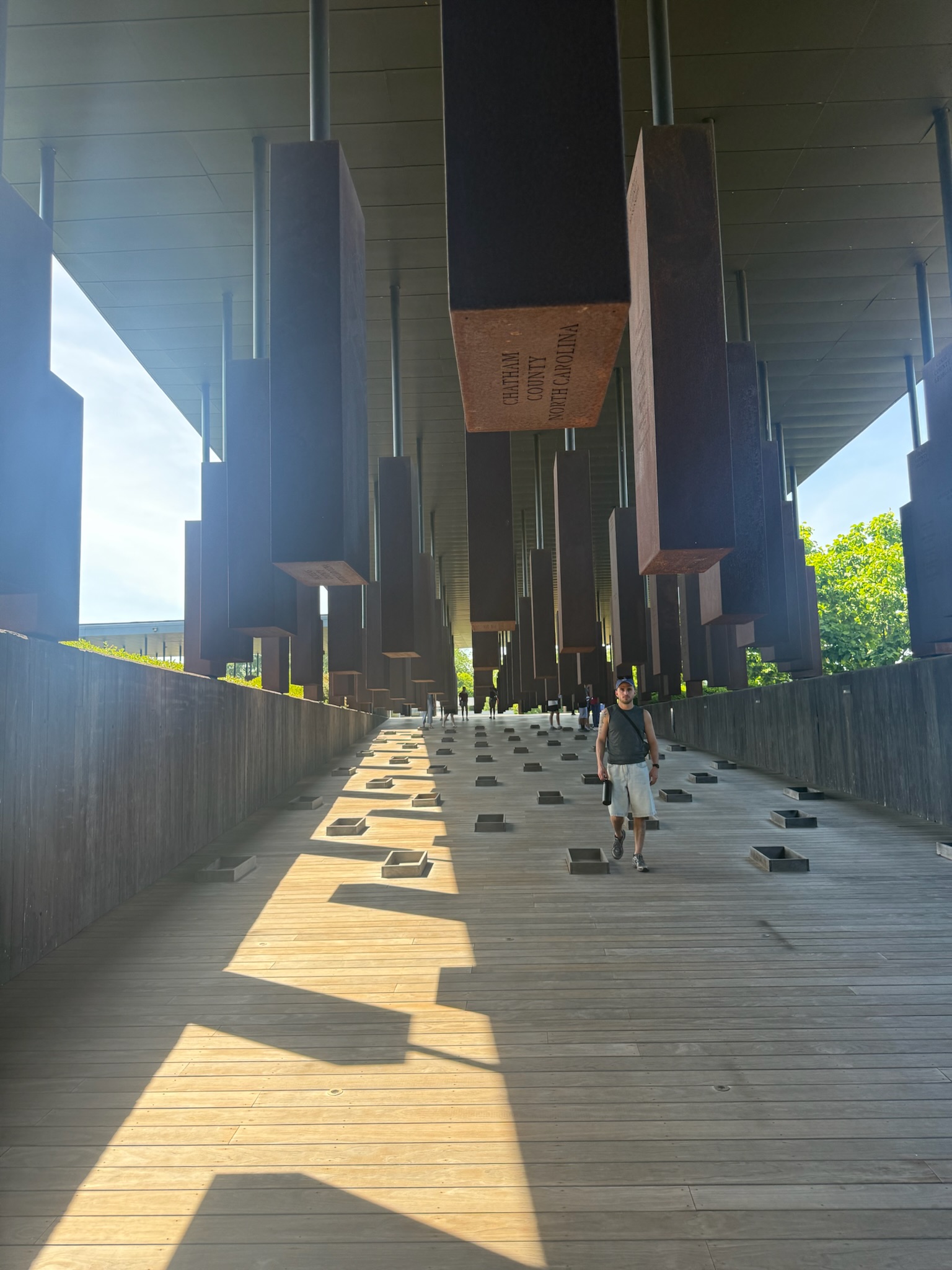
One student observed, “It’s interesting to see how many people lost their lives in lynchings that we don’t even know about. How little it’s been remembered.”
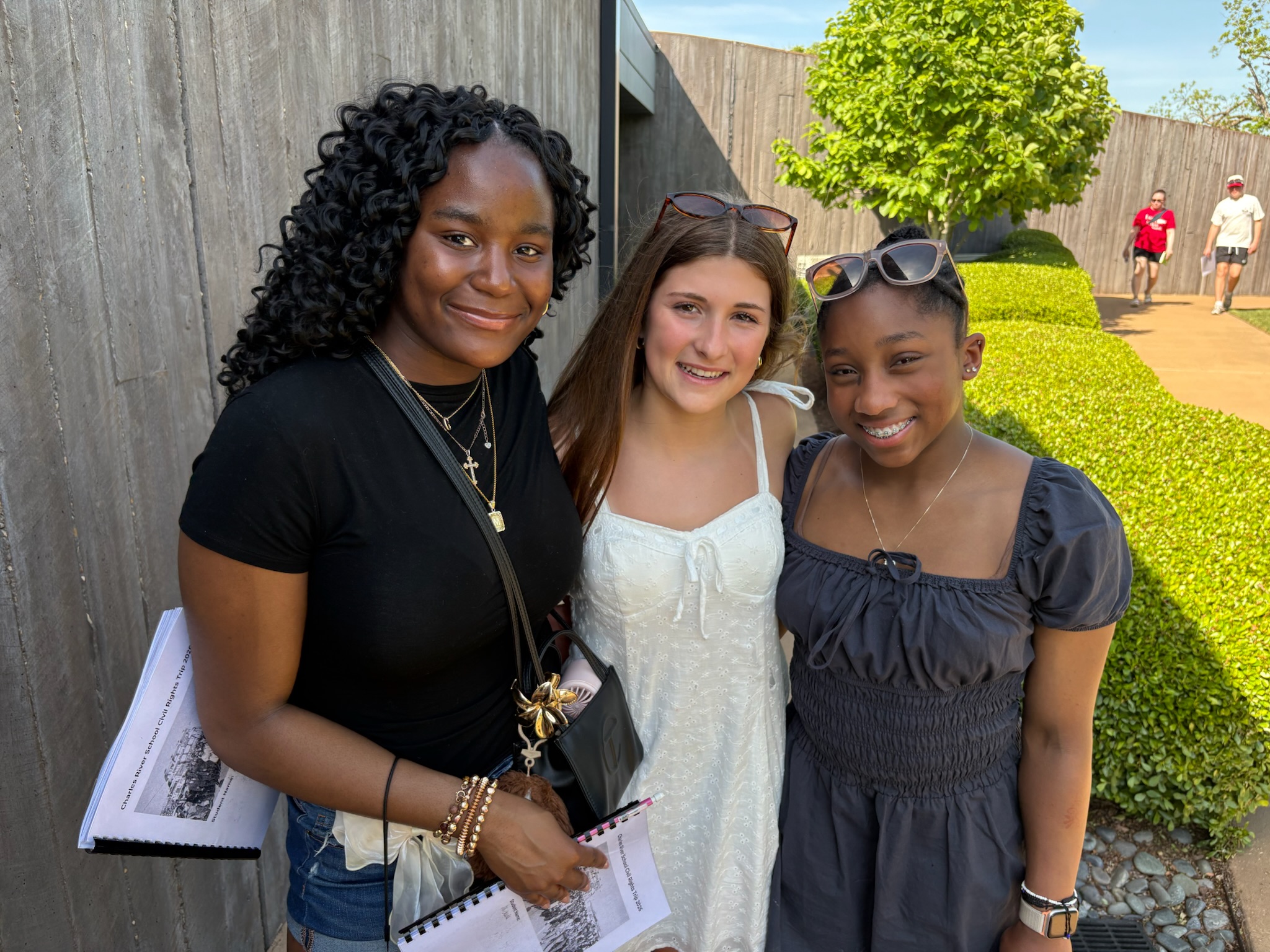
Additionally, eighth graders compared the National Memorial for Peace and Justice to the Legacy Museum they saw earlier in the day. Both were impactful, but the students noted that the designers and planners made very different choices.
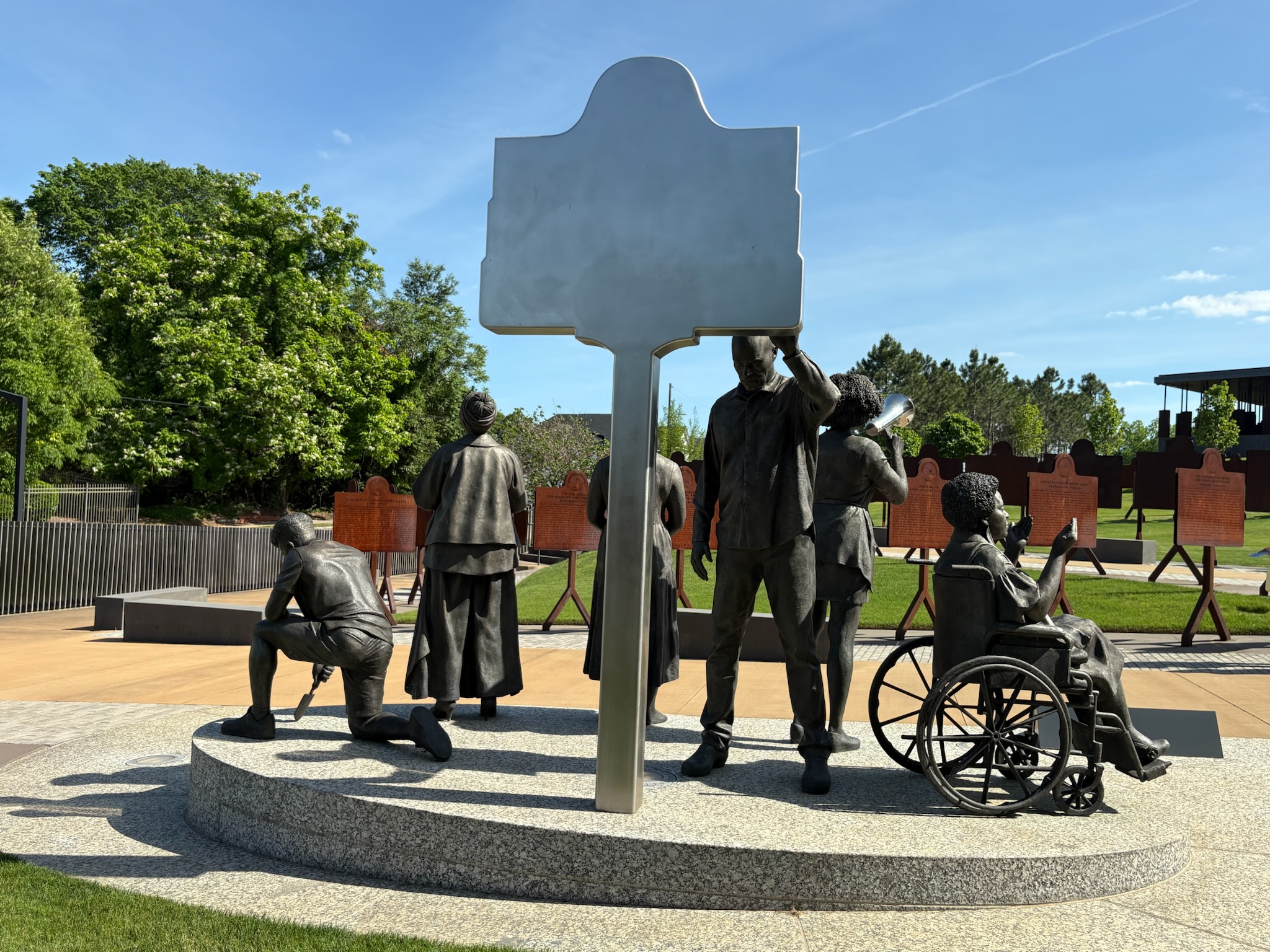
One eighth grader shared that the memorial felt “overwhelming to literally have the pillars hanging.”
Another said the memorial was very meaningful to take in. “It puts into reality this actually happened. It is one thing to learn and read about it another thing to physically see it.”
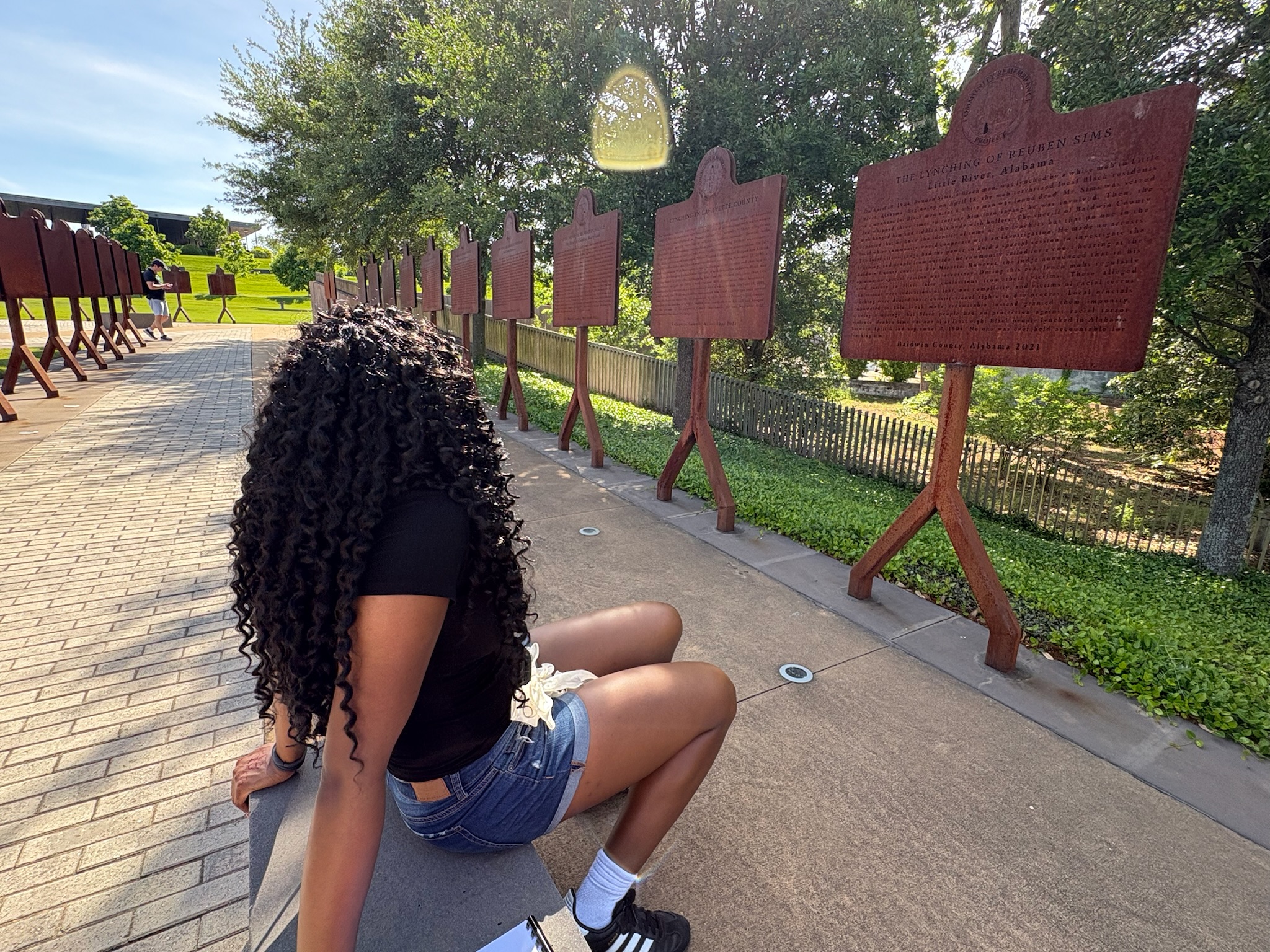
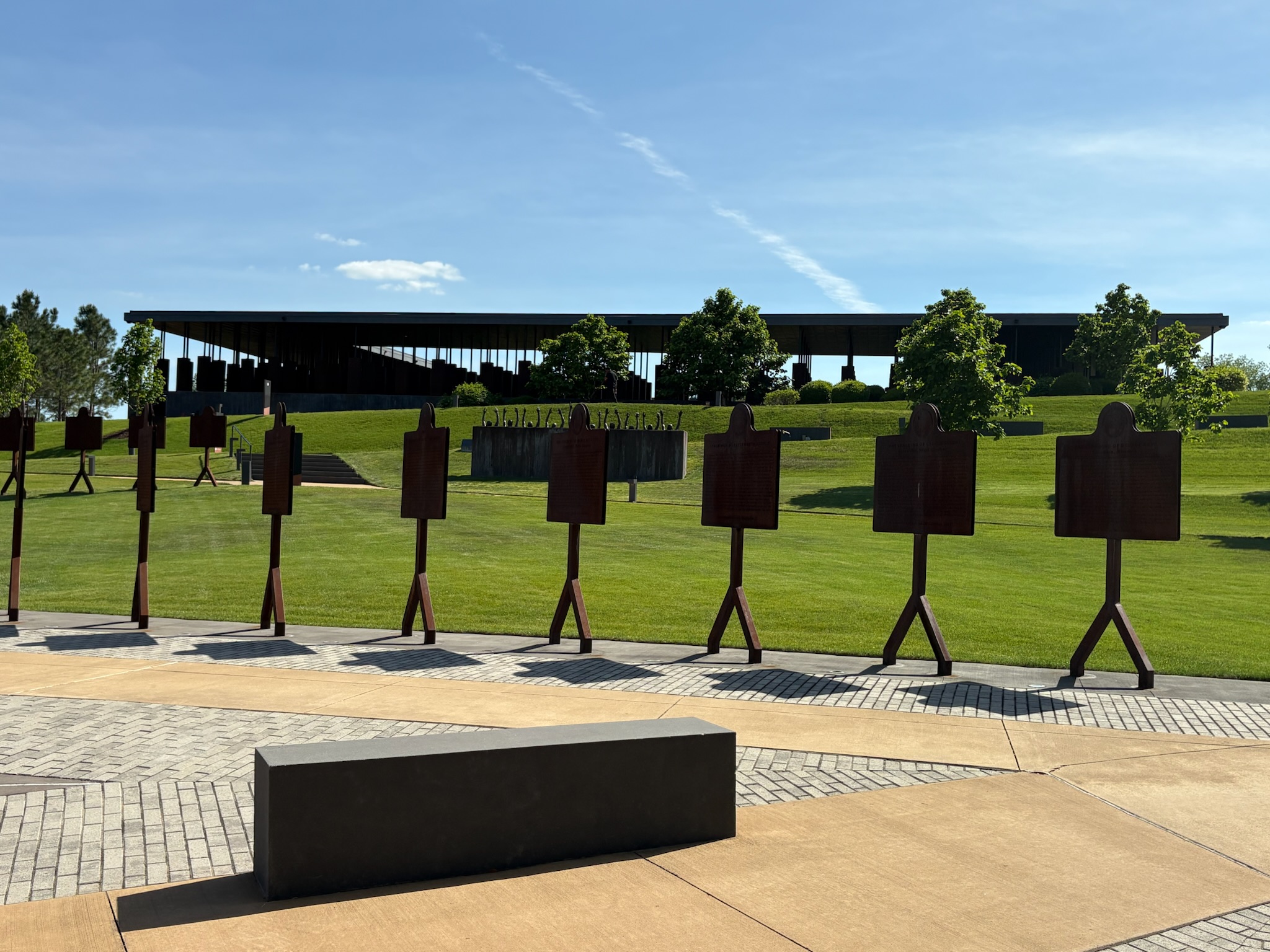
The Community Remembrance Project at the memorial site is dedicated to helping communities learn about the lynchings that occurred there and memorialize the victims with replicas of the hanging steel memorial slabs, designed to look like coffins. Outside of the memorial square, we saw the replica steel memorial slabs that counties have been invited to take from the memorial. It was striking to see empty spaces, but even more striking to see how many remained.
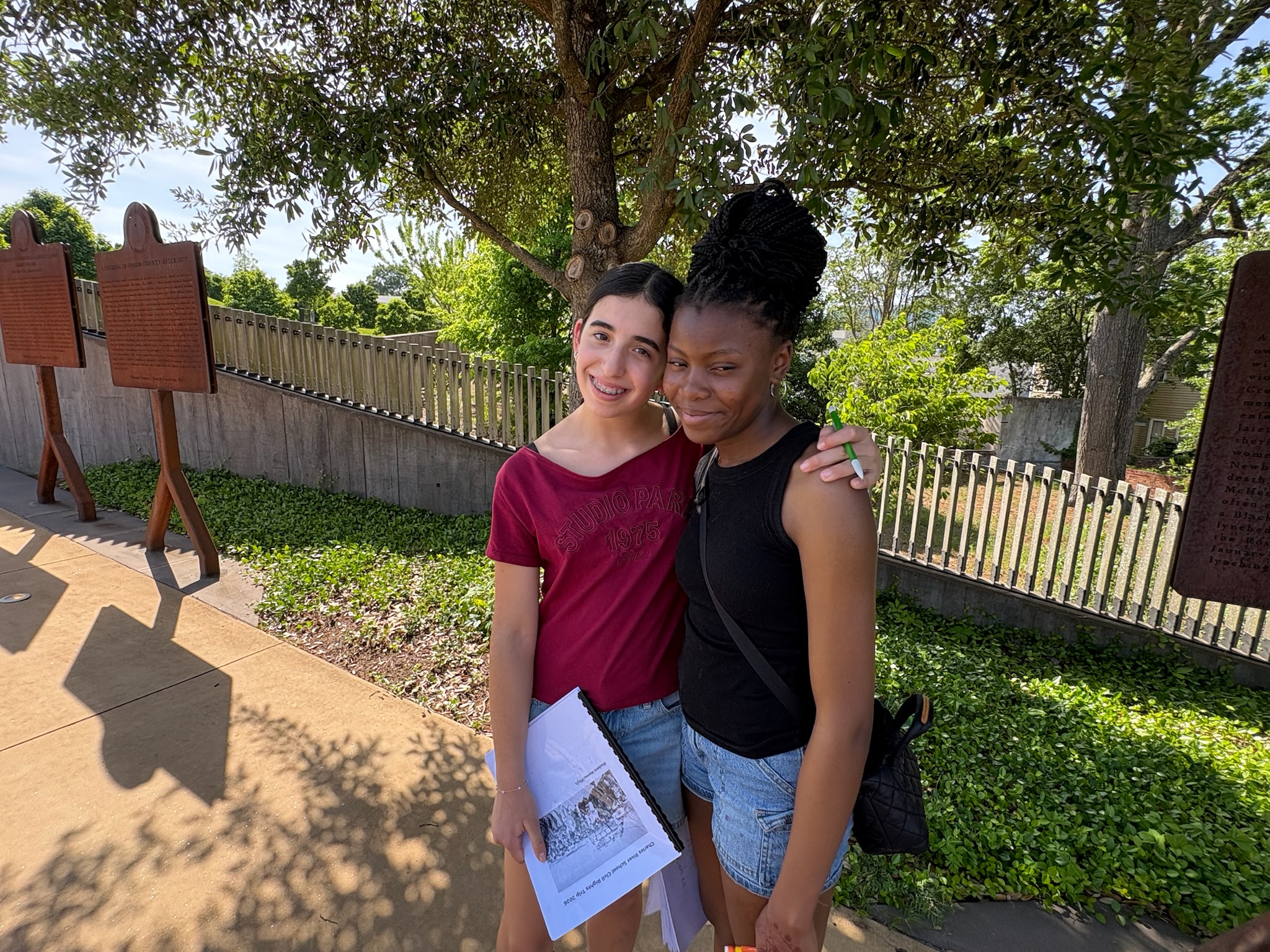
In the spirit of “truth-telling,” the Historical Marker Project helps communities install narrated markers of where lynchings occurred and who the victims were. We walked through examples of these markers from across the country that honored the communities who have reckoned with the history of lynching and racial terror and chosen to install the markers.
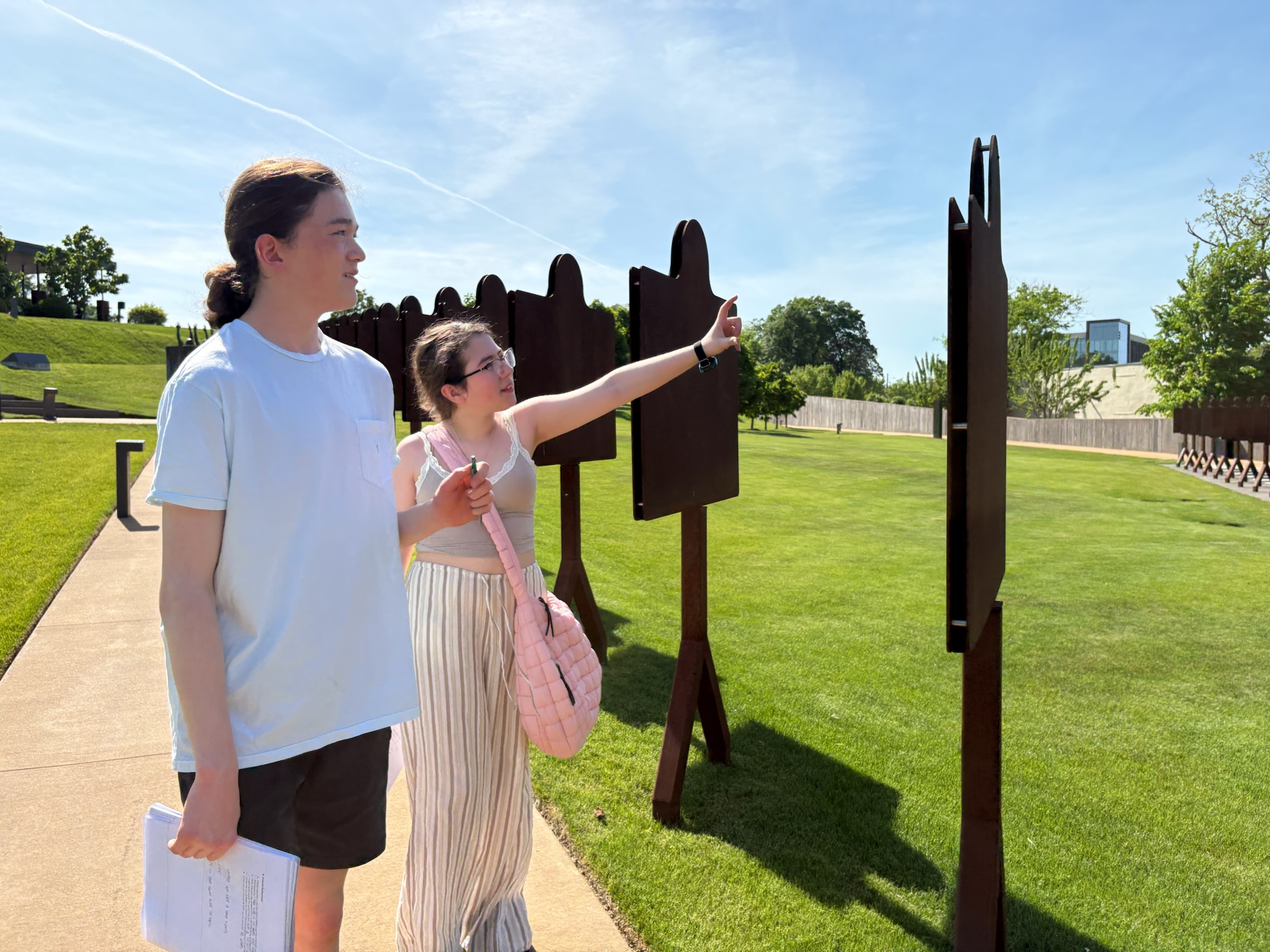
“Things like this should be everywhere. Like, places like these should be around the country because a lot of people just wouldn’t know about stuff like this if it wasn’t here which is why it’s important. This is our history. Whether it’s hard or not, we need to keep it because if we don’t, then we’ll just repeat over and over until we finally do learn and it’s important that it doesn’t happen again because we don’t want to go back. We need to go forward,” a wise 8th grader remarked.
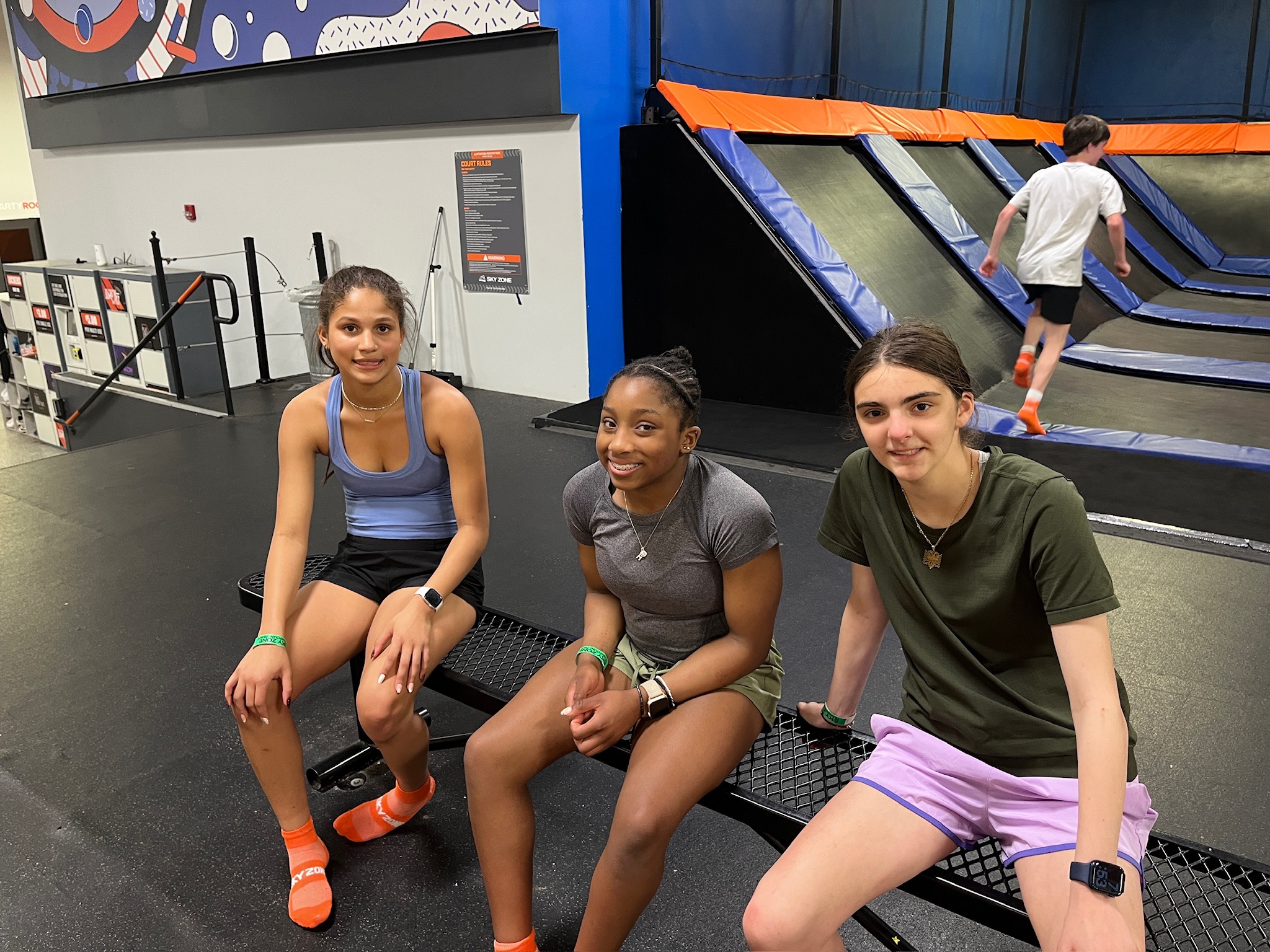
After a day of intense learning and sometimes heavy moments, it was time to play.
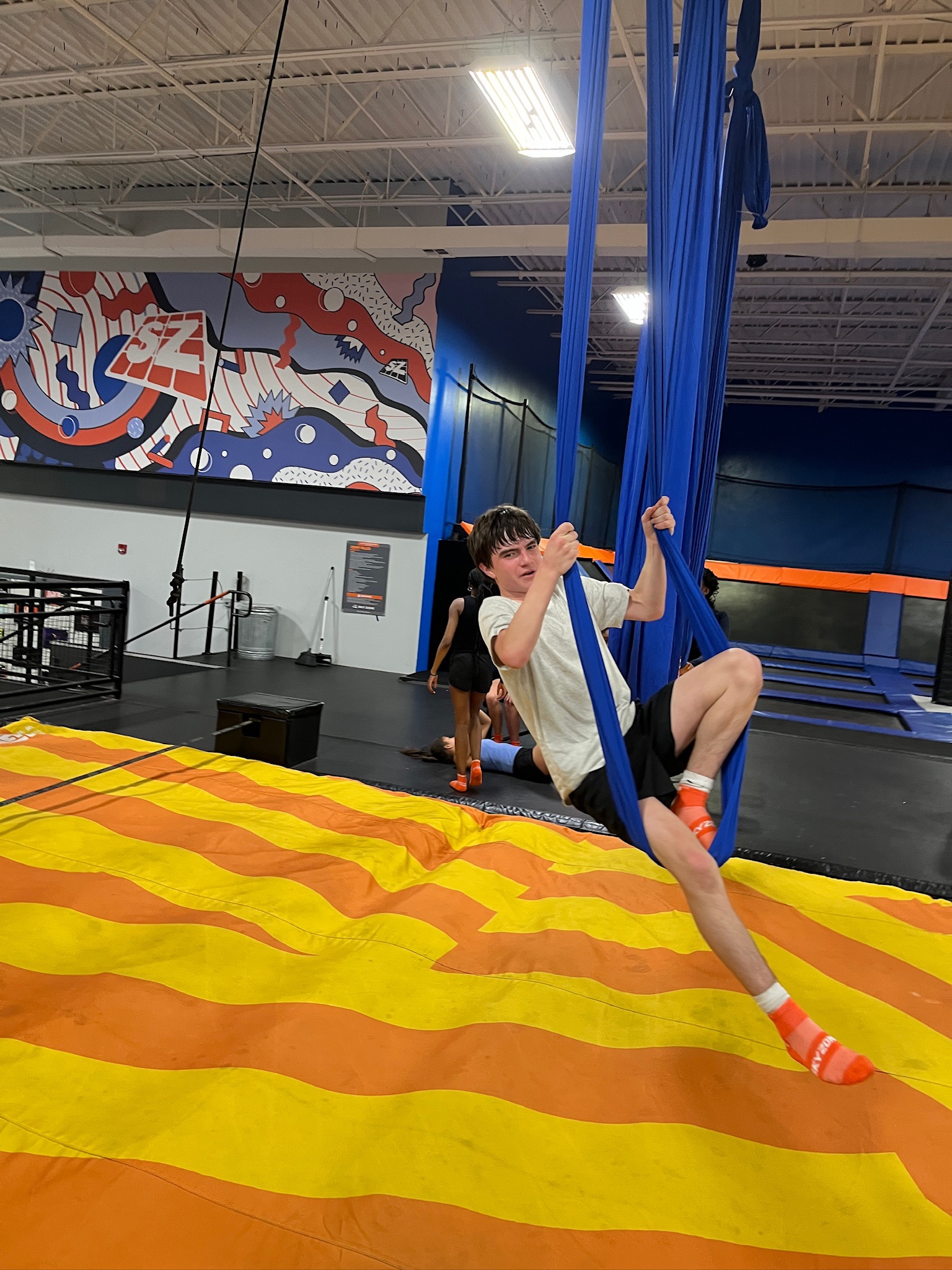
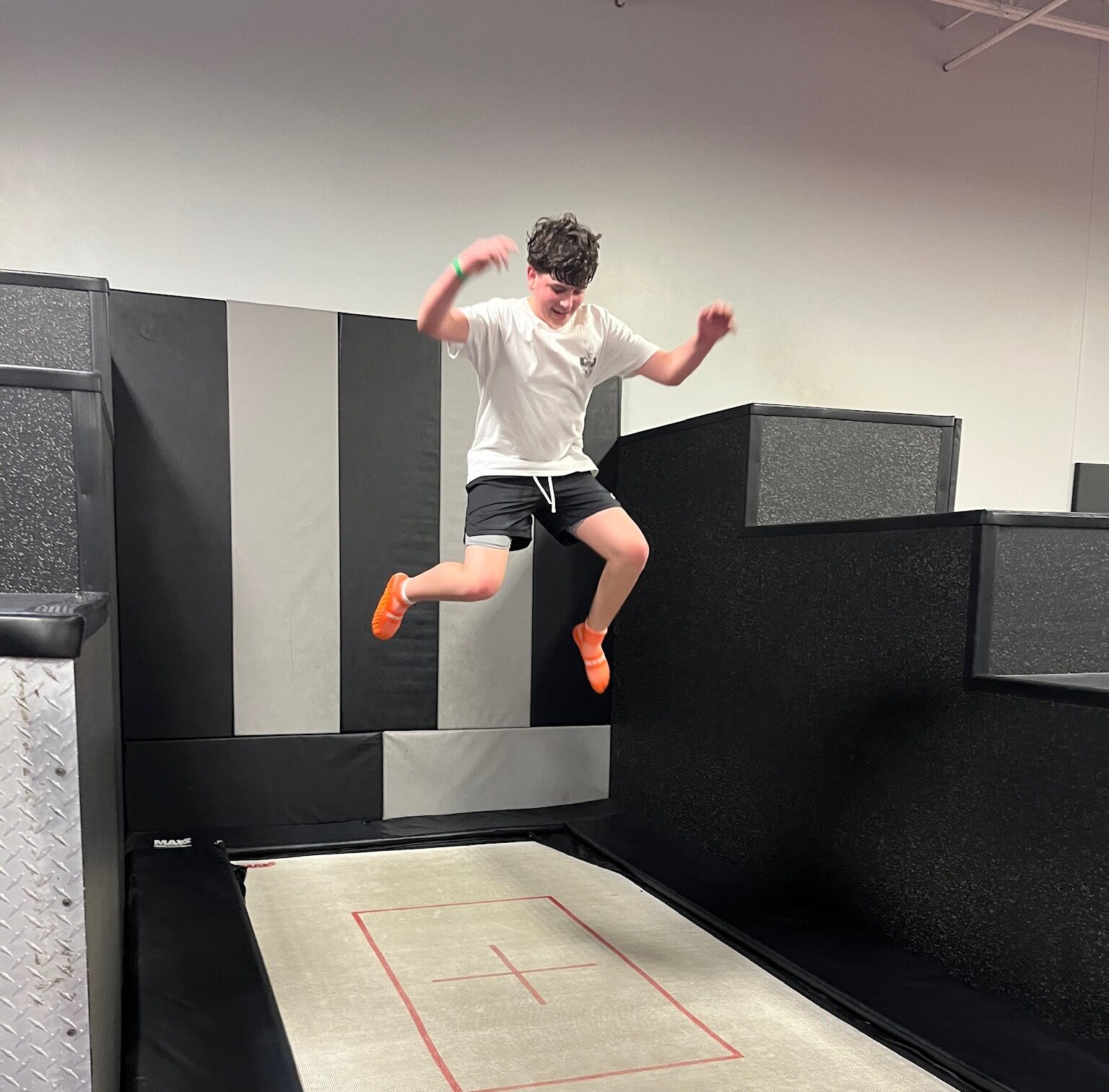
We headed to Skyzone and had fun together on the trampolines and foam pits!
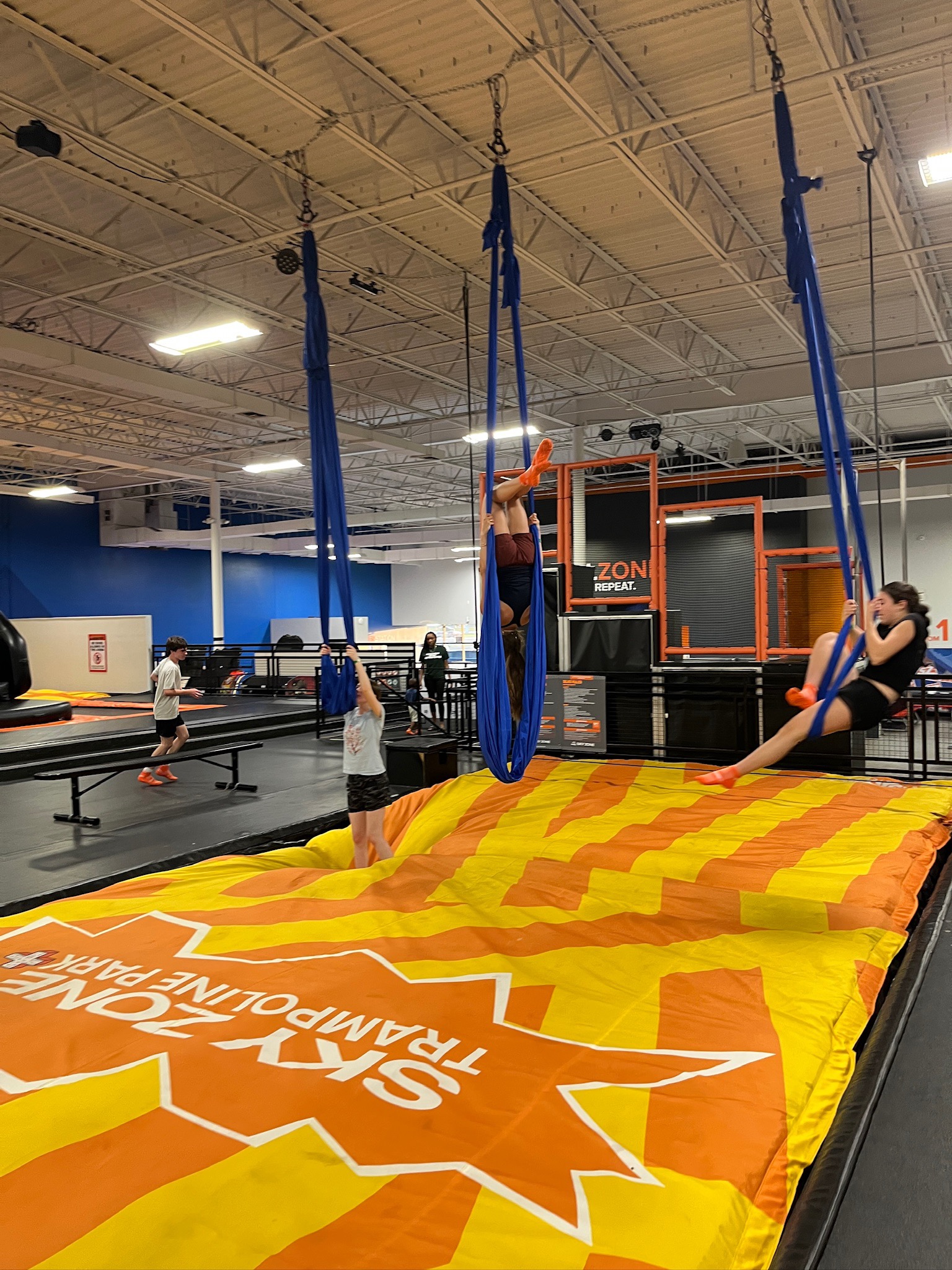
It was a joyful time for bonding for students and adults alike complete with pizza and ample joy of childhood.
We ended the day in family groups, reflecting on all we learned and getting ready for the final day of our trip.