In Fifth Grade, students solidify their elementary math foundations by mastering multi-digit algorithms, calculating 3D volume, performing operations with decimals and unlike fractions, and plotting points on coordinate grids.
- Unit 1: Finding Volume | Exploring 3D space using unit cubes and deriving volume formulas (Volume = length * width * height).
- Unit 2: Fractions as Quotients and Fraction Multiplication | Connecting fractions to division and multiplying fractions by whole numbers/fractions.
- Unit 3: Multiplying and Dividing Fractions | Dividing unit fractions by whole numbers and solving complex real-world fraction problems.
- Unit 4: Wrapping Up Multiplication and Division with Multi-digit Numbers | Mastering standard algorithms for multi-digit whole number operations.
- Unit 5: Place Value Patterns and Decimal Operations | Reading, writing, comparing, adding, subtracting, multiplying, and dividing decimals to hundredths.
- Unit 6: More Decimal and Fraction Operations | Solving complex word problems using unlike fraction denominators and decimal reasoning.
- Unit 7: Shapes on the Coordinate Grid | Plotting points in Quadrant I and analyzing numerical rules and patterns.
- Unit 8: Putting It All Together | Synthesizing Grade 5 concepts through collaborative math investigations.
Integrated Math projects
- Volume robot creation
- Design a Tiny Home for a family displaced by a natural disaster
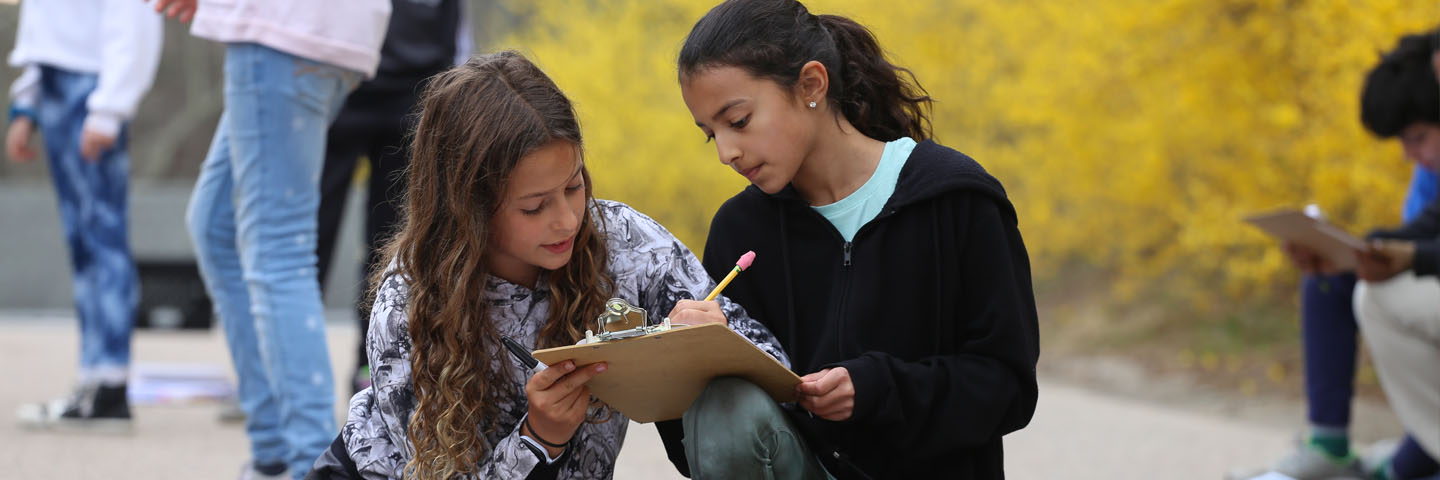
- Revere Beach trash pick-up data analysis and interpretation
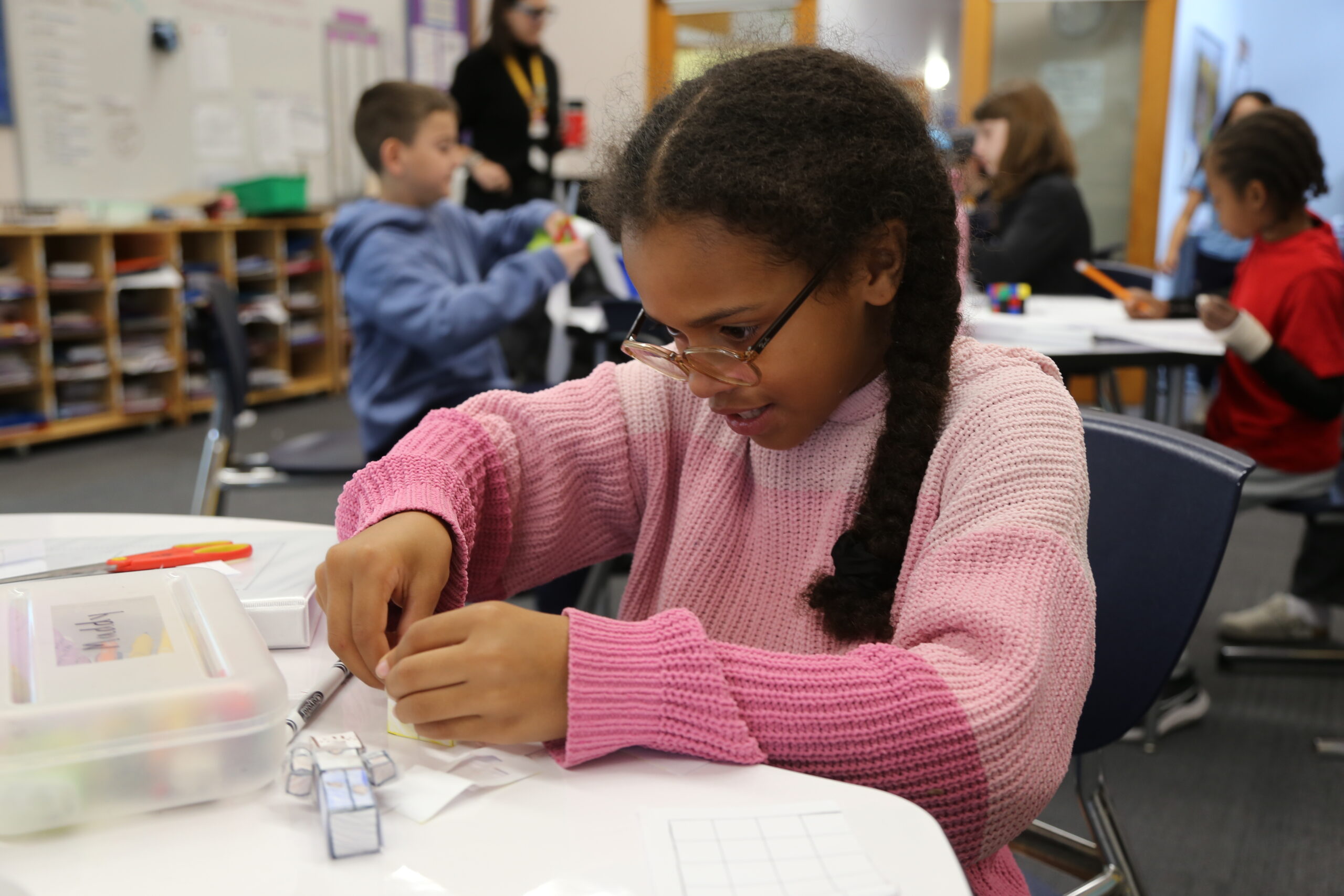
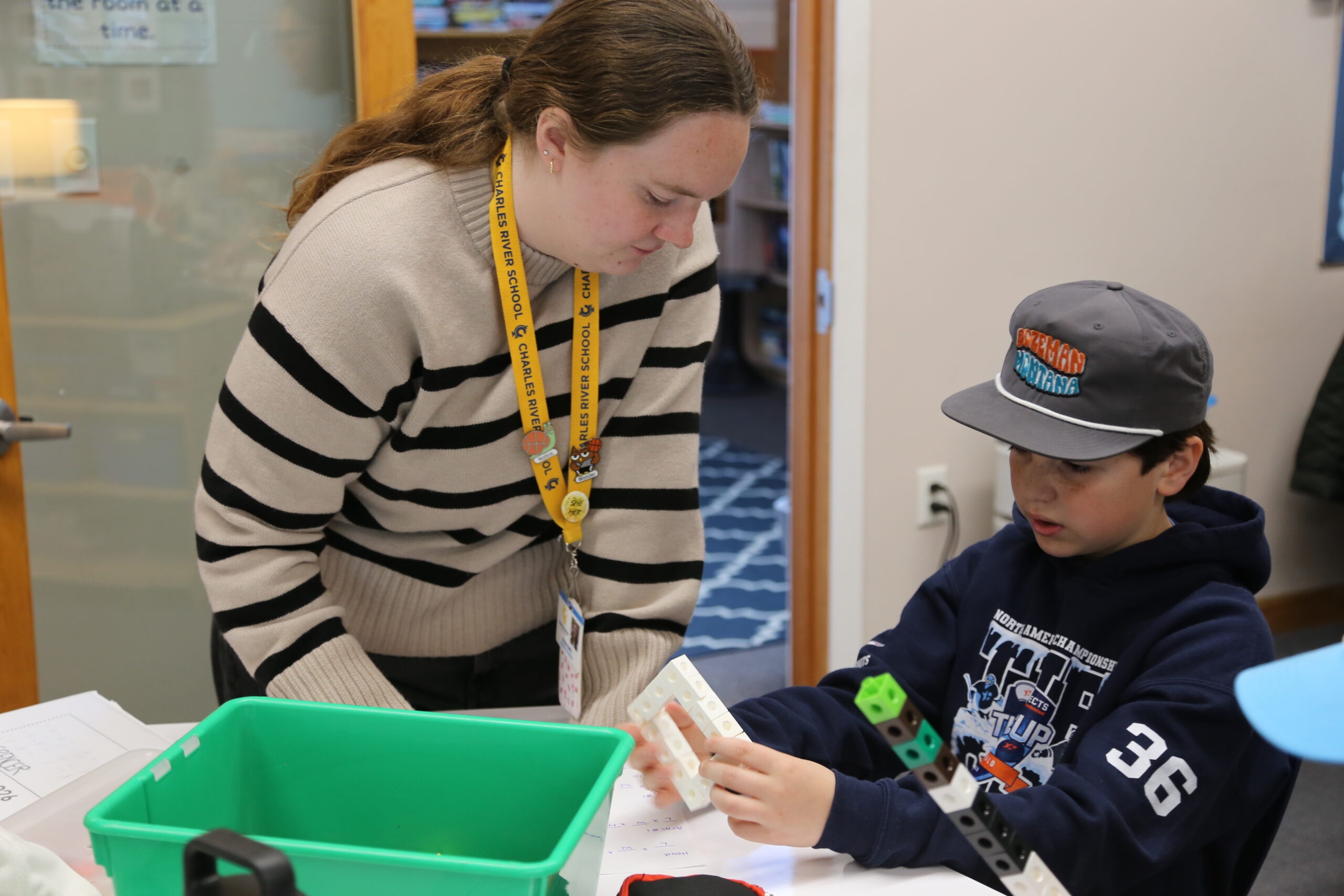
In alignment with Unit 1 of Illustrative Math, Grade 5 students apply their understanding of volume to design and build their very own robots! They begin by sketching their robot designs, determining the length, width, and height of each body part. Next, they calculate the total volume by adding the volumes of all the individual parts. Using Unifix cubes, students construct each section of their robot, then create a net (blueprint) for every part on graph paper to make the body parts 3D. Finally, they bring their robots to life by coloring, decorating, and personalizing their creations.
In connection with the Tiny Home project in Theme, each student works to design a house for a family that has been displaced due to a natural disaster. Using addition and subtraction of three- and two-digit numbers, each student calculates the current expenses for a given family and then begins to consider what their new home will look like. They must consider cost throughout the process and develop the layout of the rooms and furniture using a one inch to two foot scale, with the ultimate goal of building a tiny home that, when built to scale, would be the size of their classroom. Throughout the project, students apply their knowledge of area, volume, addition, subtraction, and multiplication, all while thinking about the needs of others.