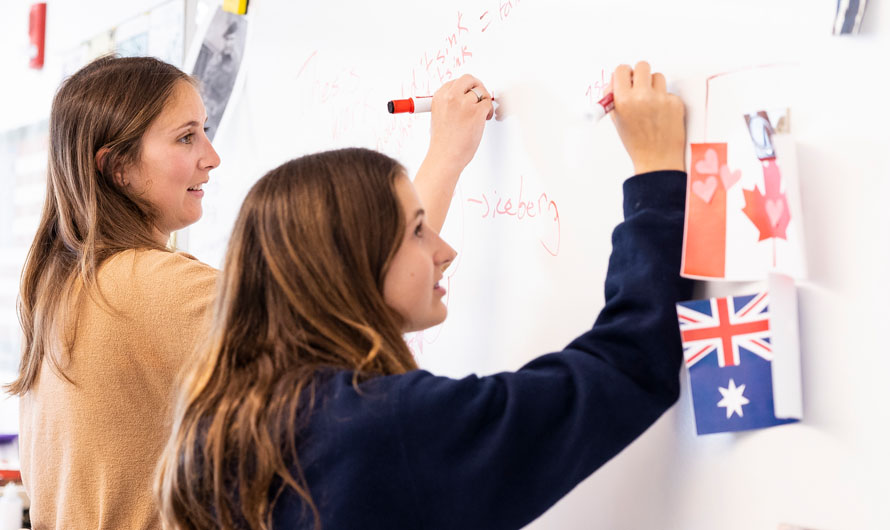
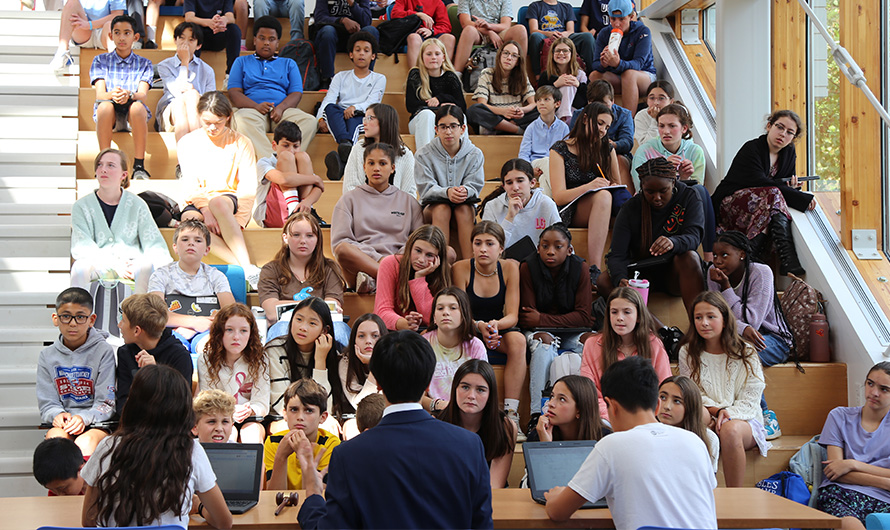
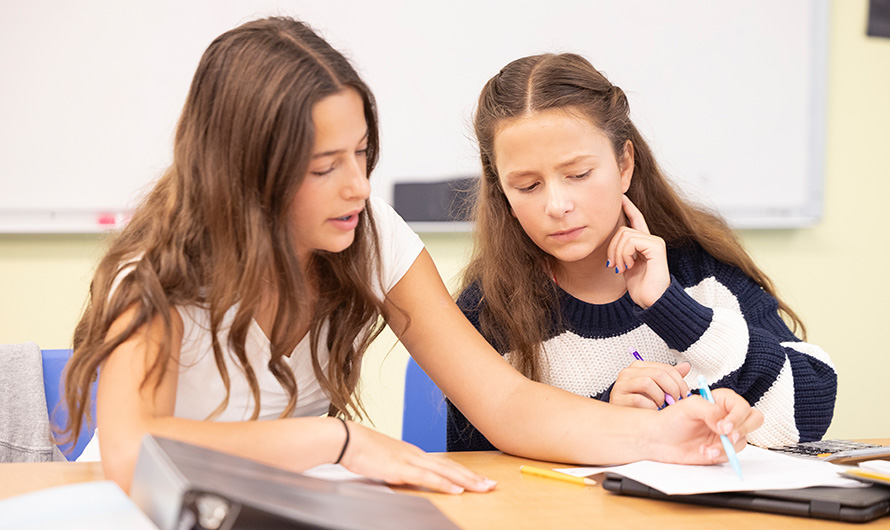
In the second and third years of a three-year program, students expand their knowledge of French/Spanish grammar and vocabulary. Instruction is almost entirely in the target language. Students improve their language skills through group and paired speaking and writing activities during class and through individual work on their Chromebooks both in and outside of class.
Developmental Skills:
- Students continue to build vocabulary and increase their knowledge of grammar in order to speak and write with increasing fluency in the target language.
- Students read and recite poems and short articles related to theme-based vocabulary.
French
Seventh grade French students start the year studying verbs and vocabulary related to sports, weather, and art. They can successfully form sentences using the irregular verb faire, several newly-learned regular -re verbs and -er verbs. Students can also use interrogative adverbs effectively to ask, understand and respond to information questions. During the second part of the year, focus shifts to vocabulary themes and corresponding expressions related to food. Students learn about various Francophone breakfast foods, lunch menu items and café fare. Using the irregular verbs, partitive articles, and authentic restaurant menus, students order and pay for food during real-life skits and role plays. The year ends with an immersive unit about Haiti. Students can locate its major cities, mountains and bodies of water on a map, and they can recall important facts, early history, and essential dates leading to the slave revolt.
Example skills and topics include:
- Sports
- Reading about and playing pétanque
- Poetry recitation
- Café skits
- Geography and history of Haiti
Spanish
Seventh grade Spanish students build directly on their foundational knowledge to advance their Spanish language skills and cultural understanding. Having mastered regular present-tense verbs, students are moving forward to work with irregular, special, and past-tense verbs, expanding their ability to talk about past events and share more detailed stories. Our curriculum focuses on practical, real-world themes, including “Let me introduce my family” and “I need some new clothes.” To wrap up the year, students will put their skills into practice by learning how to describe their houses and plan a group party. Throughout every unit, the class prioritizes steady growth in oral proficiency, listening comprehension, and accurate pronunciation.
Example skills and topics include:
- Mi familia famosa project
- Learning commands and using them to give directions during a trust walk activity
- Poetry recitation
- Restaurant skits
- Dream House project
- Planning a trip to Central or South America